Sunday, April 30, 2006 


Pursuing a new growth strategy (Pt III)

published: Sunday April 30, 2006

Edward Seaga, Contributor

SO FAR, this series of articles has argued on the one hand that a fixed exchange rate regime produces low inflation, low interest rates, and upper middle to high incomes per capita on a sustained basis.

This contrasts with the outcomes of the inflation-targeting strategy based on a floating exchange rate: higher inflation, higher interest rates, and low to lower-middle incomes per capita.

If we follow through the argument of the merit of a wage-led growth strategy for which suitable employment opportunities would have to be found for a great many workers, then the question of the under-development of the agricultural sector must be squarely faced.

With the filling out of the few remaining potential areas suitable for further hotel development, the expansion plans for maximising exploitation of the mining sector already in place and the relatively marginal potential which exist for increased manufacturing, the only resource base available for substantial productive growth and new employment is agriculture.

GROWTH PROSPECTS IN AGRICULTURE

The impression is often given that agriculture has no future. The present traditional pattern of agricultural production varies from high technology to no technology. The segment of the sector that lacks technology is also the area of highest under-employment.

Agro 21 proved that technology could transform idle lands into productive fruit orchards, including one of the largest banana plantations (Victoria Banana) and artificial ponds into highly productive aquaculture. Its failure to create a viable export vegetable industry was mostly due to disease and heavy flooding which totally submerged all crops in two of its three-year trial period. It took Mexico seven years to find the right approach to creating a very successful and profitable winter vegetable agricultural operation. Vegetable farming is still an open opportunity for success.

This time, the emphasis should be on organic vegetables, one of the fastest growing areas of agriculture yielding high profit mark-ups. Mariculture has greater possibilities than has yet been exploited to develop seafood delicacies for the great many Chinese outlets on the eastern seaboard of America.

Hydroponics has already established operations with super abundant yields and very low unit costs, undercutting vegetable costs from imported sources and fully supplying local hotels with selected products. This opens the door wide to development of a substantial vegetable export programme supplying hotels throughout the Caribbean.

Biotechnology offers opportunities for the development of nutraceuticals in the health food industry, one of the fastest growing industries. Jamaica has 800 species of plants which are endemic, representing one of the largest biotechnological potentials in the world. Research, while progressing and with some results, has to be expedited.

WHERE IS THE AGRI-DEVELOPMENT PLAN?

With all these potentials and others, for these examples are not an exclusive list, what is the plan for agricultural development? There is no plan that I am aware of which assesses the entire agricultural sector fully on the future of crops and livestock. Studies have been carried out on specific crops and particular types of livestock, but no comprehensive approach has been produced capable of presenting a plan to modernise and transform the sector. The time now is very appropriate with the questionable future of sugar, to review the entire sector, incorporating new ideas, new products and new technologies.

Idle hands are only one part of the problem. Idle lands are the other. Productive lands need water for irrigation. St. Catherine alone has 12,000 acres of land which are idle because of lack of irrigation.

A plan developed by Agro 21 in the late 1980s, mapped out the construction of a 500-acre mega reservoir, several times the size of the Mona reservoir, which would trap the floodwaters of the Rio Cobre River, 80 per cent of which now flows to the sea in times of flood rains.

The reservoir would be gravity fed from river to storage and storage to farm, requiring no electrical power. Indeed, it would produce some hydro-electrical power for the national grid. What better solution to put idle lands and idle hands to work than by introducing modern production techniques to introduce new crops based on new thinking and providing new employment?

There is need for planners to take the initiative to create a plan for a modern agricultural sector, as begun by Agro 21, incorporating land use and irrigation needs, assessing crop-by-crop potential, particularly now with concerns about the future of sugar.

This type of planning was done for industry in the preparation of an Industrial Policy a few years ago, notwithstanding the adversities of limited local raw materials for industry and the burden of exceptionally high electricity costs. Why not for agriculture, a sector endowed with resources and manpower relying little on electrical energy?

I repeat, agriculture represents the only remaining resource base with substantial potential for expansion of production. Giving up on agriculture is an option which we cannot afford.

OVERCOMING POVERTY

There is another imperative for reviving the agricultural sector. Poverty is synonymous with small-scale farming in Jamaica. The statistics confirm this. There is little hope for overcoming poverty without brighter prospects for small farming.

One of the great socio-economic divides of Jamaica is the distribution of income which has traditionally maintained two classes of people, the "haves" and the "have nots", as I labelled them more than 40 years ago. Here again, improving incomes would rely on better prospects in the small farming sector.

The abundance of resources with which Jamaica is richly endowed: fertile land, inviting climate, strategic geography, abundant minerals, resourceful people and a vibrant culture, compared to other countries which were not then, but are now, far more successful than Jamaica, this tells a sad story of inability to shut our eyes to the failures of the past and open them to visions of the future.

For there is a future, but only if we are bold enough to grasp it with earnest conviction and a profound determination to establish beyond any doubt that Jamaica has no reason to be poor.


© Copyright 1997-2006 Gleaner Company Ltd.


Sunday April 30, 2006

Foreign leader impressed by education approach

LIMKOKWING University College’s “avant garde approach to education” has impressed St Vincent and the Grenadines Prime Minister Dr Ralph E. Gonsalves so much that he has decided to send his students to Malaysia.

“Your university has taken me by surprise. You have taken a practical yet avant garde approach to education,” he said after he was taken on a tour of the campus by the university college’s president Tan Sri Lim Kok Wing.

Dr Gonsalves found out more about the university’s industry-within-university concept, touring such facilities as the National Branding and Packaging Design Centre.

“I will persuade my colleagues in the Caribbean region to send students to Limkokwing to study. I am confident our young will benefit from the experience,” he said, adding that the Caribbean island nations are in the process of becoming a federation.

He said his country needed to break out from the cocoon as “we are still somewhat imprisoned by the ethos of an old world.”

“Malaysia is one of the countries that small and developing countries have to get close to,” he said.

Dr Gonsalves accepted Lim’s invitation to be a visiting professor and plans to spend some time giving lectures at the university college this year.

He, in turn, has invited Lim to be a member of his country’s Global Advisory Board.
Lim said Limkokwing would also consider other forms of support, including transfer of technology.

“We discussed how we could lend support to his government in such areas as promotion of tourism and trade,” said Lim.

St Vincent and the Grenadines, a country made up of more than 30 islands, has agriculture as its biggest economic activity, followed by a dynamic tourism industry, and an offshore financial centre that is growing rapidly. It is fast moving into a service economy.

Copyright © 1995-2006 Star Publications (Malaysia) Bhd

Saturday, April 29, 2006 


Meeting in Beijing:
Chinese Government and ECLAC to Strengthen Cooperation in the Field of Economic Development
Zeng Peiyan, Vice Premier of the State Council of China, met with José Luis Machinea, Executive Secretary of this regional United Nations commission.


(25 April, 2006) A delegation of the Economic Commission for Latin America and the Caribbean (ECLAC), headed by its Executive Secretary, José Luis Machinea, met with the Vice Premier of the State Council of China, Zeng Peiyan, on Monday 24 April in Beijing. Zeng Peiyan expressed his government's interest in increasing exchanges with this regional United Nations commission.

During the meeting, delegates discussed the status of relations between China and Latin America and the Caribbean, analysing the different mechanisms available to increase cooperation between ECLAC and the Chinese government.

As one of the members of the State Council of China, Zeng Peiyan is one of the country's highest ranking authorities. He praised ECLAC's important role in developing economic cooperation with China.

He emphasized that as developing countries, China and the countries of Latin America and the Caribbean share much in common on many key international issues and are complementary in economic terms. Moreover, he placed a high value on the relations between both parties and expressed his intentions of deepening political ties, economic cooperation and cultural exchanges "to ensure the development of friendly, mutually beneficial cooperation," he added.

Vice Premier Zeng Peiyan belongs to the Political Bureau and the Central Committee of the Communist Party of China. During his lengthy career he has held other positions, among them, Vice-Minister of the Electronics Industry, Vice-Minister of Construction, Deputy Secretary-General of the Central Economic and Financial Leading Group, and Vice-Minister of the State Planning Commission.
Since 2003, he has been Deputy Leader of the State Council Leading Group for Informatization, Deputy Director of the Three Gorges Project Construction Committee, and Head of the Office of the State Council Leading Group for Western China Development.

Also participating in the meeting were Vice-Minister Liu He, of the Office of the Leading Group on Financial and Economic Affairs, headed by the President of the People's Republic of China, Hu Jintao. This body is composed of the top-ranking leaders of the country's administration. In this position, Liu He has played a vital role in developing China's macroeconomic policy.

José Luis Machinea took advantage of the occasion to invite Vice Premier Zeng Peiyan to visit ECLAC's headquarters in Santiago, Chile. Zeng Peiyan thanked him and indicated he planned to travel to Chile in the near future.

The ECLAC delegation, which also included Robert Devlin, Regional Advisor in ECLAC's Washington office, and Andras Uthoff, Officer in Charge of ECLAC's Social Development Division, was in Beijing to take part in the Second Economic Policy Dialogue.
Seminar on Economic Policy of Latin America-PR China, organized by the German Cooperation Agency GTZ, in which Vice-Minister Liu He was participating, and during which distinguished experts exchanged experiences regarding current trends and challenges facing economic and social policies in Latin America and the People's Republic of China.


For questions, please contact ECLAC Information Services: dpisantiago@cepal.org; Tel: (56 2) 210 2380/2149.

Friday, April 28, 2006 


April 28, 2006

“Greening” at IDB headquarters and country offices


The IDB’s 2005 Sustainability Review discusses the Bank’s sustainable practices both in the field and at home

You can learn a lot from the back of a Starbuck’s napkin. Above the friendly recycling arrows, it relays that the product is made from 100 percent recycled fibers, at least 40 percent post-consumer material and that no bleach was used in its production, a mini advertisement for the company’s environmental savviness.

This informal way to disclose corporate sustainable practices to coffee drinkers worldwide is reflective of the trail blazed by private companies over the past decade in issuing reports on corporate social responsibility.

Commercial banks have also joined this trend, publicizing issues related to sustainability within their business practices. Reflective of the mounting interest in corporate social responsibility among private sector banks are the growing ranks of institutions that have adopted the Equator Principles, a framework to help financial institutions manage social and environmental issues in their operations. Largely stemming from the reporting initiatives of private sector banks, multilateral development institutions have begun to follow suit by compiling more comprehensive sustainability reports on their activities, building upon already existing practices of annually reporting on their environmental and social track records.

The first of its kind for the IDB, the 2005 Sustainability Review provides a panorama of the Bank’s overarching commitment to environmentally and socially sound development strategies in Latin America and the Caribbean, including initiatives to improve regional policy, regulatory and institutional frameworks for sustainable social and environmental management.

Integral to the IDB’s process of completing its first sustainability review has been deciding how to define sustainability and understanding what it means to the Bank, a task that’s more complex than it appears at first glance. In its most basic form, the review defines sustainable development as meeting the needs of the present without compromising the ability of future generations to meet their own needs, a definition which is applicable to both the IDB’s in-country and in-house operations.

An overview of in-house efforts to minimize the Bank’s corporate footprint at Bank Headquarters in Washington D.C., the 26 country offices throughout the region and the Paris and Tokyo offices, is also included in the review.

Minimizing the IDB’s corporate footprint

From cutting emissions and implementing the use of eco-friendly paint and carpet cleaner to installing water-free urinals, the Bank is making strides towards “greening” itself from within.

As part of the overarching goal to mainstream sustainability into all areas of corporate operations, the IDB began a process of self-evaluation in 2005, starting with Bank Headquarters. By closely examining the facility’s consumption patterns and major emissions, problem areas were pinpointed and plans of action developed.

One of the first issues to be tackled following this evaluation was water consumption, which fell by 9 percent from 2004 to 2005—from 21.2 to 19.2 million gallons—after water-free urinals were installed throughout the two main buildings. Following this initial improvement in water savings, the Bank expects to see more significant decreases in future years.

Overall energy consumption also decreased from 2004 to 2005, and consequently, so did emissions such as carbon dioxide and nitrogen oxides.

According to the review, the IDB recycles about 10 tons of paper, aluminum, glass and plastic each month and in 2004, begun to crush and recycle all fluorescent light bulbs, a process which reduces the amount of mercury waste that ends up landfills. Additionally, all waste paper and photocopier toners are recycled.

Greening from within

Giving older buildings a “green” facelift by replacing existing fixtures and systems with cost-effective sustainable alternatives is a gradual process.

Part of this process is rethinking the use of everyday products, from the various sprays and foams used to clean the bathrooms to toilet paper and paper towels. The Bank only uses eco-friendly cleaning products, over 40 percent of which are Green Seal approved, and over half of the paper products used have the same seal of approval. The Green Seal paint standard is also increasingly being adhered to and all paper products in bathrooms and pantries are now made from 80 percent recycled materials.

The IDB is currently working towards meeting the LEED-EB building standard, or the Leadership in Energy and Environmental Design’s Green Building Standard for Existing Buildings. This rating system of design standards provides a baseline from which to measure a building’s operational efficiency, as well as progress made towards implementing environmentally sound practices.

Additionally, in revamping its country offices, the IDB has increased the use of solar energy and is conserving energy through various insulation techniques, motion and heat sensors, low consumption lighting and water fixtures and more efficient air filters.

In concluding, the 2005 Sustainability Review provides concrete examples of the moves the IDB is making towards minimizing its environmental and social impact, while also signaling that much work remains on the path towards adopting truly sustainable practices.

Also available in: Español

© 2006 Inter-American Development Bank. All rights reserved.


27 April 2006

UNDP and Japan Bank for International Cooperation forge partnership to fight poverty

UNDP and the Japan Bank for International Cooperation (JBIC) have agreed to join forces to end poverty across the world.

The two organizations agreed on 20 initiatives in more than 10 countries. These include an initiative in Cambodia, where JBIC and UNDP will address HIV/AIDS in the work place in the context of the expansion of Sihanoukville port, which is also known as the “virus harbor.” Also, a proposal for Northeast Thailand will look at providing employment opportunities to poor farmers affected by the agricultural reform and reduction of deforestation in the area.

“This is a milestone in our partnership with JBIC, and I expect to see the MOU translated into actual collaborative activities in many parts of the world,” UNDP Administrator Kemal Dervis said in Tokyo, where he signed a partnership agreement between UNDP and JBIC to work towards promoting the MDGs.

For further information, please contact: Akiko Fujii in Tokyo at: akiko.fujii@undp.org, or Dominic Sam in New York at: dominic.sam@undp.org.


THA spends $6m on community centres in 6 villages
Friday, April 28th 2006


The Tobago House of Assembly is spending in excess of $6 million to deliver community centres to six villages this year.

So far centres at Bethel and Hope have been delivered at a cost of $2.5 million and $75,000 respectively. The Glamorgan centre costing $3.5 million was due for delivery on Wednesday. Centres are also being constructed at Whim, Mt St George and Parlatuvier.

Assistant Secretary of Community Development and Culture Wendell Berkley disclosed this at last week's post Executive Council press briefing. He said the centres would serve as a home for the communities to carry out their activities and urged villagers to reorganise their village councils and to tap on the human resources in their areas. He also urged them to seek out areas to raise revenue to assist them in carrying out their activities and referred to the recent Mt Pleasant Sports and Family Day and the Buccoo Crab and Goat races. He congratulated the organisers in these two villages for their successful events.

Meanwhile the Division of Community Development and Culture is organising it annual May Pole Festival for May 16 at a venue to be announced. The festival is normally held at the Shaw Park Cultural Complex but this is currently under reconstruction at a cost of $50 million.

© Tobago News


Friday 28 April 2006

The Verdonk-law should not apply to Aruban citizens

Frank Bovenkerk

CURACAO – Criminologist Frank Bovenkerk, professor criminology at the University of Utrecht contended this week in the correspondence columns of NRC Handelsblad that sending Antilles youngsters back to the Antilles is discriminatory. “But when you discriminate, you should do it right. I simply do not understand why this regulation also has to apply to the more than 100.000 Aruban citizens.”

In 1995, Bovenkerk pointed out the great deal of immigrants in the criminality that led to the establishment of the CRIEM-project, and a note on nature, volume, and reasons of criminality amongst ethnic minorities.

He did this to the parliamentary inquiry committee Criminal Investigation methods. According to Bovenkerk, such discriminatory measure as Minister Rita Verdonk (Immigration and Integration, VVD) had proposed, can only be supported if it can solve a very serious problem, and that may be the case. “If the Antillean government does not cooperate, I do not see another possibility other than sending them back.” That is discriminatory towards the majority part of Antilleans that are non-criminal, ‘but administratively I do not see how it can be done differently’.

He does not understand why the measure also applies to Arubans. From all the criminal figures in the Netherlands as well as in Aruba, very few Arubans are in the criminality.

From an inquiry in 1996 it even appears that the criminality in Aruba is not even one-fourth of that in the Netherlands. “Maybe this is due to the relative progress or the grip that the roman-catholic church still has on the nation. There is in any case no reason to stigmatize the residents of this island by including them in the bill to keep out criminal Antillean citizens.”

© Copyright 2001, Amigoe.com.


Survey shows poverty decline
Observer Reporter
Friday, April 28, 2006

THE 2005 Jamaica Survey of Living Conditions, tabled in Parliament yesterday by Finance Minister Omar Davies, showed that poverty declined last year, when compared to the previous year.

The survey, a joint publication by the Planning Institute of Jamaica (PIOJ) and the Statistical Institute of Jamaica (STATIN), said "the incidence of poverty declined by 2.1 percentage points to 14.8 per cent" over the 2004 figure.

According to the survey, between 1995 and 2005 the poverty level declined by nearly half (12.7) from 27.5 per cent. This has not been a steady fall, however, since there was a 2.8 percentage increase between 1998 and 2000, and 2001 and 2002. Since that time, however, lower poverty levels have been recorded, the document said.

The study showed that the decline was greatest within the Kingston Metropolitan Area (KMA) - Kingston and St Andrew, Portmore and Spanish Town. The 2005 figure for the KMA was 9.6 per cent, 4.7 percentage points less than the corresponding period, while other towns fell by 0.6 percentage points and rural areas by 0.1 percentage points to 7.2 per cent and 21.1 per cent, respectively.

Copyright© 2000-2001 Jamaica Observer. All Rights Reserved

Thursday, April 27, 2006 


Ethics and Development
INTER-AMERICAN DEVELOPMENT BANK
Inter-American Initiative on Social Capital, Ethics and Development


April 26, 2006
No. 174


OF INTEREST

"La Agricultura Familiar en un Contexto de Apertura Comercial: "Impactos y Perspectivas"" by Luis Alejandro Acosta, Marcos Sebastián Rodríguez and Jorge Ortiga for FAO.
This article published by the Regional office for Latin America and the Caribbean of the United Nations' Food and Agriculture Organization seeks to present the different effects trade liberalization may have on family agriculture and lays out possible solutions for each scenario.


Clergy asked to support Urban Renewal

Bahamas Information Services
04/27/2006

Minister of Social Services, Melanie Griffin (seated) gets a hands on feel of the equipment. Also pictured are Commissioner of Police Paul Farquharson, Mrs Rosemary Thompson, and Mrs Corene Thompson, wife and mother respectively of late Archdeacon William E Thompson. (BIS photo by Gladstone Thurston)

NASSAU, The Bahamas – In a passionate plea to members of the clergy, Prime Minister the Rt Hon Perry Christie invited them to join the Government in fighting the social ills plaguing the country, through the Urban Renewal Progamme.

He issued the invitation during a meeting held Thursday, April 20, at Superclubs Breezes, where the clergymen received an extensive overview of the Urban Renewal Programme and the challenges that need to be addressed.

“We can make a major difference if we put our hands to the wheel to make it happen,” the Prime Minister told the clergymen. Presentations were made by Dr. Desiree Cox, Consultant, Urban Renewal Transformation and Research Unit; ASP Elseworth Moss; Supt Keith Bell and Dr Nicollette Bethel, Director of CultureThe audience, which also comprised members of the Cabinet, were updated; via slide presentations, on crime statistics, the rise in child pornography, an assortment of sharp weapons confiscated from students, amongst other issues. “The idea and invitation was predicated on the fact that I am of the considered view that we do not do enough as a Government and we do not do enough as a people in our country to firstly, understand the challenges that our people face and giving ourselves sufficient time to strategise, to design ways of overcoming the challenges,” the Prime Minister said.

He noted however, that the issues are not going to be solved in one day. Rather, by following examples of other countries which faced similar challenges and have designed programmes for success and for The Bahamas to implement them.

Having served as a Cabinet Minister since the 1970s, the Prime Minister said he has seen a number of issues addressed, and that in every file in Government, there have been strategies to deal with these challenges.

“But for whatever reason, there has never been this picture painted of challenges where we are able to take one, as a Government, a comprehensive, unified, integrated and coordinated approach to solving the problems because on a given day, the department or ministry is trying to deal with the problems of that day,” he said.

The Prime Minister noted that although there are trained personnel in place, governments have not effectively utilised planning strategies to tackle the issues.

He said that the reason why he has been so strong on the church making a commitment is because the Government does not have by itself, the resources to engage in the measuring and monitoring we do.

According to the Prime Minister, it is not the intention for politicians to exploit Urban Renewal, but to create the mechanism for the community to steer the programme.

“We need bodies and we need leaders. The most effective leaders are in the church,” he said. “Unless we are able to be relevant to the people, through relevant programmes and relevant approaches, we are not going to understand these challenges until we are going to have to make them up. The brainchild of Prime Minister the Rt Hon Perry Christie and devised by Police Commissioner Paul Farquharson, the scheme, which started out as the Farm Road Project, can be viewed as one of the most ambitious crime reduction experiments undertaken by the Police Force in recent history.

The scheme exists in Bain and Grants Town, Englerston, St. Cecilia, Fort Charlotte, and Grand Bahama. Plans are underway to institute the programme throughout the country

© 2005 The Official Website of The Government of the Bahamas. All rights reserved


Ministry of Education & Youth

Cabinet to Review National Youth Policy Strategic Plan Shortly
KINGSTON, (JIS):

Wednesday, April 26, 2006

The strategic plan, which was developed to guide the implementation of the revamped National Youth Policy, is set to go before Cabinet in May of this year.

Director of the National Centre for Youth Development (NCYD), Ohene Blake made this disclosure in a recent JIS News Interview.

Mr. Blake said the Plan, which has been ready for quite some time, had to undergo a series of consultations to ensure that it was accepted by the youth development sector.

"The consultations began in 2004 but what was envisioned in the beginning was that since we had undergone the consultation with the Policy, we would just roll straight into our strategic plan without further consultation. However, what came to light was that most of those consultations would have been done between 2001 and 2003 and at least half of the cohort would have moved out of the age group .that delayed the process," Mr. Blake explained.

In addition to this the process was further delayed by the 2002 general elections, which saw several ministry portfolios being realigned.

"The shifting of portfolios meant we had to go through another round of consultations," the NCYD Director pointed out.

In the meantime however, he said much had been done towards the implementation of some of the more defined objectives of the Policy with regard to youth participation and empowerment.
"Ten of the 12 strategic objectives under employment and participation, which is one of the six focal areas identified under the Policy, have been implemented," Mr. Blake informed.

"We haven't just simply waited. What we have done is began to implement some of the clear areas, such as participation and empowerment, as much of that falls under the purview of the National Centre for Youth Development and so we have pursued that vigorously. I don't think we could have sat and waited because there are serious issues facing our young persons," the NCYD Director said.

He noted that this was evidenced in the establishment of the National Youth Council, advocacy for a cultural policy, and a cultural curriculum. To this end, a new Culture Policy has been formulated and is to be put forward for Cabinet's approval.

In the meantime the National Youth Parliament and the Jamaica Youth Ambassadors Programme have been established, while the facilitation of international youth exchange programmes, to ensure fair coverage for all priority groups in youth exchange opportunities, have been strengthened.

Further efforts have seen the revamping and institutionalization of the National Secondary Youth Council and the Jamaica Union of Tertiary Students, with increased financial support to uniformed groups such as, the Boy's Scouts and Brigade, Girl Guide groups, the Young Men's Christian Association and the Young Women's Christian Association, which were objectives of the Youth Policy with regard to employment and participation.

"So I think that's the focal area of the youth policy that has bolted out of the blocks the quickest because that falls under the NCYD," Mr. Blake pointed out. In addition he said dialogue was ongoing with the Office of the Prime Minister to see the "appointment of young people to government Boards and the boards of statutory organizations and having the policy reflect what was agreed in the National Youth Policy where young people within the ages of 18-24 ought to be on every single government Board and committee dealing with the decision making of the nation".

"We will be going into further dialogue with voluntary organizations that have Boards and committees set up, that they must include young persons. So I think we are well ahead on achieving those objectives," the Director said.

He however expressed a desire to see more priority being given to "youth who are not benefiting from the education system, inclusive of teenage mothers, youth in institutional care or incarceration, as well as children from deep rural communities and farming communities in the drive to achieve a fulsome solution to the education system".

In the meantime he had high commendations for the Policy, which he said unlike its 1994 predecessor had taken on "a life cycle approach to youth development".

Mr. Blake said the Policy has been recognized worldwide as being at the cutting edge of youth development and that the life cycle approach was one of the reasons that it had been crafted as part of the development agenda. "So the life span of the Policy is for 2015 and we would expect to have an updated Policy in 2014," he added.

"We have taken a long term view of youth development as opposed to the short-term view of the first policy. young people don't wake up at age 15, so with all their issues. They have arrived at age 15 over a process of development during childhood and if you are going to effectively address the issues of the youth cohort you have to look carefully at what is happening in the child cohort because if you were to address it holistically all you would be doing is remedial work at age 15. to be very proactive you have to go to early childhood development," he observed, noting that the issues had to be approached from the early childhood stage.

The National Youth Policy addresses issues such as: employment and entrepreneurship; youth health; education, training, care and protection; participation and empowerment and explores ways to provide young Jamaicans with opportunities to develop their full mental, social, spiritual and physical potential, through the provision of training programmes.

The accompanying strategic plan document specifies the plans for implementation of the Policy and will also focus on the priority areas for youth development, the cost of the activities, and the source of funding among other things.

Copyright © 1996 -2003, Jamaica Information Service, All rights reserved


International Conference
November 14-15, 2006
Washington D.C., United States


Presentation

The international donor community has called for the halving of global poverty by 2015. An increasing challenge to meeting this goal is reaching the poor in conflict and fragile states. While a significant body of knowledge exists on the interconnectedness of poverty and conflict, few studies analyze the links between conflict and state fragility on the one hand and state fragility and poverty on the other hand. Furthermore, little research on the inter-relatedness of these dynamics has been done at the micro-economic level.

USAID’s Office of Poverty Reduction (PR), the Households in Conflict Network (HiCN) and the German Institute for Economic Research (DIW Berlin) plan to co-sponsor a two-day international conference on the special challenge of poverty reduction in conflict and fragile states. Examining the relationship between conflict and state fragility at the household level provides an opportunity to understand how these factors affect household behavior, welfare and poverty. This, in turn, is important for shaping successful programmatic and policy responses.

The conference will target researchers, development practitioners, and policy-makers engaged in these issues. It is hoped that the mix of academic and experiential papers to be presented will help reduce knowledge gaps in these areas and advance both research and practice on this theme. The organizers also hope to promote increased collaboration between international researchers through this conference.

Call for papers

In addition to broad sessions led by guest speakers, the conference will include a number of parallel break-out sessions, which will focus on sub-themes. This call for papers invites submissions for papers to be presented in the break-out sessions. Submissions should address one or more of the following or related areas:

Issues/Drivers of poverty, conflict, or fragility
- inequality and social exclusion
- assets and livelihoods
- health, mortality, HIV/AIDS
- food security and nutrition- risk/vulnerability and coping strategies

Actors
- individuals, households or groups
- women, youth or children
- refugees, displaced people, returnees
- public and private institutions
- demobilization and reintegration- diaspora

Sectors
- agriculture, rural development and land reform
- natural resource management
- labor and employment
- migration and remittances
- private sector recovery
- micro-finance, credit, savings, and insurance

Public Policy/Good Governance
- basic service delivery (health, infrastructure, etc.)
- national and international public goods
- community, local or national leadership
- public finance reform and the household
- security sector reform and the household
- aid and the international community

Concepts, Methods and Evaluation
- definitions and concepts of fragile states
- methodological and data issues
- ethical issues
- program evaluation and lessons learned

Potential authors include academic researchers and practitioners. Papers may be conceptual, empirical, or policy-oriented. Particular consideration will be given to submissions that discuss the inter-relatedness of poverty, conflict, and state fragility from a micro-economic perspective. Papers exploring the conceptual foundation of the term “fragile states” including how to define and measure “fragility” are also welcome.

Paper submission

Preference will be given to full papers of up to 20 pages. However, shorter draft papers or detailed proposals for papers (of 5-7 pages) will also be considered.

Submissions should be sent (with a short CV) in Word or PDF format to Christine Binzel, cbinzel@diw.de, no later than June 12, 2006. Authors of selected papers will be notified by June 30, 2006. Completed papers are due by September 30, 2006.


April, 27 - 11:54 AM

E-government will take the DR out of obsolescence, Fernandez says

SANTO DOMINGO.- President Leonel Fernandez affirmed that the implementation of the electronic government will assure that the Dominican Republic will gradually eliminate the hindrances and difficulties of the obsolete model of State management.

He said that the electronic government is the correct route, because it means that a model is adopted at the vanguard of changes, challenges and transformations that the times and this new century demand.

"This is not for fashion, it is not to be in the most modern or current, it is not a whim, it is not because we want to imitate anybody, but because the development tendencies at international level and at the vanguard, indicate that direction for us," said the chief executive in a interview for the Presidential Office for Information and Communication Technology (OPTIC) magazine.

For Fernandez, if the citizenship in general aspires to advance toward development, it must understand that it is necessary to undertake actions that help increase the competition, preparation and productivity levels.

"When installing an electronic government system using the mechanisms and tools of information and communication technologies, starting then we will be improving the government’s productive capacity.

In other words, it is to obtain the benefits of a greater efficiency and effectiveness, to be able to generate more at a lower cost and with greater impact on the common wellbeing, that it serves as a benefit for the entire Dominican society," he said.

The chief executive stressed that it is about a shift of paradigms, a change of the economic and social development model, with which Dominicans will get closer to a democratic and participative society.

Regarding OPTIC’s role Fernandez stated that it was created at the start of his Administration to head and develop the Electronic Government strategy. He added that its purpose is so that once concluded his term in office, tangible and measurable benefits can be seen and felt that this initiative will bring with it.

"OPTIC has developed its plan strategy to implement the Electronic Government which the country requires and that the government promotes. In addition, it has the responsibility of coordinating with the other Government institutions the application of this strategy," he said.
According to Fernandez, Dominican Republic has sufficient will and desire to develop the electronic government "within a framework adhering to the modernization of a modern society, to be immersed in a Information Society towards a Society of Knowledge."

The chief executive said that there are great opportunities to position the Dominican Republic at equal levels of other countries in the region and the world, for being a reference point in applications of Electronic Government.

"Nowadays we are seen as a dynamic country and with much future, we are being seen as a model and that must be our vision," he added.


Dominican Today - Portal Alta Tecnologia


Virtual Round Table: Poverty Reduction Network


TACKLING SOCIAL EXCLUSION

DURATION: 18 April – June 2006

GUEST MODERATORS: Dorothy Rosenberg, Policy Adviser, MDGs & Civil Society, UNDP, Bureau of Development Policy, Poverty Group, Email: dorothy.rosenberg@undp.org

Cindy Berman, Social Development Adviser, Policy Division, DFID, Email: c-berman@dfid.gov.uk

DISCUSSION CONTEXT PURPOSE DISCUSSION QUESTIONS RESOURCE PERSONS BACKGROUND READINGS


DISCUSSION CONTEXT:

In September 2005 Poverty Reduction Network (PRN) Members selected ‘Social Inclusion: Strategies for targeting excluded groups’ as one of their top two priorities areas for discussion. This virtual round table is designed to bring together a variety of organizations, experts and practitioners working to confront social exclusion in developing countries. Round Table resource persons (listed below) will contribute their perspectives and experiences in the context of particular discussion questions. Members of the network, as always, are encouraged to share their own experiences and suggestions.


PURPOSE:

There are groups of people in all societies who are systematically disadvantaged because they are discriminated against. They are more likely to be denied access to income, assets and services. These persons suffer from social exclusion. Poverty reduction policies often fail to reach socially excluded groups unless they are specifically designed to do so. Rather than discuss individually socially excluded groups (such as the disabled, indigenous groups, women, ethnic minorities etc.) this discussion will focus on the challenges posed by social exclusion in the context of poverty reduction and the most effective strategies governments, civil society and donors can use to tackle these challenges.

The discussion will begin with arguments about why social exclusion matters for poverty reduction. The goal of the initial section is to agree on a working concept of social exclusion and articulate the case for prioritizing social exclusion as an approach for reducing poverty. The second part of the discussion will aim to share experiences with policies and programmes intended to confront social exclusion. Such efforts are divided into legal and regulatory frameworks, social protection, and improving access to high-quality services. The third section will focus specifically on the role of civil society in addressing social exclusion and the final section will focus on the additional challenges of addressing social exclusion in a post-conflict context.


Virtually no country immune from human trafficking, UNODC report shows

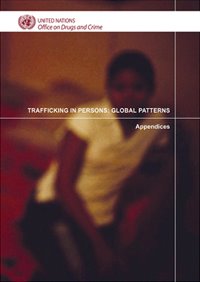
VIENNA, 24 April 2006 - Virtually no country in the world is unaffected by the crime of human trafficking for sexual exploitation or forced labour, a new report by the United Nations Office on Drugs and Crime (UNODC) shows.

The report on "Trafficking In Persons: Global Patterns," published on Monday, identifies 127 countries of origin, 98 transit countries and 137 destination countries. It shows that global efforts to combat trafficking are being hampered by a lack of accurate data, reflecting the unwillingness of some countries to acknowledge that the problem affects them.

"It is extremely difficult to establish how many victims there are world-wide as the level of reporting varies considerably, but the number certainly runs into millions," said UNODC Executive Director Antonio Maria Costa. "It is difficult to name a country that is not affected in some way.".......

Trafficking in Persons - Global Patterns

Report

Appendices

Copyright © 2006 UNODC, All Rights Reserved


Post grad students launch test preparation website for major Caribbean examinations

Tuesday, April 25, 2006

FORT LAUDERDALE, USA: A group of Caribbean post graduate students have launched an online website, that will give Caribbean schoolchildren access to more than 4,000 English, Mathematics, Science, and Social Studies practice questions.

The student training system found at www.caribbeanexams.com features over forty full-length, timed, computer-adaptive tests whose delivery simulates that of the actual exam. It includes resources for parents, practice questions, answers, and explanations (via an online help desk), as well as a comprehensive Language Arts review section.

The website provides resources to enhance the preparation process for the following examinations:

° Grade Level Assessment Test (GLAT),
° Common Entrance Examination (CEE),
° Grade Six Achievement Test (GSAT),
° Continuous Assessment Programme (CAP), and
° Grade Nine Achievement Test (GNAT).

After a student takes a practice test, they receive their scores instantly. They are able to review each of the test questions to see which items they missed. The system allows students to return and rework the questions they got wrong on the practice test with a view to developing successful test-taking strategies.

The site also features a real-time online grade book that identifies the student’s weaknesses and strengths, allowing them to focus on the areas that most need improvement.

The website’s exclusive examination techniques will show students super speed methods to get through the questions they know with ease, saving then time so they can concentrate on the hardest questions without rushing. Students will also:

° Learn to avoid procrastination.
° Learn to tell the difference between right answers and clever-sounding traps.
° Learn the secret to using contextual clues to make important distinctions between right and wrong answer choices.

"We are very excited to provide Caribbean students with this opportunity to improve their chances on their examinations," said Shalette Ashman-East, who spearheaded the project.

Technological infrastructure for the system is provided by the Institute for Mathematics and Computer Science, an educational research institute based in South Florida.

"We've undergone many months of pilot testing, and we're delighted with the response now that it is widely available," Ashman-East said.


Copyright © 2003-2006 Caribbean Net News All Rights Reserved


Conférence annuelle des médias des Caraïbes à l’occasion de la Journée mondiale de la liberté de la presse

27-04-2006 (Kingston)


Pour célébrer la Journée mondiale de la liberté de la presse, les médias des Caraïbes organisent leur conférence annuelle les 2 et 3 mai 2006 à Bridgetown (Barbade) sur le thème « Liberté de la presse et développement humain dans les Caraïbes ».

Cette conférence régionale est organisée conjointement par le Bureau de l’UNESCO à Kingston, l’Union de radiodiffusion des Caraïbes (CBU), l’Agence de presse des Caraïbes (CANA) et l’Unité de recherche sur les médias de l’Ecole de commerce de Mona.

Elle sera consacrée au thème principal de la Journée mondiale de la liberté de la presse 2006, « Médias, développement et éradication de la pauvreté », à travers un débat sur la liberté de la presse et le développement humain dans les Caraïbes. Au cours de ces manifestations, la Conférence des médias des Caraïbes (CCM) sera recentrée et relancée. Il s’agit du seul forum régional qui rassemble chaque année les professionnels de la presse écrite et de la radiotélévision. L’annonce de la coopération entre la CBU et la CANA pour accueillir le secrétariat de la CCM sera faite à cette occasion. Une cinquantaine de patrons des médias, de responsables et de journalistes de vingt pays ou îles des Caraïbes participeront à la conférence.

Etant donné le thème choisi cette année, des représentants des organisations de défense des droits de l’homme et du secteur du développement seront également présents.

Une présentation publique sur la corrélation entre la liberté de la presse et le développement économique dans la société contemporaine aux Caraïbes aura lieu pendant la cérémonie d’ouverture. D’autres présentations ou mini-ateliers seront organisés pendant ces deux jours :

° Le rôle des médias dans l’intégration des Caraïbes (présentateur de TBA);

° Autonomiser les citoyens via l’accès aux moyens de communication et d’information (présentateur de TBA);

° Les médias des Caraïbes et les Objectifs du Millénaire pour le développement (OMD) des Nations Unies.

© Copyright UNESCO, 2005

Wednesday, April 26, 2006 


Health cover headache
Wednesday, April 26, 2006

Sharon Roulstone, Chairman of the Board of Directors of CINICO and Gordon Rowell, CEO of CINICO

In its second year of operation, the biggest challenge for the Cayman Islands National Insurance Company (CINICO) is controlling health care costs, which are rising every year.

The CEO of CINICO, Gordon Rowell explained that health care is something that many countries have to grapple with. For instance in the US, there is high accessibility to health care, but it is very expensive and large segments of the population are uninsured. In the UK, Canada and similar countries with national health care, it is affordable to everyone, but there is limited access.

“The public has grown to expect health insurance to pay for everything,” said Mr Rowell. “The challenge will always be balancing accessibility to health care and the costs. The public wants maximum benefits at minimum costs. But you can’t trim costs without taking something away and people don’t want that.”

Mr Rowell noted that one of the primary reasons for setting up CINICO was to provide access to health insurance to people who would otherwise be denied or have difficulty getting cover.
This includes people over 60 years old, in a low-income bracket, seafarers, indigents and people with health impairments. It also provides insurance to civil servants.

The coverage varies depending on which group that an individual falls into. But civil servants have virtually unlimited benefits including dental and vision while the low income and health impaired have a more basic medical coverage plan.

Since CINICO is a non-profit entity it designed its operations to break-even including paying claims and administration. CINICO premiums are primarily paid by Government with some premiums paid by individuals.

According to Mr Rowell 65 percent of health care costs are due to outpatient care, which in CINICO’s terms, is anything that is non-surgical. This would include doctor visits, pharmacy, x-rays, physiotherapy and dialysis.

However, these costs are escalating, because there are many people who overuse the health care services, as there is little to no direct cost to them at the time of use, as individual patients.
In fact, Caribbean Home Insurance Company became insolvent because of the overwhelming number of claims and got to the point where the Government was forced to self-insure. And since there were no controls or discounts in place, Government paid significantly more in health care costs.

Mr Rowell said the remaining 35 percent of the costs are for overseas medical care, which has traditionally been a big portion of the costs. But these are starting to come under control because it has implemented access to health care networks, which allows people insured with CINICO to get discounts for overseas services.
Mr Rowell estimated that CINICO has saved $3.92 million since July 2005 from overseas discounts.

Mr Rowell said one of the impediments to controlling costs has been the lack of data from its main provider, Health Services Authority (HSA).
This information is critical as CINICO needs to identify huge holes in the health care network where money is being unnecessarily wasted or defrauded. However, Mr Rowell said there has been significant progress as representatives of CINICO and HSA have met several times in recent months to work on the billing issues.

Another initiative CINICO is working on is to get a higher level of reinsurance. Reinsurance allows Government to put a cap on the amount of losses of providing health care such as catastrophic disease afflicting a large number of the population. This would limit the costs the Government would have to bear to a certain level.

Although concrete figures were not available by press time it is estimated there are 11,000 people insured with CINICO, which includes civil servants, their dependents and retired civil servants.

The remaining number is spread out among the various groups.
The population of people over 65 is expected to more than triple to 11,300 by 2025. And it is expected the need for CINICO will increase as private insurers start to decline coverage for people as they reach 60 years-old.

shurna@caymannetnews.com

Copyright © 2003 - 2006 Cayman Net Ltd All Rights Reserved


Tax rules may hamper pension reform

published: Wednesday April 26, 2006
Brian J. Denning, Contributor


Denning

AS DR. Omar Davies, Minister of Finance and Planning, prepares to deliver his 2006/07 Budget tomorrow, it is hoped that the minister will amend certain tax rules which may otherwise have a negative impact on the nation's pension reform programme.

The Government's 2001 White Paper on Pension Reform stated that the reform of Jamaica's pensions regime has two key features:

The enhancement of Jamaica's social security system - National Insurance Scheme - so that more meaningful benefits can be provided to eligible contributors and their beneficiaries; and

The regulation of cccupational pension schemes and approved retirement schemes within an effective legal framework.

A primary objective of this reform programme is to ensure that proper arrangements are made by, and for, persons during their working lives, so that they can receive an adequate pension upon retirement.

This includes the establishment of an appropriate framework for self-employed persons and persons in non-pensionable employment to make sufficient provision for their retirement.
The Pensions (Superannuation Funds and Retirement Schemes) Act, 2004 (which came into force on March 1, 2005) and accompanying regulations provide the legal framework within which this reform shall take place.

To date, however, our taxation laws have not been amended in order to ensure that our tax rules complement and support the objectives of the pension reform.

For More Perspectives on these Issues see The Jamaica Gleaner


T&T Facilitates Energy for Caricom

Government Information Service, Port of Spain, April 25, 2006. Trinidad and Tobago (T&T) has facilitated the Petro Caribe arrangement between Venezuela and other Caricom countries for them to enjoy the benefits of favourable payment terms for petroleum products from Venezuela, according to Prime Minister Patrick Manning.

Mr. Manning said T&T was voluntarily giving up Common External Tariff (CET) protection for the regional refining industry in order to facilitate Petro Caribe. He was speaking at the joint press conference with Jamaican Prime Minister, Portia Simpson –Miller, following bilateral talks between Trinidad and Tobago and Jamaica at Whitehall on Tuesday April 25.
.
The bilateral discussion was the first item on the programme for the official visit of the Jamaican Prime Minister to Trinidad and Tobago. Mrs Simpson –Miller was welcomed by a military parade and gun salute on her arrival at Piarco International Airport on Monday, April 24.

She said Trinidad and Tobago agreed to a long term arrangement to supply gas to Jamaica which agreed to invest in an Aluminium Smelter project proposed for Trinidad. Gas supply options for Jamaica included compressed natural gas and liquefied natural gas (LNG) from the LNG Train 4 or LNG Train X plants. The supply of gas should begin in 2009 under “Most Favoured Nation” payment terms.

Other items on Mrs. Simpson- Miller’s itinerary include a children’s rally at the Jean Pierre Complex / Hasely Crawford Stadium, luncheon at the Trinidad and Tobago Manufacturers’ Association Headquarters and a State Banquet at President’s House.

Mrs. Simpson-Miller departs for Jamaica at 3 pm Wednesday, April 26, following a visit to the National Gas Company and a courtesy call on the Mayor of Port of Spain, Alderman Murchison Brown.

Copyright © 2006 Government of the Republic of Trinidad and Tobago


Wednesday April 26, 2006

UNDP Governance Programme Supports Democratic Dialogue in the St Kitts and Nevis

Learn more about Democratic Dialogue, a cutting-edge programme supported by UNDP, by accessing http://www.democraticdialoguenetwork.org/.

An orientation and information session to invite participation in the Democratic Dialogue Programme in St. Kitts and Nevis will be held on Tuesday, April 25th at 7:30 p.m. in the Conference Room at the University of the West Indies, The Gardens, Basseterre; and Thursday April 27th at 7:30 p.m. at the Nevis Credit Union Building, Charlestown. Please respond by email to natalie.parris@undp.org, paula.mohamed@undp.org or uwiskn@sisterisles.kn if you have any questions or you wish to attend. Telephone contact 1-246-467-6128, 467-6009 in Barbados or 465-2190 in St. Kitts & Nevis.

Over the past 10 years, the Regional Bureau of Latin America and the Caribbean (RBLAC) of the United Nations Development Programme has introduced democratic dialogue processes to support development programming in Latin America and the Caribbean. This cross-institutional programme provides a platform to address complex societal problems and challenges that cannot be addressed  adequately, successfully, sustainably, legitimately or peacefully - by any single institution.

With assistance from UNDP Barbados, this Programme is being introduced to St. Kitts and Nevis. This year, UNDP will support a series of consultative workshops bringing together the nations leaders from the public and private sectors. A wide cross-section of stakeholders in St. Kitts and Nevis, a Caribbean Small Island Developing State, will have the opportunity to:
Ø Discuss critical development issues that result from globalization.
Ø Explore and examine fundamental development issues and their root-causes.
Ø Review issues of conflict and build capacity for dialogue that highlights leverage points for change.

Democratic dialogue is inclusive: people from different sectors, classes, hierarchies, parties, religions, generations, gender and cultures who normally work separately or even in opposition to one another come together to engage in dialogue processes and recommend solutions.

Democratic dialogue opens safe spaces for people to talk, listen to one another, build trust and transform relationships. The democratic dialogue process provides safe spaces for people to talk, listen to one another, build trust and transform relationships. Such conversations allow people to reach consensus and agreements by enabling them to build a shared understanding of problems, visualize their role and what must be done to address critical issues.

Finally, democratic dialogue is connected to action, as the participants emerge from the process with a shared sense of purpose, commitment to a common future, and agreed actionable points to bring the desired future into being.

Learn more about Democratic Dialogue, a cutting-edge programme supported by UNDP, by accessing http://www.democraticdialoguenetwork.org/.

© 2003 Pam Democrat. All rights Reserved


Volume No. 1 Issue No. 80 - Monday April 24, 2006

First Ecopsychology Workshop Conducted in Dominica

Terri Henry

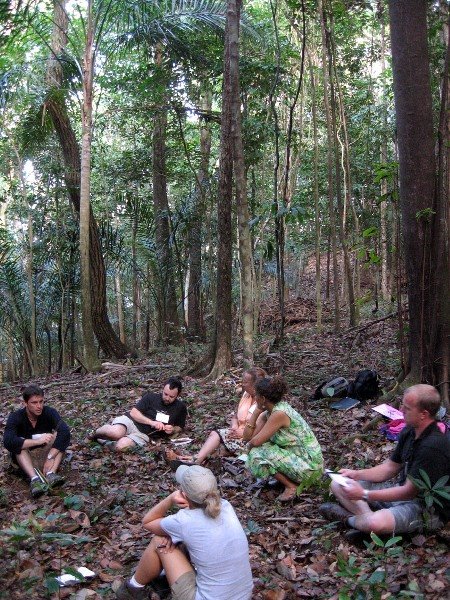
Recently, Dominica’s first Ecopsychology workshop was successfully conducted by local Dominican Terri Henry in Castle Bruce on the forested site of the forthcoming ‘Richmond Bay Ecolodge’ project. The one-of-a-kind workshop was commissioned by EDSA, the largest ecotourism planning and ecolodge design firm in the world and was attended by Hitesh Mehta Project Manager and the worlds leading authority in Ecolodge design and planning. Also participating were other EDSA employees, a local architect, project clients and investors.

This unique workshop was specifically created to help the planners, designers and project investors increase their appreciation of the forest ecosystem and develop a connectedness with the land that in turn would bring a greater sensitivity to their planning.

Throughout the two and half hour workshop participants were guided through a series of activities to enhance their sensory awareness and perception. This enabled them to learn from the ingenuity of natures design and work in harmony with the natural area when designing and implementing the project.

Group sharing and short written assignments bought forth clarity of communication and an open expression of thoughts and feelings which resulted in further unity as a collective working group with a common vision. All participants commented favourably on the outcomes of the workshop and felt that it made a significant contribution to both the project and their personal lives. Ecolodge guru, Hitesh Mehta enthusiastically concluded that “The workshop was professionally run and Terri is an awesome facilitator.

I have been enlightened and will definitely use her wisdom and expertise in our future tourism projects”. Terri Henry has been researching and practicing natural living and healing therapies for the past 16 years and has been studying Ecopsychology since 2004. She is currently seeking a scholarship to further her studies in this area with a Masters Degree. Director of the Environmental Co-ordinating Unit Mr Lloyd Pascal has supported this endeavour stating that ”Dominica stands to benefit tremendously by having Ms. Henry serve in this field.”

Ecopsychology is a field that is developing in recognition that human health, identity and sanity are intimately linked to the health of the earth and must include sustainable and mutually enhancing relationships between humans and the non-human world. Ecopsychology places human psychology in an ecological context and is aimed at healing the divisions between mind and nature, humans and earth.

The central concern of Ecopsychology is the physical, psychological and spiritual health of both human and nonhuman species and an understanding of the psychological processes that either bond us to the natural world or alienate us from it. Whilst Ecopsychology is relatively new as a formalised discipline many of its theories and practices are rooted within ancient and indigenous wisdom sources such as the aboriginal populations of both Australia and the Americas.

At this critical juncture in Dominica’s development Ms Henry feels it is imperative that we embrace the techniques of applied Ecopsychology to foster an ‘ecological consciousness’ which would inform our choices from everyday actions to policy decisions.

She states that “even as Dominica is becoming increasingly well-known and marketed as the ‘Nature Island of the Caribbean’ and has an economy largely based on the abundance of natural resources, especially agriculture and ecotourism, environmental degradation continues to be a problem that both affects and is caused by all sectors of society.

The solution to this pervading problem is found in the perspective of deep-ecology. When we are able to fully appreciate nature, not just as a profit-generating or survival resource but as intrinsically valuable in and of itself the desire to preserve and regenerate our environment is more than just self-preservation but a demonstration of the highest self–respect as the self expands to encompass all life.”

She also adds that “This transformation demands nothing less than a complete paradigm shift which shatters the illusion of human’s separation from nature and instils us with a complete awe and reverence for life.” The practices of Applied Ecopsychology are relevant for all sectors of society. Indeed all workshop participants agreed that significant positive change would occur if a large segment of the population became involved in the ‘Reconnect to Nature’ process.

For further information or to make a booking for the “Reconnecting to Nature” workshop please contact Terri Henry on 235 6256, email onelove@onelovelivity.com or visit the website www.onelovelivity.com

© Copyright 2002 TheDominican.Net


Wednesday,April 26, 2006 - Philipsburg, Sint Maarten, N.A.

Minimum wage increase without flexibilisation of labour laws

PHILIPSBURG--The St. Maarten Executive Council hopes to persuade the Central Government to approve an increase in the minimum wage in St. Maarten to NAf. 7.79 without making the dismissal law more flexible.

Labour Affairs Commissioner Louie Laveist plans to discuss the matter with Minister of Economic and Labour Affairs Burney Elhage in Bonaire today and while he doesn’t expect the minister to say yes to the increase, he hopes to have “fruitful discussions” and present the St. Maarten position to the Central Government.

The Executive Council’s decision was taken because talks have broken down between social partners on the flexibilisation of the dismissal laws as agreed on in the Memorandum of Understanding. “Despite several meetings and attempts to persuade social partners, we were unable to come to a consensus. The discussions failed,” said Laveist.

A Memorandum of Understanding (MOU) was signed on Friday, February 17, when unions, government and employers organisations agreed to work out mutually acceptable terms and conditions for the implementation of the “flexibilisation” of the labour laws and for the eradication of abuse of short-term (six-month) labour contracts. A workgroup had to decide to what extent the liberalisation of the labour market would take place in St. Maarten.

But Laveist’s proposal was ratified by the Executive Council yesterday in which it is advised not to introduce the labour laws flexibilisation and to proceed with the minimum wage increase to NAf. 7.79 per hour according to present labour laws. “Consensus by all partners is good, but not mandatory. Government has demonstrated good faith but the negotiations have failed,” he said.

A letter will also be sent to all stakeholders involved in the discussions informing them that government understands there is no longer an agreement on the MOU and consequently a reduction of the surtax will be not introduced. Furthermore, the letter states that in addition the Executive Council will also not implement the flexibilisation of the dismissal law.

The Executive Council strongly recommends that the private sector present a proposal to government via the labour summit joint committee to prevent possible exploitation of a flexibilised dismissal law. “If they present a viable solution that social partners can live with, government can reconsider its position and finalise the MOU,” Louie said.

Once again Laveist called upon the business community of St. Maarten to increase employees’ pay. “I make a plea not to contribute to any further to increase of poverty, crime and social ills, no further contribution to substandard living,” he said, stating that after 13 years it was obvious that a minimum wage worker was entitled to a raise.

Copyright ©2006 The Daily Herald St. Maarten


Brazil to provide AIDS drugs for eastern Caribbean

Wednesday, April 26th 2006

The Organisation of Eastern Caribbean States (OECS) will benefit from a supply of anti-retroviral drugs provided by Brazil, over the next five years, a Caricom Secretariat press release said.

Public Relations Officer at the Caricom Secretariat, Calvin Brown, told Stabroek News yesterday that the prices for the drugs were still to be set. But he said they would be lower than the current market prices.

Brown said the anti-retrovirals were being provided under a special arrangement and being funded by the Brazil government.

In Guyana, the New Guyana Pharmaceutical Corporation supplies HIV medication for the local health system. It had been hoping to be able to export HIV drugs to Caricom countries.
According to the press release, Prime Minister Denzil Douglas, Caricom lead Prime Minister with responsibility for Human Resources, Health and HIV/AIDS will sign a Letter of Intent with Brazil's Third Secretary of the Foreign Ministry, Gabriela Resendes tomorrow for the supply of the anti-retroviral drugs.

The signing of the Letter of Intent follows a high-level PANCAP mission to Brazil in April 2005, which was led by Prime Minister Douglas. The press release said that among the issues earmarked for discussion at the upcoming meeting of the Caricom Council for Human and Social Development (COHSOD) tomorrow and Friday in St Kitts and Nevis, are domestic regulations governing the free movement of health professionals in the region and the migration of nurses. The state of mental health in the region, the community's progress in reducing the demand for drugs and the setting up of affordable drop-in centres for drug addicts and the homeless are also expected to engage the meeting.

Regional health and social security officials are also gearing to focus on a plan of action aimed at integrating the region's approach to preventing and controlling chronic diseases. This is in addition to examining the economic impact of diseases such as diabetes and hypertension in the Caribbean and making arrangements for a regional Health Insurance scheme.

The release said COHSOD would receive an update on the status of implementation and developments in the regional strategic response to HIV/AIDS.

The council will also receive several reports including one from the meeting of Chief Medical Officers yesterday, a status report on Health and Cricket World Cup (CWC) 2007, and proposals for establishing the Caribbean Health Initiative to improve health care delivery in the region.
Newly appointed Minister of Health and Social Security of the Bahamas, Senator Bernard Nottage will chair the meeting.

Outgoing Chair of COHSOD, St Kitts and Nevis Minister of Health Rupert Herbert, and Director of the Pan American Health Organisation, Dr Mirta Roses are to deliver remarks at the meeting.

© Stabroek News


26th April
Caribbean Bird Flu Watch
By Godfrey Eneas
Urge CaribVET to prepare and circulate surveillance protocols by May 31, 2006.

Support the conduct of the sub-regional simulation exercise in June 2006, and at least one national simulation exercise in each country, taking into consideration the effectiveness of the entire cycle of sample collection, transport (e.g. airline carriers), diagnostic testing and reporting by end 2006.

Develop common performance indicators to evaluate and strengthen active and passive surveillance systems on disease status (sample size, communication network, database appropriateness and analysis, sentinel sites).

Provide assistance to countries on matters related to procurement of field kits, sample collection and protective gears.

Provide assistance to strengthen legislation and institutional infrastructure.

More of this article: The Bahama Journal

Tuesday, April 25, 2006 


Developing a supplier’s Code of Conduct: Hewlett-Packard

Hewlett-Packard, headquartered in Palo Alto, California, is a technology solutions provider to consumers, businesses, and institutions. It operates in 178 countries and employs approximately 160,000 people across the globe.

This case study describes how a technology company developed a Human Rights and Labor Policy within their Global Citizenship strategy, and is engaged in the complex and unclearly defined issues of human rights within their business. The case also describes ongoing development and challenges, and examines how the company has been implementing the United Nations Global Compact, specifically the principles that deal with human rights.

The company contractually obliges its top 40 suppliers to commit to HP's supply chain code of conduct. This includes 100 sites and accounts for 80% of HP’s spent dollars. HP is in the process of increasing the number of suppliers it requires making this commitment and strengthening the means by which it ensures compliance with the obligation.

Eventually, this code of conduct will be explicit in all new supplier contracts, so compliance will be a necessity to do business.

In developing its supply chain code of conduct, HP did its own extensive benchmarking and research, and worked with Business for Social Responsibility, a think tank and consultancy around CSR based in San Francisco, California. The Director of Supply Chain Services stated that HP scoured the landscape of supplier codes of conduct, looked at the various international standards, even looked at the UN Global Compact- but none were satisfactory or entirely relevant to HP. So it developed its own code.

The "HP Supplier Code of Conduct" professes to focus on compliance with local laws in the areas of environment, worker health and safety, and labor and employment practices, and in intended to work in conjunction with management systems to measure, improve and communicate progress in these areas. The treatment of labor issues is fairly comprehensive and, despite the use of headings that refer to compliance with local laws, contains standards, for example, in relation to non-discrimination and prison labor, which may or may not be covered by local legislation.

The focus on these issues is positive and its effectiveness will be greatly enhanced by the planned improvements in compliance monitoring. To meet HP's human rights obligations, the supplier code of conduct should be expanded to cover human rights matters beyond labor issues, matters such as:

° Performance and monitoring of security guards by suppliers;
° The impact on the local community of supplier operations;
° The penalization of suppliers for corrupt or human rights-abusive regimes.

Currently, HP monitors its supply chain using a self-assessment questionnaire completed by HP's top 40 suppliers. HP then works collaboratively with suppliers to achieve the required standards in any area that is identified as falling below HP requirements. HP's Director of Supply Chain Services reports that HP's suppliers take this process very seriously given the importance to them of their relationship and business with HP. HP is moving to expand and strengthen their supply chain monitoring.

They are extending self-assessment beyond the top 40 suppliers to the suppliers HP regards as "high risk".

At the same time it is strengthening the monitoring of the top 40 suppliers by utilizing HP's own procurement auditing capacity to conduct site assessments of supplier performance, moving beyond the self-assessment model. In time, this model will also be extended to the high-risk suppliers. Finally, HP is currently researching appropriate entities to conduct third-party assessment of supplier performance. Selective third party assessment will be the final stage in the evolution of supply chain monitoring at HP.

This case study is part of Raising the Bar: Creating Value with the United Nations Global Compact. Designed to help companies understand the Global Compact framework and its principles, Raising the Bar is the only publication that provides a catalog of available tools and implementation guidelines that companies can use to implement the Compact’s principles.

Further information

° Hewlett-Packard
° United Nations Global Compact

© 1997-2006 World Business Council for Sustainable Development (WBCSD). All rights reserved.


Browne sits in as opposition leader at IMF meeting

Tuesday April 25 2006

by Marabel Jacobs

City West MP Gaston Browne, stand-in for the Leader of the Opposition Steadroy “Cutie” Benjamin, who had a previous engagement, met with officials from the International Monetary Fund (IMF) to discuss the country’s economy.

During the meeting, the MP reportedly characterised the UPP government as a most exclusive, incompetent and value destructive government.

He made his comments in the context of the added EC$75 million in revenue raised from taxation and organic growth which he said the UPP destroyed in sustaining a gigantic Cabinet, extensive travel costs including overseas travel and the purchase of a plethora of sport utility vehicles for public officials. He also blasted the government for its unnecessary nepotistic employment policies.

Browne stated he expressed to the IMF officials that the former ALP government delivered superior service to the populace with less resources and expressed serious concerns about the UPP’s ceremonial rhetoric and its inability to deliver good value for money to the people.

Concerns were also expressed about the reduction in the rate of economic growth and development, including the deterioration in the country’s physical infrastructure, excessively high utility prices, the lack of new investments, the country’s worsening fiscal position and the reported victimising policies of the UPP government.

Browne recommended several value creating initiatives in the offshore financial services sector, informatics, fisheries and the use of intellectual capital to facilitate national development.

© SUN Printing & Publishing LTD 2003-2004. All Rights Reserved.


Tuesday, April 25, 2006

2007 income projection increases to $9.684 billion

SAN JUAN (EFE) – Treasury Secretary Juan Carlos Méndez said Tuesday that the net income projection to the General Fund for Fiscal Year 2007 totals $9.684 billion, if a tax reform with a 7% sales tax is approved.

Méndez explained during a hearing of the House Budget Committee that the collections estimate for Fiscal Year 2007 represents an increase of $789 million, compared to Fiscal Year 2006.
However, he said that "if the tax reform is not approved, the estimate of net income to the General Fund would be $9.188 billion".

"The income projection to the General Fund for Fiscal Year 2007 includes the income that would be generated by the approval of a tax reform, if approved, to go into effect in Fiscal Year 2007," the official said.

He also added that "it is estimated that the sales and services tax, using a 7% rate. . . would generate some $1.383 billion for the General Fund, after deducting the 1.5% for the municipalities and the 1% for the extra constitutional debt".

Copyright © 2000-2006 Casiano Communications Inc. All rights reserved.


iKNOW Politics INTERNATIONAL KNOWLEDGE NETWORK OF WOMEN IN POLITICS

Bringing women in politics together globally

On April 10, 2006, the United Nations Development Programme (UNDP), United Nations Development Fund for Women (UNIFEM), the National Democratic Institute (NDI) and the International Institute for Democracy and Electoral Assistance (IDEA) announced a partnership to create the International Knowledge Network of Women in Politics: “iKNOW Politics.”

iKNOW Politics aims to increase women’s participation and effectiveness in political life. For women engaged in politics around the world, the Network will offer a “one-stop shop,” providing access to critical resources and expertise, stimulating dialogue and disseminating knowledge on women’s political participation.

“Our goal is to offer access to an impressive database of combined resources and expertise from four organizations and to cultivate an inspiring international network of women,” stated Ms. Randi Davis, former Senior Parliamentary Development Advisor, Democratic Governance Group (DDG) of the UNDP.

Whether you are an elected official, candidate, researcher, student or practitioner, iKNOW Politics will offer a structured way of making contacts, collaborating and learning about political developments and events. Via web-based technology, it will bring together women like you from all over the world.

Look forward to the official launch of iKNOW Politics in September 2006.

© National Democratic Institute for International Affairs—NDI. All rights reserved.


More families benefit from Dominica’s squatter regularisation programme

Friday, April 21, 2006

ROSEAU, Dominica: Twenty-eight families in Stock Farm, Dominica now have the opportunity to own their land as a result of a move by the government to regularise their situation under the Squatter Regularisation Programme.

To date, 120 families have benefited from a decision by the government to regularise the situation of squatters across Dominica. This commitment to regularise the living conditions of squatters was articulated by Prime Minister, Roosevelt Skerrit in his National Day Address on November 3, 2005. In its manifesto for the 2005 General Election, the Dominica Labour Party promised to regularise the living conditions of squatters, “including earmarking new state owned locations for families to relocate at peppercorn rental rates”.

Under the Programme, squatters are being offered land at $1 per square foot, with the fees associated with land registration being met by the Government of Dominica. There are twenty-five squatter areas in Dominica and the Government is regularising the situation of squatters on a phased basis.

Some of the squatter areas include Gutter East, Fond Cole, Ravine Bernard and Tarish Pit. In addition to the letters of allocation that have been sent out to squatters in Stock Farm, the Ministry of Housing, Lands, Telecommunications, Energy and Ports has also sent out allocation letters to some ninety-two families in Bernard Ravine, Yam Piece and Chemin Neuf informing them of their land allocations and the terms and conditions under which the lands were being offered to them.

Copyright © 2003-2006 Caribbean Net News All Rights Reserved


April 25, 2006

Brazil and Granada endorse technical cooperation agreements
15:33

Nelson Motta
Reporter - Agência Brasil

Saint George's (Granada) - The governments of Brazil and Granada signed two cooperation agreements today (24) at a meeting between the Brazilian minister of Foreign Relations, Celso Amorim, and the prime-minister and chancellor of Granada, Keith Mitchell and Elvin Nimrod.

The encounter took place at the Botanical Gardens, seat of the local government.The agreements have to do with technical cooperation and suspending the need for visas on diplomatic and official passports. The head of the Brazilian foreign ministry's North and Central America/Caribbean Department, ambassador Gonçalo Mourão, explained that the basic technical cooperation agreement was a Brazilian proposal."It is precisely to enable us to expand our cooperation programs with that country," he commented.

As for the agreement to suspend the need for visas on diplomatic and official passports, he observed that this will facilitate official contacts between the Caribbeans and Brazil, as well as those between Brazilian government authorities and representatives of that region.

According to the Brazilian foreign ministry, some areas were pinpointed in which Brazil and Granada share an interest in establishing technical agreements. They include civil defense (warning and alarm systems, community orientation, and the handling of corpses and solid wastes), manioc cultivation, sheep and goat raising, hospital infrastructure, nursing training, and food security.

Translation: David Silberstein

© Agencia Brasil


24 April 2006

Reports Find Strong Economic Growth in Latin America, Caribbean

Current climate, past progress offer chance to address enduring issues, IMF says

Washington -- Latin American and Caribbean economies are performing strongly and the region’s governments should continue to implement sound macroeconomic policies and reforms to sustain and strengthen economic growth, according to Anoop Singh, the director of the Western Hemisphere Department at the International Monetary Fund (IMF).

In an April 21 press conference, Singh commented on the IMF’s Spring 2006 update of the economic situation in Latin America and the Caribbean as well as the outlook for the region. The IMF official said the region’s economies have exceeded earlier growth projections, expanding the “robust rate” of 4.25 percent growth in 2005 -- a quarter percentage point more than the IMF projected. Singh said that poverty and unemployment indicators also have shown improvements in many countries in the region.

The IMF official indicated that a favorable global economic climate, including strong prices for exports of commodities and raw materials, played a key role in the region’s robust economic performance. He added that improved macroeconomic policies have also benefited the region. Monetary policymakers in particular were successful in controlling inflation, reflecting a strong regional commitment to price stability, Singh said.

Given the favorable global economic situation and a generally strong policy environment in the region, the IMF official said that the near-term prospects for Latin America and the Caribbean are good. Singh also said the current economic climate represents an important opportunity for the region to address persistent problems.

“The recent strong performance of the regional and global economy, and the continuing generally favorable outlook, provide a rare opportunity for policymakers in the region to move decisively further in addressing vulnerabilities from low growth, poverty, and inequality,” Singh said. “This would pave the way for raising productivity and the growth potential in the region over the medium term, and better meeting the increasingly urgent social aspirations of the population.”

As Latin America and the Caribbean look to build on accomplishments in monetary and fiscal policy and seize the opportunity before them, Singh said, the region must continue to strengthen macroeconomic institutions and ensure that spending increases are both targeted to social and physical infrastructure development and consistent with efforts to reduce debt levels.

Looking ahead to building medium-term growth potential, Singh said that more efficient investment in the region will be needed and that regional efforts to bolster productivity must continue.

As part of this process, the IMF official said, priorities should include improvements to the region’s business climate and efforts by financial institutions to expand access to credit. Reforms that strengthen regulatory frameworks and facilitate flexibility and competition are an important part of this agenda, he said, citing labor reform that provides flexibility as measure that could contribute to continued employment growth.

Even though the strengthening of policies throughout the region has greatly improved its resilience against international shocks compared with the situation at the start of the decade, Singh called on Latin American and Caribbean government’s to work to build on this progress.
“To sustain and further strengthen growth, and to insure economies against global risks, the priority is for governments to persevere with stable macroeconomic policies and press ahead with structural reforms that remove barriers to investment and growth,” he said.

A transcript of Singh’s press conference is available on the IMF Web site, as is full text of the report, Western Hemisphere Regional Economic Outlook 2006 Midyear Update.

For information on U.S. policy in the region, see Global Development and Foreign Aid.

(Distributed by the Bureau of International Information Programs, U.S. Department of State. Web site: http://usinfo.state.gov)


25th April
Real Urban Renewal Needed
At its best, urban renewal is all about seeing to it that Bahamians in need have ready and steady access to government and other socially available services.


Urban renewal is also concerned with trying to buff up the image of the police in the community. So instead of being seen as ‘the enemy’ or the ‘man, police officers are supposed to be seen as friends of the so-called community.

In this regard, it is quite instructive to see what Government propagandists say about the urban renewal project. The key point they make is to the effect that "the Project is bringing some unexpected rewards - not for the persons benefiting from the many programmes established over the years, but for one of the key stakeholders of Urban Renewal, the Ministry of Social Services and Community Development."

As Kim Sawyer, an Assistant Director with the Ministry of Social Services and Community Development and head of the ministry's Urban Renewal Unit notes, "I think that we, as a ministry, have benefited tremendously from the programme as well.'

She explains, 'By forming a unit of the Department of Social Services responsible for Urban Renewal, we have been able to bring relief more quickly to some of the needy persons in the community, and it has further allowed us to form comprehensive alliances within and outside of our ministry that have benefited not only those departments, but individuals seeking our assistance".

Quite evidently, this is all for the good.

No one in their right mind could possibly disagree with people who say that Bahamians should work together for the achievement of the common good.

As noted, "Those alliances include partnerships with government entities such as the Royal Bahamas Police Force, Department of Labour, Ministry of Housing and National Insurance and the Department of Environmental Health Services. Alliances have also been formed with church, business, community and social partners."

And as Sawyer notes, 'We are all here for the betterment of the community and if you wait for persons to come to you, by the time they reach to you the problems are so insurmountable that it takes years and years to deal with them and the clients become frustrated,' says Miss Sawyer. 'By being more proactive and interactive within the community, we have been able to get to some of the problems facing persons in the communities before they reach an advanced stage."
There can –yet again- be few objections to such good intentions.

While all of this is fine as far as it goes, there are other considerations that should be taken into account concerning the efficacy and long-term sustainability of such an initiative.

We are convinced that the time has come for the government and its social partners to get up and get doing on formulating plans, procedures and projects that would catalyze business ventures, empower residents and otherwise see to it that the land these people own is able to grow in value.

Of necessity, this also implies that the state authority would see to it that these areas are all given full access to modern amenities such as electricity, water, schools, health care centers and zoning adequate to each community’s specific needs.

Put otherwise, what we are suggesting is that deliberate effort must be put into seeing to it that these so-called inner city areas become more than social cesspools where plunder, piracy and sub-par living is the order of the day.

Our surmise is that there is a symbiotic relationship in the ways of some Bahamians live and in the miserable conditions others are obliged to undergo. This is borne out in any number of harrowing stories concerning what some unscrupulous landlords are able to get away with as regards some of the dilapidated properties they own. In the mean time, these landlords live in luxury elsewhere on this same island.

This is the kind of situation where opulence for a few is predicated on misery for many. This is what has to be done away with in today’s Bahamas.

No amount of prattle about the need for renewal will ever be sufficient if Bahamians do no reach that point in their understanding that they come to believe that they should make a clean break with piracy, plunder and rip-off as standard operating procedures.

When Bahamians reach that point in their understanding of what it really takes to be a nation-building people, they will simultaneously understand and appreciate the wonder-working power in community solidarity and the need for each to be his neighbor’s brother, sister or friend.

The Bahama Journal - Bahamas News Online Edition
Copyright Jones Communications Ltd. ©2005 - Nassau, Bahamas.


Press Release

April 21, 2006

IDB to host meeting on private investment opportunities in the Caribbean health and wellness sector on May 9

Senior government officials from The Bahamas, Barbados, Guyana, Jamaica, and Trinidad and Tobago, international and Caribbean investors, and representatives of Caribbean regional organizations will meet on May 9, 2006 at IDB headquarters in Washington, D.C., to explore business opportunities in the health and wellness sector in the region.

Four key issues will be addressed at the meeting: the nature and scope of the health and wellness sector in the Caribbean; market opportunities; barriers to entry; and potential IDB support for sector development. The meeting will give the IDB and the Caribbean governments an opportunity to learn about the needs of potential private sector investors and entrepreneurs and to discuss how the private sector can work with the IDB and the governments to take advantage of investment opportunities.

Sessions will include a report on the results of a market research study on the health and wellness sector in the English-speaking Caribbean by Dr. Leroy Miller of International Business Strategies, the consulting firm that conducted the study; panel presentations by international and Caribbean investors and the IDB; and working groups on healthcare education, telehealth, eldercare, assisted living, skilled nursing facilities, wellness and alternative health. Among the participants will be investors and partners, representatives of Caribbean governments, including investment agencies, and IDB officials.

The IDB is a regional development bank that finances socioeconomic development projects in Latin America and the Caribbean. It lends primarily to central government agencies with sovereign guarantees. Up to 10 percent of IDB lending may be provided for private sector projects.

The scope of such private sector lending was recently expanded from infrastructure projects to all other sectors, such as health and education. Under the new framework, the Bank may also finance public-private partnerships and operations that do not have sovereign guarantees.

° More Information

Please contact Sandra Henry at (202)
623-2684 or
sandrah@iadb.org.

° Links
Agenda


° Press Contact

Alexandra Russell-Bitting alexandrarb@iadb.org (202) 623-3454

© 2006 Inter-American Development Bank. All rights reserved.

Monday, April 24, 2006 


Good governance remains a challenge, says Governor-General
published: Monday April 24, 2006

Noel Thompson, Gleaner Writer

WESTERN BUREAU:

GOVERNOR-GENERAL Professor Kenneth Hall says that despite Jamaica being given passing grades in upholding human rights principles as well as political and civil liberties, it is still widely held that good governance is on the decline in the country.

"Jamaica has established a comprehensive legislative and institutional framework, which relates to good governance. However, several deficiencies might be identified, including the serious gaps in the legal and legislative framework," said Professor Hall. "The underresourcing of critical institutions relating to governance and inadequate law enforcement is also a factor."

He was addressing members of the Cornwall Bar Association at its 30th anniversary awards dinner at Fisherman's Inn, Falmouth, Trelawny, on Saturday night.

By attributing acts of anarchy and lawlessness to the lack of faith in the justice system, he said that one can be led to conclude that the legislative and judicial framework in existence has fallen short of expectations.

"One of the challenges faced by our nation today is the emergence, articulation and insistence on the practice of good governance," he contended.

Professor Hall lauded the Cornwall Bar Association and emphasised that it had earned an enviable reputation among judges and the legal profession in general for contributing to the administration of justice in Jamaica.

"Let me commend the association for making its members available to provide legal aid services and assist in the various Circuit Courts in the county of Cornwall in the disposition of cases that go before them," he said.

Former Government ministers Carl Miller and Benjamin Clare, were recognised at the function for their contribution to the legal fraternity.


© Copyright 1997-2006 Gleaner Company Ltd

Sunday, April 23, 2006 


April, 23 - 5:29 AM

DR and UN sign agreements

SANTO DOMINGO. - The Dominican Government signed last Friday institutional agreements with the United Nations (UN), including democratic governability, fair growth and development, the economy’s modernization and sustainable environmental management programs.

The global amount, as established by the United Nations, ascends to US$ 100 million dollars and it will be applied within next the five years.

Technical secretary, engineer Temístocles Montás, signed representing the Dominican Republic and Mr. Niky Fabiancic, United Nations resident coordinator in the country, representing the world-wide organism.

The collaboration and assistance the UN provides to undeveloped countries, including the Dominican Republic was acknowledged by Montas.

The subscribed institutional agreement includes social and institutional programs to be executed; UN funds for Education and Childhood (UNICEF, Pan-American Health Office (OPS), United Nations for Agriculture (FAO), International Worker’s Organization (OIT), the OIM, the UNFPA, ONUSIDA and the PMA.

Mr. Tad Palac, subscribed jointly with, Temístocles Montás, five programs oriented to childhood protection and VIH prevention.

These agreements will be helpful in fortifying the social programs supported by President Fernandez’ Government, said Montas while he thanked the UN for the assistance it has provided to DR over the years.

Dominican Today - Portal Alta Tecnologia


Caribbean Red Cross to develop HIV/AIDS action plan

Monday, April 24, 2006

by Kishawn Thomas

Caribbean Net News Grenada Correspondent

Email: kishawn@caribbeannetnews.com


ST GEORGE’S, Grenada: The Caribbean Red Cross HIV/AIDS Network (CARAN) and the International Federation of Red Cross and Red Crescent Societies (International Federation) is currently meeting in Panama City, Panama to begin development of a four year strategic plan for HIV/AIDS in the Caribbean. The theme of the meeting is “Strategic Positioning for 2010.”

The latest findings on HIV/AIDS as published in the "AIDS Epidemic Update 2005", the annual report by the Joint United Nations Programme on HIV/AIDS (UNAIDS), show that whilst there is new evidence that adult HIV infection rates have decreased in certain countries the overall trends in HIV transmission were still increasing. One of their key conclusions is that far greater HIV prevention efforts are needed to slow the epidemic.This will be the first time in its six year history that the Network’s meeting will be held outside of the region. Previous meetings have been held in Jamaica (2004), Trinidad (2003) and the Dominican Republic (2002). CARAN was established in 2000.

In addition to the development of a strategic plan, CARAN will also discuss new partnerships, current and upcoming HIV/AIDS campaigns, regional successes and challenges and the progress of its youth-oriented “Together We Can” (TWC) peer-to-peer programme. A new CARAN executive will also be elected at the end of the meeting. The majority of Red Cross National Societies and Overseas Branches (NS/OSB) in the Caribbean will be represented at the meeting.

Since the last CARAN Meeting in Jamaica, CARAN’s membership has scaled-up considerably in HIV/AIDS programming. In the past they focused almost entirely on the vitally important areas of youth peer education and anti-stigma and anti-discrimination. However they are now broadening their approach to include highly successful social marketing and social mobilization campaigns that reach many more people with key HIV/AIDS messages. Mr John Flemming, Regional Health Delegate with the International Federation said this meeting is very important since it defines Caribbean Red Cross activities in HIV/AIDS for the next four years.

He said the NS/OSB in the Caribbean have greatly increased their capacity to deliver high quality HIV/AIDS interventions over the past six years and they look forward to putting a framework in place that will increase their capacity until 2010 and beyond.

The Red Cross movement is ideally positioned to play a key role in this focus on scaling up prevention activities in the Caribbean and throughout the world through with its global membership of 183 National Societies.The meeting will end on Wednesday April 26.

Copyright © 2003-2006 Caribbean Net News All Rights Reserved

Saturday, April 22, 2006 


Water shortage - Moonilal says
RIA TAITT Saturday, April 22 2006

Give dirty clothes to Manning

FACING complaints by his constituents over an acute water shortage, a fed-up Oropouche MP Roodal Moonilal yesterday said he is seriously considering advising his thirsty constituents to gather their dirty linen and take it to the “relevant Minister’s boss” (ie the Prime Minister) and dump it on his front steps.

Speaking in the House of Representatives on the National Lotteries Amendment Bill, Moonilal slammed Government for the water problems in the country. He also took the courageous step of calling for legislation to deal with discrimination based on sexual orientation. Pointing to the fact that the UK had such laws, he said this was also needed in this country because equality was not for everyone.

He said this country was still at the first base — that is combating ethnicity and gender based discrimination. On the water situation, Moonilal proposed that some of the profits of NLCB be issued to citizens for a water subsidy, “so that affected householders who are without water for weeks can get a subsidy of $400 a month to buy water.”

He said there were poor people who had to come up with $100 to $200 a week to buy water. Stating that Public Utilities Minister Pennelope Beckles had developed the habit of saying that everything was in the pipeline, Moonilal said everything was in the pipeline, except water. “And while we wait for the plans to materialise, helpless and hapless citizens must buy water from contractors who are extorting,” he lamented.

Making the connection to the Bill at hand, Moonilal said the wealth of the nation was going towards legal fees of the NLCB. “When I look at the figures (expended on legal fees) I want to ask the NLCB if it was representing every condemned killer on Death Row,” Moonilal said.

He said between 2003 and 2006, 78 percent to 100 percent of the legal fees paid out by the NLCB went to the firm, Alexander, Jeremie and Company. “This is a conflict of interest if ever there was one — that a sitting Attorney General whose office may be called upon to approve the spending of a state authority to obtain legal advice, the AG receives 100 percent of the legal fees.” he said. “Ask Ramesh about Daltons,” Planning Minister Camille Robinson-Regis countered. Ken Valley rose on a point of order to state that Moonilal was imputing improper motives to the AG.

“The Attorney General is no longer with the firm Alexander, Jeremie and Company,” Valley rebuffed. Moonilal said NLCB didn’t even give work to Boynes and Company or the firm, “Morean and Company.”


Level of debt frightening
Web Posted - Sat Apr 22 2006
Opposition Member of Parliament Dr. David Estwick has labelled this country's public sector debt as "frightening".

Speaking during yesterday's lunchtime lecture in the Errol Barrow Memorial Gallery at the Democratic Labour Party's headquarters, he said that the entire public sector debt of the country was about 100 per cent of the GDP, in fact terming the island as "bankrupt".

"I want to make the charge to this administration that they are making a fundamental economic mistake to attempt to solve the problems by monetary policy adjustments in Barbados," he said.
He pointed to the cash-flow problems of many government departments as evidence of the creation of a structural deficit in the country.
"Every single department in operation in Barbados is in debt," Estwick said, while pointing to the National Housing Corporation, the Barbados Water Authority, the Caribbean Broadcast-ing Corporation and the Queen Elizabeth Hospital.

He later added that the Prime Minister had increased interest rates which made it more difficult for some to borrow, "But at the same time that he is doing this in an attempt to make sure that you do not spend as much on consumer items and as a result therefore cause a flight of foreign exchange, the Prime Minister on the same hand is reducing taxation so as to give corporations and individuals more money in their hands to spend ... It does not make sense. It cannot function like that."

Saying that Barbados faced a problem with foreign exchange generation, he stressed that something had to be done to address the situation.
Later in the event, Estwick touched on the problems being experienced in the Accident and Emergency department and said that most of these had to do with the lack of numbers in staff.

"Since 1985 in the Haynes Commission report, they [staff] indicated the hospital was overcrowded. After subsequent renovation of Accident and Emergency there was no improvement in the time of waiting. So it cannot be equipment or quality of environment. It is staff," he said.

Stating that VAT generates $600 million, he suggested that some of this money should be used to increase staff numbers so that citizens could get discharged at a reasonable time.

Barbados Advocate ©2000


Methodist churches training HIV/AIDS youth counsellors

Saturday, April 22nd 2006

The Methodist churches have joined the fight against HIV/AIDS by training their youth members to be active in counselling on HIV/AIDS prevention, stigma and discrimination.
The Methodist churches of the Caribbean and the Americas (MCCA) on Wednesday began a four-day HIV/AIDS peer counselling workshop in the Conference Room of the Grand Coastal Inn, to strengthen the participation of Christian youths and young adults, the Government Information Agency (GINA) reported.

The MCCA comprises key Christian-based organisations - the Guyana District, the General Board of Global Ministries, United Methodist Churches, the Caribbean Conference of Churches, the MCCA women's group, the Organising Committee in Guyana and the Leeward Islands.
The workshop aims to initiate a youth movement within MCCA to ensure that youths have access to various channels through which peer counselling can be achieved successfully.

The workshop is expected to provide sufficient educational and awareness resources to the youths so that they may strengthen their means of willpower to foster changes in behaviour and attitudes toward sexuality and HIV/AIDS.

At the end of the workshop it is hoped that the youth peer counsellors will be action-oriented to implement HIV/AIDS awareness and education projects, GINA said.Minister of Health Dr. Leslie Ramsammy in delivering an address at the workshop applauded the involvement of the Methodist churches in the fight and emphasised the importance of their role.

He noted that the church is an important place where the issue of HIV/AIDS needs to be addressed because its members are the best agents to conduct campaigns on stigma, discrimination and preventable means.

Ramsammy also congratulated the Methodist church for being the first denomination to make HIV/AIDS part of its development agenda and spiritual message.

In 2005, a similar workshop was held in Barbados and the issue of youth involvement was brought to the fore. Jamaica will be the second host country for the MCCA youth and young adult peer counselling workshop in July.

© Stabroek News

Friday, April 21, 2006 


Friday April 21, 2006 - Philipsburg, Sint Maarten, N.A

Social partners hit stalematein dismissal procedure talks ~ Laveist to discuss matter with Dick ~

PHILIPSBURG--Although the Labour Summit Joint Committee comprising representatives of the various social partners has reached agreement that the abuse of short-term (six-month) labour contracts should be eradicated, parties are at loggerheads over an agreement on the dismissal procedures.

This was part of the information revealed to the Executive Council during a meeting with Committee Chairman Miguel de Weever on Thursday.

Labour and Social Affairs Commissioner Louie Laveist said that while it had already been agreed that the labour laws should be made more flexible, the labour unions and private sector couldn’t reach consensus on how to proceed with making more flexible the section of the labour law that deals with dismissals.

Laveist and De Weever are scheduled to travel to Curaçao next Tuesday, April 24, to discuss this and other matters with Economic and Employment Minister Burney Elhage and Justice Minister David Dick.

Laveist said the Executive Council would meet next Tuesday and decide on how to proceed in view of this development. “We had the meeting with De Weever, but I consider the position of the Executive Council as a work in progress,” he said shortly after the meeting with De Weever Thursday.

The social partners and government signed a Memorandum of Understanding (MOU) earlier this year agreeing to increase the minimum wage in St. Maarten from NAf. 6.54 per hour to NAf. 7.79 per hour (NAf. 1,100 per month to NAf. 1,350 per month for a 40-hour work week).

The parties also agreed to work out mutually acceptable terms and conditions for the immediate implementation of the “flexibilisation” of section 1.4 of the labour laws, which deals with dismissals, and for the eradication of the abuse of short term (six-month) labour contracts by Labour Day, Monday, May 1.

They also agreed that the surtax on wages would be reduced by five per cent, from 30 per cent to 25 per cent. The latter has to be taken to the floor of the Island Council for ratification.

Laveist has asked employers to start paying workers the proposed 19.1 per cent minimum wage increase as a Labour Day gesture. He said that although the Central Government had not yet given the green light to increase the minimum wage, it would be a positive move if employers could start paying the proposed increase to workers at the low end of the income bracket.

Copyright ©2006 The Daily Herald St. Maarten


Promote positive and healthy life choices
Friday April 21 2006

do not live in a vacuum. Where will it end? No more cable?

No more Internet? Cut the signals of radio stations from neighbouring islands? We don’t travel because we might become exposed to the corruption of the outside world? Unrealistic! No, what we need to do is have balance in the media; use it to also promote positive and healthy life choices.

As a media worker who is regularly threatened for being part of an organisation that provides open access to the airwaves, I get wary when there’s talk of censorship, no matter how well-intentioned.

When ministers of government publicly malign WINN FM’’s call-in programmes, when there are other stations that host them too, it concerns me. When a senior government official recently went off on a tirade about WINN FM to a group of other public fora and tells people that they shouldn’t listen to WINN FM, that our standard of broadcasting is “deplorable”, it concerns me.

For Full Article


Friday 21 April 2006
Chair in criminology at UNA

CURACAO/ROTTERDAM – The city councils of Rotterdam and Amsterdam are going to finance a chair in criminology at the University of the Neth.Antilles (UNA). The professor that’s going to get the function will have to do research on the relationship between the living situation in the Antilles and the problems of Antillean youth in the Netherlands.

For four years, the City Council in Rotterdam will make 25.000 euro available for the research. According to the spokesperson for Rotterdam, Amsterdam will contribute with the same amount of money. When Mayor Ivo Opstelten (VVD) of Rotterdam and Alderman Ahmed Aboutaleb (PvdA) of Amsterdam visited the Antilles late last year, they came up with the idea of the chair. “Of course there has been a lot of research done in the Netherlands on the problems of and with the Antillean youngsters, but there was always a blind spot in the research, the background situation in the Antilles where they have spent part of their youth.

We would like to know if that has influence on the problems here and if so, how”, said the spokesperson.

The Erasmus University, a university in Amsterdam, the above City Councils, and the rector in the Antilles will deliberate on the precise interpretation of the chair. The appointment will take place in the course of this year. There is no candidate yet.

© Copyright 2001, Amigoe.com.


COMMENTARY

Are Caribbean Youth in a Crisis?

Thursday, April 20, 2006

Three newspapers in three different Caribbean countries recently carried reports about the challenges that youth in the Caribbean face, each basically making observations, which, with few exceptions, basically notes identical concerns.

Cayman Net News notes failure at school, increase in the misuse of drugs and alcohol, adolescent crime, and road accidents.

It further observes the kind of lavish lifestyles of kids from affluent homes, and stresses the need for teenagers to be equipped to compete in this competitive world as issues of concern.

The Trinidad and Tobago Express mentions the need for career guidance for students at the Secondary Entrance Assessment level to deal with unemployment among the youth, which stands at 12.1 percent in the 20-24 age group. The report goes on to say that at school, children do not have a career in mind even at the ages of 15 and 16 years, and some leave not knowing which career they would like to pursue.

It is suggested that knowledge of careers should begin at the assessment level for high school, so that the youth could enter the system more focused, since students even did not understand why they had to do certain subjects, or what benefit it would be to them.

The Jamaica Gleaner discusses the issue of whether the youth were ready for the workplace. It states that secondary and tertiary graduates often had limited job opportunities, and mentions a university lecturer as saying that at the workplace, there is a reduced number of good quality employees because of the kind of graduates being recruited.

There is the further observation by a managing director of a company, that graduates entering the workplace are not mentally ready to become good employees, even though they may be academically qualified. Their interpersonal and communication skills are not developed, and they do not know how to relate to their superiors.

Other concerns noted in the report were a lack of initiative, responsibility and morals, and that young employees lacked the capacity to think beyond their work roles, and were driven primarily by the monetary reward from the job. Can we then say, then, that Caribbean youth are experiencing a severe crisis?My view is that they most certainly are. This has to do in part with the emergence of a new kind of Caribbean society which has left adults behind. This is because the average Caribbean adult, particularly the male, is either on drugs, is an alcoholic, has not mentally matured, and this is seen in the play boy image he displays in dealing with the opposite sex.

This means that even if such a person has a nuclear family, he is hardly at home to make a difference to the teenagers, in terms of representing positive values which the young could incorporate in their behaviour.

Again, the Caribbean adult, because of the new demands of the workplace, and the competitiveness of Caribbean society, is busy in his later adult years trying to earn a qualification, or additional credentials, because the workplace is requiring more qualified people. Time is therefore spent studying programmes which should have been done in the early adult years, which were spent irresponsibly.

The attention that should have been given to the young at home was therefore lacking. We therefore have a different kind of Caribbean youth that has grown up without proper knowledge of appropriate values, and therefore with no context in which to anchor his or her behaviour.
Resistance and rebelliousness therefore replace good and proper values.

Furthermore, Caribbean society’s heroes have become the drug lords, or dons, the gunman, or the DJ, who are associated with quick money. Even youths from affluent homes take on this gangster culture, which is promoted by some Caribbean performing artistes, the content of whose songs leaves much to be desired. And so is the vulgar display of performances at various concerts.

These factors act as a deterrent to any serious attitude by the young towards school work, or even if some of them succeed, they are still ingrained with the dance hall culture. Many of the performers themselves are not well educated, and so present an image of fun, quick bucks, the latest dress styles, and cars.

This is where the irresponsibility, not yet mentally ready for the workplace, and poor communication and interpersonal skills have their origin. The education the youth receive has not countered these lower, short lived cultural practices.
Coupled with this is the quality of education that the youth receive from some of the institutions they attend. Many of these institutions do not expose the young to good and proper knowledge, the best that has been thought and taught, and therefore which has lasting value. Some of those who deliver the knowledge at these institutions were themselves not properly taught.

Students are therefore not exposed to high culture, but to knowledge that is intellectually feeble. This is again why they display the kind of behaviours mentioned by the three newspapers. Students leave some of these institutions with personalities that are not fully developed, and without a core of ethical principles on which to base and reinforce their conduct.

In this sense, then, Caribbean youth are definitely in crisis, which is being perpetuated by a Caribbean society which in many instances is unsure of itself, lacking in cultural cohesion, and with political, social and legal institutions which are not trusted, and which, in many instances, are regarded as suspect by the minority of decent citizens who, despite everything else, rise above the fray.
It is only when the society undergoes fundamental change in its morals and mores, and allows positive values to permeate throughout our various institutions, including our education system, will a new human person emerge with the kind of desirable qualities that are the hall mark of good citizenship.

Our youth will then become the products fit to contribute positively to this new society, as well as fit to live with.

Copyright © 2003 - 2006 Cayman Net Ltd All Rights Reserved


UN Reform for the Rest of Us: An Agenda for Grassroots Accountability

Michael Kagan April 14, 2006

Editor: John Gershman, IRC

This month, the United Nations fundamentally restructured the way it supervises and promotes human rights around the world. But to understand what the UN has and has not done on the reform front over the past year, let me begin with a story I heard along the Sudanese border in Uganda a few years ago.

Access to the Full Article


Thursday, April 20, 2006 


Thursday, April 20, 2006

Too many students failing
By LISA S. KING, FN Asst. Editor
lisa@nasguard.com

A local businessman and former educator yesterday blamed a "deficient educational system" for the national "D" average recorded by students taking The Bahamas General Certificate in Secondary Education (BGCSE) examination. Speaking at the weekly meeting of The Rotary Club of Lucaya, Calvin Kemp urged Rotarians to look at the purpose of the BGCSE and to see for themselves if it is being properly applied by education authorities.

In times past, he said, Bahamians fortunate enough to attend high school were required to sit an external examination prepared and marked by certain British universities such as Cambridge or London. The primary purpose of these examinations was to determine whether a student had matriculated or had met the academic qualifications to enter university.

Mr Kemp noted that with the assistance of at least one of these same British universities, the Ministry of Education established the BGCSE to replace these external examinations. He said it is important to know that many years ago, the British observed that only five per cent (or one in 20) of their student population would qualify for admission to university.

That small group would go on to become professionals such as doctors, lawyers and engineers, while the majority of their population - the other 19 of the 20 - would be trained to become craftsmen, tradesmen and technicians, such as carpenters, masons, plumbers, electricians and mechanics.

"If the BGCSE is in fact a replacement for the external examinations previously prepared and marked by universities such as Cambridge and London and if, as we have suggested, the primary purpose of this examination is to determine whether a student qualifies for entrance into a university, then the BGCSE may not be a proper measure, generally speaking, of our success or failure in the field of education," Mr Kemp said. "I have come to believe that, for the most part, neither the students or teachers are at fault. In fact, I believe that it is the system which has failed both the teachers and students."

Mr Kemp said in The Bahamas, high school students are forced to spend their time preparing for an exam which is designed to qualify them for admission to university.

"Then we act surprised when they fail," he said. " We should expect them to fail, especially when we realise that in Great Britain, only five per cent of their student population are allowed to even prepare for those examinations."

The other 95 per cent are too busy learning the vocational and technical skills they need to survive."

Mr Kemp said the majority of high school graduates who are fortunate enough to go on to colleges and universities abroad, usually attend institutions in the United States, Canada and the United Kingdom.

"I suggest to you that in the United States and Canada, the same kind of logic applies and we can be sure that even in those countries, less than 10 per cent of their young people are interested in going to college and, therefore, only that relatively small group would bother to take the SAT examinations each year," he said.

Copyright © 2006 The Nassau Guardian. All rights reserved.


Thursday April 20, 2006 - Philipsburg, Sint Maarten, N.A.

Pay higher minimum wage as a Labour Day gesture

PHILIPSBURG--Labour and Social Affairs Commissioner Louie Laveist has asked employers to start paying workers the proposed 19.1 per cent minimum wage increase to NAf. 7.79 per hour as a Labour Day gesture.

Laveist said that although the Central Government had not yet given the green light to increase the minimum wage, it would be a positive move if employers could start paying the proposed increase to workers at the low end of the income bracket.

“I would ask all employers to give employees an increase or comply with the minimum wage request by the Island Government,” he said during Wednesday’s Executive Council press briefing.

Laveist said he had been asked to give a speech during the Monday, May 1, Labour Day celebrations being organised by the local unions. “I look forward to the day,” he said.
He said Miguel de Weever, who sits on the Labour Summit Joint Committee, would give the Executive Council an update on the progress of talks pertaining to the implementation of the “flexibilisation” of the labour laws and the eradication of the abuse of short-term (six-month) labour contracts, which the committee agreed to discuss.

The social partners and government agreed earlier this year to increase the minimum wage in St. Maarten from NAf. 6.54 per hour to NAf. 7.79 per hour (NAf. 1,100 per month to NAf. 1,350 per month for a 40-hour work week). The parties also agreed that the island’s surtax on wages would be reduced by five per cent, from 30 per cent to 25 per cent.

Copyright ©2006 The Daily Herald St. Maarten


According to the recently released United Nations Development Program Report, reducing worldwide poverty can only be achieved by a global effort that addresses the un-abating HIV/AIDS epidemic, persistent civil war, accelerating rates of environmental degradation, limited integration in the global capitalist economy and deficiencies in human and social sector development. The report identifies Sub-Saharan Africa and the former Soviet Union as regions where these factors have undermined efforts to reduce poverty and mortality rates. Yet, the report also identifies success stories. Increased investment in literacy and human development, and greater access to world markets in China contributed to reduction of poverty. In India, improved education and health care systems facilitated poverty reduction. Despite these notable improvements, the report cautions, the current flow of annual aid monies needs to be doubled to substantially decrease poverty worldwide. –YaleGlobal

Poorest of the Poor May be Halved in a Decade, UN Predicts

Terri Judd
The Independent, 9 July 2003

Click here for the original article on The Independent's website.

Source:The Independent

Rights:© 2003 Independent Digital (UK) Ltd

YaleGlobal Online © 2006 Yale Center for the Study of Globalization


Knowledge Assessment Methodology
Updated March 2006

Welcome to the Knowledge Assessment Methodology 2006 (KAM)! The KAM is an interactive benchmarking tool to help countries identify the challenges and opportunities they face in making the transition to the knowledge-based economy.

The KAM consists of 80 structural and qualitative variables to measure countries' performance on the four Knowledge Economy (KE) pillars: Economic Incentive and Institutional Regime, Education, Innovation, and Information & Communications Technology. Each variable is normalized on a scale of zero to ten relative to other countries in the comparison group. The KAM data also allows to derive country’s overall Knowledge Economy Index (KEI) and Knowledge Index (KI). See the User Guide for more information.

The KAM is available in six different modes:

° Basic Scorecard uses fourteen key variables as proxies to benchmark countries on the aforementioned four KE pillars and derive their overall KEI and KI indexes. The scorecard allows comparisons for up to three countries for 1995 and the most recent available year.

° Global Ranking presents performance scores of all countries on the KEI and KI indexes, as well as on the four KE pillars, in a sortable table format.

° Create Your Own Scorecard allows to use any combination of the 80 variables and to compare up to two countries or regions for the most recent available year.

° Cross-Country Comparison allows bar-chart comparison of up to 20 countries on their KEI and KI indexes while demonstrating the relative contribution of different KE pillars to the countries' overall knowledge readiness.

° Global Over Time Comparison demonstrates countries’ progress on Knowledge Economy pillars and indexes from 1995 to the most recent year.

° World Map provides a color-coded map for the global view of the world’s KE readiness for 1995 and the most recent year.


© 2006

The World Bank Group, All Rights Reserved.


Caribbean PM Extols Petrocaribe

St. John´s, Apr 20 (Prensa Latina) Baldwin Spencer, Prime Minister of Antigua and Barbuda, advised the Organization of Eastern Caribbean States to examine the potential advantages of PETROCARIBE and use its benefits.


Baldwin Spencer, Prime Minister of Antigua and Barbuda.

Spencer noted the skyrocketing prices of fuel on the world market, due to the conflicts in several producing countries, and said "our region will always feel the effects, but PETROCARIBE offers us alternative access to the market," according to the Antigua Sun newspaper.

PETROCARIBE representatives met in Antigua and Barbuda Tuesday to analyze progress and other regional issues with OECS, mostly how the regional organization will carry out the collaboration with Venezuela.

In January´s meeting in Jamaica, PETROCARIBE leaders decided to continue coordination for such actions as a single bloc.

Through this June 2005 political and commercial initiative for conservation of non-renewable resources in the area, Caracas offers crude oil and by-products to the Caribbean Community at preferential terms.


Copyright © 2006 - All Rights Reserved.
Prensa Latina


Dominica grants concessions to facilitate private sector investment

Wednesday, April 19, 2006

ROSEAU, Dominica: The Cabinet of Dominica, under the chairmanship of Prime Minister Roosevelt Skerrit, has approved licences granting concessions to a number of private sector entities under the country's Fiscal Incentives Act.

According to a recent press release, the government grants concessions in the form of tax holidays, exemptions and waivers to private sector entities in an effort to stimulate investment and boost productivity, income and employment in Dominica.

Specifically, the Cabinet has approved a licence granting concessions to a Dominican under the Hotel Aid Act and the Income Tax Act for the construction, establishment and development of an apartment hotel at Picard, Portsmouth.

These concessions have been granted under certain terms and conditions, including:

° The enterprise must invest EC$620,000 by the end of the first year of the operation.

° The enterprise must employ at least four Dominicans by the end of the first year of operation.

Cabinet has also granted approval of a licence to a Dominican national for the construction, establishment and development of an apartment hotel at Picard, Portsmouth.

The concessions have been granted on certain terms and conditions, including:

° The enterprise must invest at least EC$2.5 million by the end of the first year of operation.

° The enterprise must employ at least six (6) Dominicans upon completion of the project.

Cabinet has also approved granting concessions to an individual for the construction, establishment and development of a wellness tourism resort at Belles.

These concessions have been granted under certain terms and conditions, including:

° The enterprise must invest at least EC$1.7 million by the end of the first year of operations.

° The hotel must employ at least six Dominicans upon completion of the project.

Cabinet has also approved the granting of a licence granting concessions to a dive and water sports service company under the Fiscal Incentives Act and the Consumption Tax Order. The enterprise must make an investment of EC$336,170.00 by the end of the first year of the expansion of operations and must employ at least four Dominicans by the end of the first year.

Cabinet has also decided to provide concessions to a company for the establishment of a destination management company in Dominica. The concessions have been granted subject to a number of conditions including:

° The enterprise must invest at least EC$100,758.00 by the end of the first year of operations.

° The enterprise must employ at least three Dominicans from year one and at least seven Dominicans by the end of year three.

Concessions have also been granted by Cabinet to a Dominican in support of a food service operation in Portsmouth and support is also being provided to a local furniture operation in Dominica.

The granting of concessions is reportedly part of an ongoing effort by Government to provide assistance to the private sector to stimulate growth and prosperity in the country.

The Government says it is convinced that economic growth levels of 3% and higher can only be sustained through Government’s Public Sector Investment Programme (PSIP) and higher levels of private sector investment, local and foreign.

Copyright © 2003-2006 Caribbean Net News All Rights Reserved


Ministry of Local Government & Environment

Caribbean Climate Conference Ends on Positive Note

MONTEGO BAY (JIS)

Wednesday, April 19, 2006

Donovan Stanberry, Permanent Secretary in the Ministry of Agriculture and Land, delivers the opening address at the three-day Caribbean Climate Conference at the Rose Hall Resort and Country Club. Seated (-R) is Maikel Oerbekke of Ecological Technologies Limited; Councilor Cecil Davis, Deputy Mayor of Montego Bay and the Tom Roper from the Global Sustainable Energy Islands Initiative.

The first Caribbean Climate Conference held in Montego Bay, from April 10 to 12 ended on a high note with the more than 100 participants making a commitment to continue the fight against global warming.

To this end, a resolution was passed towards the end of the conference, calling for a more concerted effort towards a wide dissemination of the valuable information presented, and continuous lobbying for focused government action against the phenomenon of global warming.
Managing Director of Ecological Technologies Limited (Eco-Tec) the organizers of the conference, Maikel Oerbekke, told JIS News that he was pleased with the outcome of the forum, and that plans were already being put in place for a follow up conference in 2007.

Mr. Oerbekke also expressed pleasure at the level of attendance from non-government organizations. He said that more involvement at the community level would be one of the goals for the next event.

Meanwhile, German Ambassador to Jamaica, Volker Schlegel described the event as very informative, adding that he would have liked to see more government agencies and departments involved, which would help to further share the information. He said that every citizen should be made more aware of the importance of renewable energy for the country.

"Jamaica is one of those countries with the most number of sunshine days, and so far I think we really should do much more to use renewable energy here to reduce the cost of importing energy", he stated.Ambassador Schlegel said he would be moving to intensify the dialogue surrounding the use of renewable energy, at the government level.

Copyright © 1996 -2003, Jamaica Information Service, All rights reserved.

Wednesday, April 19, 2006 


En seminario
Secretario Técnico de la Presidencia plantea logros para alcanzar Objetivos del Milenio


El secretario Técnico de la Presidencia, Temístoclés Montás, dijo que la consecución de los Objetivos del Milenio, que pretende erradicar la pobreza extrema y el hambre, entre otras cosas, requiere asegurar la estabilidad macroeconómica que permita al Gobierno concentrarse en mejorar la calidad del gasto y continuar con el crecimiento sostenido del país.
Montás agregó que lograr estos objetivos obliga a las autoridades a corregir los fallos de mercado, focalizar el gasto de manera eficiente para atacar directamente la pobreza, además de que se necesita de la ejecución de una política de desarrollo a corto y largo plazo en la inversión de infraestructura física y en la inversión de capital humano.

El funcionario se pronunció en esos términos durante el inicio del seminario Crecimiento, Reducción de la Pobreza y las Metas del Desarrollo del Milenio: Aspectos Macroeconómicos y Herramientas de Monitoreo, que inició este martes y se extenderá hasta el próximo jueves 20, en el Hotel Delta.

El seminario, que es coordinado por el Secretariado Técnico de la Presidencia, es impartido por el reconocido economista Richard Agenor, profesor de la Universidad de Manchester. Agenor ha sido profesor de las prestigiosas universidades de Yale, en los Estados Unidos, Cambridge, en Inglaterra, Georgetown, Liverpool y Bordeaux en Francia.

En el seminario analizarán diversos temas como la inversión Pública en infraestructura, el rol del mercado laboral en el desarrollo, las distintas formas de evaluar el impacto de los programas de salud, de ajuste macroeconómico en el desarrollo, así como el rol de la crisis y sus efectos nocivos en la pobreza de un país.

En las palabras de introducción al seminario el secretario Técnico de la Presidencia afirmó que las metas de desarrollo de los Objetivos del Milenio constituyen uno de los retos más importantes que se hayan trazado las Naciones Unidas desde sus inicios, entre las que cabe destacar la erradicación de la pobreza extrema y el hambre, lograr la enseñanza primaria universal reducir la mortalidad infantil, mejorar la salud materna, garantizar la sostenibilidad del medio ambiente y el combate al VIH/SIDA, paludismo y otras enfermedades.

Las metas de estos objetivos han sido fijadas para alcanzarlas en un período que vence en el 2015.

Dirección de Información, Prensa y Publicidad de la Presidencia


Abril 18, 2006

(c) Copyright 2004.


Iwokrama plans for further development, self-sufficiency
Tuesday, April 18th 2006

The Iwokrama International Centre for Rain Forest Conservation and Development last November celebrated its tenth anniversary since its formal foundation. Originally the conception of President Desmond Hoyte who in 1989 announced it at a meeting of the Commonwealth Heads of Government, this project involved setting aside 370,000 hectares of pristine tropical rainforest in the middle of Guyana for sustainable development and to promote the concept of conservation through use.

Much has been achieved. There is a field station at Kurupukari which provides the living and working environment for forest activities. A canopy walkway has been erected and a campsite has been established at Turtle Mountain. It has acquired an international reputation for research into sustainable development, established links with conservation agencies such as the World Wildlife Fund, the Darwin Foundation and the Audubon society.

It receives support from the North Rupununi District Development Board and the villages of Surama and Fairview. And it has received financial and other support from the government and the Commonwealth. The patron is HRH The Prince of Wales.

Yet it faces a challenging future. At a time when there is increasing competition for donor funding it has recognised the need to transform itself from a research organisation largely relying on donor funds (almost US$1.1M last year) to a self-sufficient body generating revenue from its products and services. It has already taken steps in this direction and last year earned US$300,000 from eco-tourism and other activities.

The Board of Trustees headed by former British High Commissioner Edward Glover, adopted a new five-year business plan at a meeting on April 17, 2006. This plan in brief outline involves:

(a) the promotion of sustainable timber harvesting in the Iwokrama forest. In partnership with Demerara Timbers Limited, it has developed an approved scheme of Reduced Impact Logging which is being implemented as a flagship project, an example of sustainable development in action. It will benefit from royalties on logs felled and eventually, it is hoped, from a share of the profits. There is further scope for development in this area;

(b) to greatly increase the push to attract visitors who have been averaging 500 a year. The government's commitment to build an airstrip by October will provide a major boost and there are plans to substantially develop the facilities and amenities available to visitors;

(c) to develop the provision of courses for ranger training, tour guides and management for conservation, forestry and government organisations within the Caribbean and Guiana shield regions;

(d) to seek specific grants for research and conservation and to focus on corporate sponsors and private trusts instead of the existing mix of development agencies and donors.

It will also explore opportunities for the development of businesses based upon land use and the sale of Certified Emissions Reductions (carbon credits), issued under the UN Clean Development Mechanism. This could include new plantation forestry and agricultural fuels.

This is an ambitious plan to revitalise this imaginative and pioneering project and make it self supporting. One has always felt that its full potential has not been unfolded and reports suggest that Mr Glover has already done a considerable amount of preparatory work since his appointment as chairman and will hit the ground running. If the plans fructify, in three or four years time it could be a model to the world both of sustainable forestry development and eco-tourism, attracting foreign and local visitors in larger numbers, and be completely self-supporting.


© Stabroek News


19th April
Caribbean Bird Flu Watch
By Godfrey Eneas

There is much concern about the potential outbreak of Bird Flu in the Caribbean. As a result of the recent meeting in Trinidad and Tobago on this issue, observers in the region have been expressing their views on the state of preparedness by regional governments.

In the Bird Flu Watch, comments from professionals and agribusiness people in the region will be quoted from FAO- Carib-Agri, which is a service provided by the FAO Sub-Regional Office in Barbados.

Preparedness

Comment 1

1. With respect to the preparedness of the Caribbean sub-region: Yes the Caribbean sub-region is unprepared to deal with a full outbreak of avian influenza and HPAI. But this was exactly the purpose of the joint meetings held in Trinidad last week, 03-07 April 2006. The meeting objectives, inter alia, were:

l To review the extent of preparedness for, and identify challenges/ constraints to the implementation of successful AI prevention, control and surveillance programs at the national and regional levels.

l To assess and promote regulatory controls in support of effective prevention and control of AI at the national and regional levels.

 To identify technical and financial resource requirements for successful implementation of national and regional animal disease programs.

At the meeting, participants were informed of the project proposal under the GF-TAD initiative of OIE and FAO, in collaboration with WHO for assistance to the Caribbean sub-region for the prevention and control of AI. This assistance focuses on training on laboratory diagnostics, in epidemiology and on surveillance as well as on ecology and surveillance of wildlife. Additionally, there were discussions by the OIE on specific modalities for the assessment of veterinary services in the Caribbean.

2. On the other issue of compensation to producers: at the same Trinidad meeting, there were discussions on compensation to farmers. There were proposals to initiate discussions on a model CARICOM Compensation Plan by end July 2006, with support of the Caribbean Poultry Producers Association (CPA) for development of a payment and financing schedule.

It was also recognized that there needed to be review/update of relevant legislation for compensation in disease control programs by countries. The issue of compensation was recognized as a global one to the extent that the OIE regional commission meeting in November 2006 will have this on their agenda for discussion.

G V Pollard

Food and Agriculture Organization of the United Nations Sub-Regional Office for the Caribbean
Comment 2

Just to let everyone know that during the week 03-06 April 2006, there was a meeting of Caribbean veterinarians in Trinidad to discuss national and regional preparedness for Avian Influenza. The general impression, which I got from the meeting, is that there is a high level of unpreparedness both at the level of Government and the private sector.

The authorities in the US & Canada believe that Highly Pathogenic Avian Influenza (HPAI) caused by H5N1 will arrive in North America later in 2006. If that happens, we can expect the virus to be in the Caribbean early in 2007, which is the year of the Cricket World Cup.

The recent outbreak of aspergillosis in Trinidad has had a dramatic impact on the industry both in terms of price and consumption. The arrival of HPAI anywhere in the Caribbean could decimate the industry and cause malnutrition. Poultry products still constitute the major source of animal protein (up to 82% in some countries) in our Caribbean diets.

Dr. Desmond Ali, Food Scientist, Trinidad and Tobago

The Bahama Journal - Bahamas News Online Edition
Copyright Jones Communications Ltd. ©2005 - Nassau, Bahamas.


St. Kitts & Nevis represented at meeting of PAHO Caribbean Area Managers meeting (114/2006)


BASSETERRE, ST. KITTS, APRIL 18TH 2006 (CUOPM) – St. Kitts and Nevis is being represented at the 2006 annual meeting of managers of the Pan American Health Organisation, (PAHO) sub-region.Minister of Health, Hon. Rupert Herbert is attending the meeting which ends on Friday at the Office of Caribbean Program Coordination (OCPC) in Barbados.

PAHO’s Director, Dr. Mirta Roses Periago is heading the top level delegation from the Washington-based headquarters of PAHO. Administered by PAHO, the regional office of the World Health Organisation (WHO), the Caribbean is part of the Region of the Americas, which is one of five regions served by the WHO.

This is the first time in seven years that Barbados is hosting the meeting of the organisation’s sub-regional area managers.Barbados’ Health Minister, Hon. Dr. Jerome Walcott addressed the formal opening session on Tuesday morning on a range of national programme issues including progress towards achievement of the Millennium Development Goals, highlighting mechanisms, successes, and lessons learned that could benefit the sub-region.

The area managers are expected to review the roles, responsibilities, and mechanisms for strengthening PAHO/WHO’s technical cooperation in the Caribbean, including the implications of its sub-regional policy and approach.Additionally, the meeting will be updated on a restructuring proposal for the OCPC which includes a revised delegation of authority.

According to a OCPC background document, “the restructuring and strengthening of the organisation’s technical co-operation in the Caribbean sub-region will have to be consistent not only with sub-regional priorities that support national health development, but also with regional and global agreements, above all…the Millennium Development Goals as applicable to the sub-region.”

Traditionally, the Organisation’s technical co-operation programme in the Caribbean is provided mainly through the Office of Caribbean Program Coordination (OCPC), other PAHO/WHO country offices, and the PAHO specialised Centres, the Trinidad-based Caribbean Epidemiology Centre (CAREC) and the Jamaica-based Caribbean Food and Nutrition Institute (CFNI).In addition, PAHO partners with many Caribbean sub-regional entities, among them CARICOM and OECS Secretariats, the University of the West Indies (UWI), the Caribbean Environmental Health Institute (CEHI), the Caribbean Health Research Council (CHRC), and non-governmental organisations (NGOs). CAREC and CFNI are also supported by the countries themselves, and have recently undergone, with other CARICOM health institutions (the Caribbean Environmental Health Institute, CEHI; the Caribbean Health Research Council, CHRC; and the Caribbean Drug Research and Testing Laboratory, CDRTL), a review of their functioning and mandates.PAHO is an active partner in this process, working with the CARICOM Secretariat (CCS) to identify not only the mandates of the health institutions, but also the priorities for a revised Caribbean Cooperation in Health (CCH III) initiative and the roles and responsibilities of the OCPC, CAREC, and CFNI in addressing these priorities.

This process was preceded and complemented by the development of a strategic agenda for the organisation’s technical cooperation, with Barbados and the countries of the OECS, grouped together as the Eastern Caribbean Countries (ECC). The Eastern Caribbean Cooperation Strategy (ECCS) 2006-2009 was finalised in September 2005, and provides a framework for strengthening PAHO/WHO’s presence in the sub-region.At the same time, the Organisation is responding to UN reforms and to calls from major donors regarding the harmonisation and alignment of technical cooperation programmes in countries.

It is also working to align its planning and programming with the WHO 11th Global Programme of Work and the WHO Mid-term Strategic Plan 2008-2013. It has also started planning for the evaluation of the PAHO Strategic Plan 2003-2007 and the development of the 2008-2013 Strategic Plan.

PAHO PHOTO: (left to right) Hon. John Maginley, Minister of Health of Antigua and Barbuda; PAHO Director Dr. Mirta Roses Periago; Hon. Ann David Antoine, Minister of Health of Grenada, and Minister of Health of St. Kitts and Nevis, Hon. Rupert Emmanuel Herbert.

Copyright © 2005 By The Government Of St. Christopher (St. Kitts) & Nevis

Tuesday, April 18, 2006 

Vote Now for 2006 Commitment to Development Award

Sponsored by CGD and Foreign Policy magazine, and judged by a distinguished international panel, the annual Commitment to Development Award honors an individual or organization from the rich world who has made a significant contribution to changing attitudes and policies towards the developing world.

In addition to the Award Recipient, we will announce a People's Choice winner selected through on-line votes. Voting is easy: just select a nominee and click "Submit." We will send you an e-mail with a link to validate your vote. (If you don't see an e-mail from info@cgdev.org after 30 minutes, check your spam folder.) After you validate your vote, you will receive a final e-mail with a link permitting you to check the tally. We promise not to use your e-mail for any other purpose. The 2006 Commitment to Development Award Recipient and the 2006 Commitment to Development People's Choice winner will be announced on the CGD homepage and in the CGD Development Update on May 2.

Access to the Nominees' List

© 2006 Center for Global Development.


Published: Tuesday, April 18, 2006
Bylined to: Chinese People's Daily

FAO's 29th Latin America & Caribbean conference in Caracas April 24-28

Chinese People's Daily: The United Nations's Food and Agriculture Organization (FAO) will hold its 29th conference on the Latin America and Caribbean region in Caracas on April 24-28, an FAO official said on Monday.

Elisa Panades, the FAO representative in Venezuela, said the meeting would focus on land policy to help boost rural development, but it would also touch on other issues including regional challenges in the food and agriculture field.

At the closing session, experts will release a final report and set a date for the 30th regional meeting.

Panades praised the FAO projects in Venezuela, especially the Special Food Security Program, the largest in the region and the second largest in the world.

The program supports 16 organic farms, 10 intensive orchards and over 2,700 square meters of hydroponic farming by local families in Venezuela.

The conference is the largest regional gathering organized by the FAO. It meets every two years, drawing together agriculture ministers from 33 Latin American and Caribbean countries.


© 2006 VHeadline.com All Rights Reserved.


Cuba Prioritizes Children, Mothers

Havana, Apr 18 (Prensa Latina) The relationship between children and parents is a priority in Cuba, from TV spots that encourage good parenting to a law that allows either parent to take up to a year on 60% salary to be with the newborn baby.

Later children go to a day care center until ready for kindergarten, and at any time before the child is 16 the law covers up to a six month absence from work without reprisal if a child becomes ill.

Even before a child is born it´s already high on the agenda and Gyn-Ob departments here have earned great recognition like the record-low infant mortality rate of 4.5 deaths for each 1,000 live births achieved by the Infant-Mother Program (PAMI) in the Cuban province of Holguin.
But that's nothing new, and Cuba usually scores best in regional infant mortality stats.

Pediatrician Francisco Valdés was quoted in Granma International as saying "the island attained its 5.8 infant mortality rate per 1,000 live births in 2004, the lowest in Latin America, primarily due to mass and free vaccination campaigns dating back to the triumph of the Revolution in 1959."

In the Americas Cuban infant mortality is only topped by Canada, and 95% of Cuba toddlers have been inoculated against diphtheria, typhoid fever, influenza, hepatitis B, meningitis, mumps, poliomyelitis, German measles, measles, tetanus, whooping cough and tuberculosis.
UNICEF is very clear to illustrate that Cuba advocates health for young children, and its website shows an almost halving of mortality rate for children under five year-old, form 13 in 1990 to 7 in 2004.

Very new projects have upped these stats even more, like an iodized salt program that liberated the island from iodine deficiency disorders in 2005 and milk fortification plans underway.

Health prevention has made accidents the number one cause of death in children from one to 19 years of age and parenting groups exist for young mothers that concentrate in reducing transmission of STI's and accident prevention.

Cuban women participate in a national Federation with 3.8 million members with more than 175 Guidance Houses for Women and the Family.


Copyright © 2006 - All Rights Reserved.
Prensa Latina


Job Posting: Chief of Statistics, Human Development Report Office, UNDP, New York

The Mission of the Human Development Report Office (HDRO) is to advance human development. The goal is to contribute towards the expansion of opportunity, choice and freedom. HDRO works towards this goal by promoting innovative new ideas, advocating practical policy changes, and constructively challenging policies and approaches that constrain human development.

HDRO works with others to achieve change through research, data gathering, and communications and outreach work. The Human Development Report (HDR) is UNDP’s most visible global report. It receives wide acclaim and respect, and must adhere to the highest professional rigor and standards. The quality of its statistical content links directly to he HDR’s credibility and impact.

Through its work, the Chief of Statistics position will have a direct impact on the quality and timely production of the HDR that influences the international policy debates, decision-making and monitoring, as well as the innovative development of human development data and measurements. As a senior member of the Human Development Report Office (HDRO), the Chief of Statistics will lead and manage the Statistics Team to achieve the strategic goal of establishing and maintaining HDRO as a center of statistical excellence.

Working under the guidance of the Director, HDRO, and in close collaboration with other Units and members of the Office, the Chief of Statistic will lead new measurement development initiatives, oversee statistical research and innovative data presentation for the thematic analyses of the Report, manage the production of leading human development indicators and standard indicator tables, develop effective statistical outreach strategies and activities, represent UNDP and HDRO in international statistical community and build partnership with key data agencies and experts. While ensuring the statistical standards and rigor of the global HDR, the Chief of Statistics will also contribute to UNDP internal statistical capacity building and the efforts to improve statistical quality and credibility of national/regional HDRs. As a member of the HDRO Management Team, the Chief of Statistics will provide advice and support the HDRO management and operations.

Qualifications:

° The incumbent should have a post graduate university degree (or higher) and at least 10 years of commensurate experience in statistics, economics or other related social sciences with a strong training in human development issues and applied quantitative analysis.

° Outstanding proven writing and communications skills for outreach and representation; fluency in English a must; Spanish and French, very desirable.

A detailed job description for this position can be found at http://stone.undp.org/undpweb/ohr/ohrjbview.cfm?jaf_uid_c=1955
(REG2006/0549).

Interested and qualified parties are urged to apply on-line by the closing date of 3 May 2006. Only short-listed candidates will be contacted. Qualified female candidates are strongly encouraged to apply.


The Benefactor
Dieuseul Lundi's native land is an economic shambles, sustained by emigre donors like him. With earnings from two jobs in Miami he supports dozens of friends and relatives, paying for food, funerals a

By Carol J. Williams, Times Staff Writer
April 18, 2006

An aging propeller plane skittered to a halt on a dirt runway. Nearby, an ambivalent greeting party had gathered to collect Dieuseul Lundi for the last bone-jarring hour of his journey home.A nephew, Johnson Paul, had brought Lundi's four-wheel-drive Nissan with the cracked windshield.

He resented his uncle's quarterly visits because otherwise he could use the vehicle as a taxi and earn a few dollars.

A cousin, Asemedi Alexis, a voodoo healer and avid gambler, had come to hit Lundi up for money to bet on the afternoon cockfights.Jean Edner, a friend and business partner, wanted help reopening the idle cinder-block factory that Lundi helped pay for.

Since he left for the U.S. 33 years ago, Lundi has pumped tens of thousands of dollars back into Haiti through an extended family of at least three dozen people. On trips home, he resembles a one-man foreign aid program.

Access To This L.A Times Series On The New Foreign Aid

Copyright 2006 Los Angeles Times


UK firm to conduct study of Antigua-Barbuda education sector

Tuesday, April 18, 2006

ST JOHN’S, Antigua: Cambridge Education Limited, a United Kingdom consultancy firm, has won the tender to undertake a broad-based European Union funded education sector study for Antigua and Barbuda.

Making the disclosure Ambassador Dr Clarence Henry, the National Authorizing Officer for the European Development Fund (EDF) programme, expressed satisfaction over the selection and indicated that two representatives from Cambridge Education, Alan Kaye and Robert Castley will be mobilized within the next few days to commence the assignment.

Among the objectives of the study is the preparation of an education sector plan that will provide a road map for the delivery of a coherent, integrated and high quality educational service now and into the future.

“The expectation is that the plan will be suitable for use on a national level as well as for the purpose of accessing external financing and should focus on strengthening institutional capacity, improving access to quality of education at all levels,” according to Ambassador Henry.

Of particular importance, he said, will be the production of a work plan for the amalgamation of the three public tertiary education institutions - Antigua State College, Antigua and Barbuda Hospitality Training Institute and the Antigua and Barbuda International Institute of Technology.

“The consultancy will be required to review existing policies and standards regarding tertiary education, effective delivery of the curriculum, minimum facilities required for the executive of this task, structure of the tertiary education system, the number and locations of new departments required at the tertiary level, and design of a 16 month work programme to culminate in the amalgamation of the three public tertiary institutions,” he said.

Other aspects of the study includes recommendations on the organizational structure at all levels, staffing needs and training programmes, Faculty Manual, Draft Legislation to govern the institution, Course Structure and Sales and Marketing Plan.

During the execution of the study, the consultants are expected to organise a series of stakeholder meetings, as well as, a workshop at the Draft Final Report stage in collaboration with the Ministry of Education to discuss major findings arising from the review of the sector.
The framework consultancy is being financed under the Technical Cooperation Facility (TCF).

Cambridge Education is also executing the EU project designed to strengthen Technical and Vocational Education and Training (TVET) in Antigua and Barbuda which involves infra-structural expansion, procurement of equipment and capacity building at the Tomlinson campus of the Antigua and Barbuda Institute of Continuing Education (ABICE) as well as refurbishment of the engineering workshop at the ASC.

Copyright © 2003-2006 Caribbean Net News All Rights Reserved

Monday, April 17, 2006 


Caribbean Org Tackling Energy

St. John´s, Apr 17 (Prensa Latina) Representatives of the Organization of Eastern Caribbean States (OACS) are meeting Tuesday in Antigua and Barbuda to revamp PetroCaribe development and other regional issues.

Attendees will go into the details of an eventual OACS agreement with the private sector on storage and distribution of oil derivatives within the parameters of PetroCaribe.
Caracas has been supplying the Caribbean Community with oil and
derivatives at preferential prices since June 2005.

Requested by St. John´s government, a Venezuelan delegation will report on PetroCaribe advances at the encounter, where the energy policy set by OACS after its foundation will be discussed as well.


Copyright © 2006 - All Rights Reserved.
Prensa Latina


Event: Fourth Pan Commonwealth Forum on Open Learning - Oct 30-Nov 4 2006


Achieving Development
Goals:Innovation, Learning, Collaboration and Foundations

Sunset Jamaica Grande Resort, Ocho Rios, Jamaica,
30 October - 3 November, 2006

Chaired by:
Sir John Daniel
President and CEO, Commonwealth of Learning (COL)
and Professor Stewart Marshall
Director, The University of the West Indies Distance Education Centre
(UWIDEC)

Co-hosted by
Commonwealth of Learning (COL)
together with a Caribbean Consortium comprising:
CARADOL, JADOL, TTDLA, CEODL and UWIDEC
Copyright © CKLN 2005. All Rights Reserved.


$9-m road rehabilitation project for Clarendon community
Monday, April 17, 2006

A contract valued at $8.8 million was signed last week between the Jamaica Social Investment Fund (JSIF) and the Treadlight Youth and Community Club in Clarendon, for the rehabilitation of 1.6 kilometers of roadway in that community.

Grace Ann Miller, human resources manager at JSIF, speaking at the signing ceremony, said the work would include scarifying or digging up the present road surface, and resurfacing the road as well as installing curbs and channels.

"We at JSIF know that when a community's roads are in good repair, much can be achieved that can have a tremendous impact on the economic growth of the community as productivity, employment and access to social infrastructure is greatly increased," she said.

Miller pointed out that JSIF was partnering with the Ministry of Local Government and Environment as well as the Treadlight Youth and Community Club to complete the project, for which the total cost is estimated at $9.5 million.

She commended the Youth and Community Club for exceeding the minimum 11 per cent contribution of the total cost required by JSIF from the community for approval of the project, and noted that the community's contribution included providing discounted labour, storage and security for construction materials and equipment, bushing of the road embankment and overhang, and the provision of land for the site office and shed, among other things.

Approximately 1,200 people in the community are expected to benefit from the project, which is scheduled to be completed in four months. The work will be carried out by Build Rite Construction Company Limited.Jervis Knight, President of the Treadlight Youth and Community Club told JIS News that the new roads would be very helpful to the community.

"Most persons are having problems with transportation, people have to be buying parts for their cars more frequently, and are buying shoes more often. The ponds in the road and on the embankment will also disappear, and this will improve the level of health and sanitation. There are a few farmers here as well and they will be better able to transport their produce," Knight said.

Copyright© 2000-2001 Jamaica Observer. All Rights Reserved.


Monday, April 17, 2006


Rivera to collect signatures to demand San Juan debt payment

SAN JUAN (EFE) – New Progressive Party Rep. Albita Rivera announced Sunday that she will collect the signatures of her fellow legislators to demand from Gov. Aníbal Acevedo Vilá the payment of the alleged debt of approximately $200 million that the central government has with the municipality of San Juan.
"At a time in which the island’s budget is being discussed and 1.5% is talked about for municipalities, I am going to request that my colleagues join and sign the document requesting the governor to pay the $200 million that the government owes [San Juan Mayor Jorge] Santini that has put the services and employees at risk," Rivera said in a press release.

She also said it is necessary to "illustrate" to the legislators so that they understand where the debt comes from.

"Definitely, some colleagues such as [Popular Democratic Party Rep.] Jorge Colberg do not know the details of the budget and are responding to attacks like members of the Squadron [of Overseeing San Juan] to divert the reality of the debt," the representative said.

Rivera’s statements were in response to Colberg’s statements that the debt in question doesn’t exist and that Santini is using it as an "excuse to cover his administrative disaster".

Rivera said San Juan recently sued the Municipal Collection Center (CRIM by its Spanish acronym) for the payment of more than $60 million in valuations performed and announced that in the next few days similar lawsuits will be presented.

Copyright © 2000-2006 Casiano Communications Inc. All rights reserved.


Householders advised to clean up surroundings
Web Posted - Mon Apr 17 2006

By Regina Selman

Householders in Barbados need to pay more attention to the way in which they treat their surroundings, since the careless actions of one person could pose problems for the community at large. This is the message George Mayers, En vironmental Health Officer with the Ministry of Health, wants Barbadians to be aware of.

What's more, Mayers wants to remind persons that they can be prosecuted after being issued three warnings by a Health Inspector to clean up their properties. Ac cording to him, a person can be charged for being an environmental nuisance. In making his point, Mayers stated recently that when mosquitoes are found on a person's property, the inspector is supposed to serve a notice to the person in question.

If that person fails to change their behaviour and continues to endanger the public, then that person can be fined a maximum of $5 000, six months imprisonment, or both. Noting that the role of the Environmental Health Officer is to not onl y conduct house to house inspections but to also educate the general public, he has suggested that at this time of the year the focus should be on getting rid of all the breeding sites of the Aedes Aegypti mosquito, the primary carrier for viruses that cause dengue fever.

According to Mayers, it is at this time the dry season that the Aedes Aegypti mosquito lays its eggs, since the eggs have to go through an extensive amount of drying before they hatch. Persons should therefore check breeding sites such as tree trunks, empty containers and plant saucers, bird baths, eaves, gutters, old tyres and cars as well as coconut shells.

With the recent harvesting of the canes, the environmental health officer has also noted that there has been an increased sighting of rodents. This he stated, does not necessarily mean that rodents are on the increase, but that they will be seeking alternative sources of food. Persons should therefore refrain from keeping pet food around the yard ov er night, since rodents are nocturnal creatures by nature and will come looking for food. Householders should also pay attention to the way in which they dispose of their refuse as well because refuse heaps can draw rodents.

In giving some wor ds of advice to citizens as to how they can protect themselves from certain environmental triggers, Mayers has advised persons to be conscious of the increase in haze, which can cause a number of problems for asthmatics and others with sensitive r espiratory systems. With the ongoing construction boom as well, persons should be conscious of the number of heavy duty vehicles transporting materials on the road, which can also have an impact on the atmosphere.

This is a time when flowers will also be blooming and more pollen will be in the atmosphere and cow itch in this dry season can cause a lot of problems for householders who live down wind of it, he said.
Mayers revealed the above information while deployed at a community out reach Market Day at the Taitt Hill New Testament Church of God in St. George. People in the community were lectured by various persons in the Ministry of Health.

Pointing out that there are currently 200 to 250 inspectors who do early morning house to house inspections, he stated that while visits are to be paid to householders every three to four months, due to the construction boom and the increase in newly constructed houses across Barbados, some inspectors are finding it difficult to reach all householders. Mayers has therefore called for more community ventures, whereby environmental health officers can interact with the public and discuss troubling areas in the community.

Barbados Advocate ©2000

Sunday, April 16, 2006 

Sunday, April 16, 2006

Why public schools are failing our kids

Meredith Ebbin
Senior Writer

Government MP Renee Webb this week called for power to be taken out of the hands of the education ministry and returned to those who are working on the front lines — principals and teachers. She also said parents should be given more of a say in education by having them elect their own school boards.

Ms. Webb sparked debate when she told Parliament that government high school graduation rates — 53 per cent last June — were not good enough. In a special feature in today’s paper, the Bermuda Sun reports comments from three educators and a parent. All four were unanimous on two ills — a top-heavy education ministry and a tendency to adopt the latest fad. Ms. Webb told us: “I agree it is top heavy — as a consequence education is too centralized in the hands of the Ministry. We need to put education back in the hands of principals, teachers and parents.”

She also said the ministry’s tendency to latch onto the latest fad had been “to the detriment of children”.

Our interviewees lauded good facilities, well-equipped classrooms and a high level of support for children with disabilities. But two faulted public education for failing to come up with a curriculum geared to students who are interested in trades careers. And while many teachers were excellent, some were said to be inept. Officials from the Education Ministry did not respond to our request for comment.

Copyright 2006, Bermuda Sun Ltd


April 16, 2006

Caring Friends donate computers to Mahaicony youth group
By Clifford Stanley

THE Canadian Charity, Friends Committed to Caring (FCC) Thursday last donated six computers to the United Youth Group (UYG) of Mahaicony, Region Five (Mahaica/Berbice).The computers were handed over to the members of the UYG by FCC member Mr. Matthew Abraham at the end of a ten-day computer training programme at a Centre at Mahaicony which saw attendance and participation by more than 40 persons, the majority of them youths.

The systems were brought into the country on March 31 last by members of the Canadian-based FCC who had travelled here to carry out a two-week programme of free dental and medical clinics in Regions Five and Six (East Berbice/Corentyne).

The computer training programme targeting Mahaicony youths was conducted by Mr. Abraham, while other members of the FCC were engaged in medical and dental clinics along the coast and riverine areas in Region Five and along the Berbice River between April 3 and 13 last.Mr. Abraham, who has been visiting with FCC whenever the organisation comes to Guyana and was here last year, is a Computer Teacher at the Central Commerce Collegiate Institute (CCCI) in Toronto, Canada.

He said that he had acquired eight computers to donate to Guyanese this year. On his previous visits, he had observed that there was a need for more computers for youths and other local institutions.The remaining two of the eight were given to the New Amsterdam Hospital.

The Sunday Chronicle has learnt that FCC has been visiting Guyana and conducting free clinics along the coast and in the hinterland for the past 15 years.

The organisation is headed by Guyanese-born Dr. Arnold Doobay who left to take up residence in Canada in 1965 and members are usually based in Region Five when they make their annual visits.Matthew Abraham said he had acquired the computers free of charge from the school where he teaches and had brought them into Guyana through the auspices of the FCC.

He thanked his boss at the CCCI Mr. Chris Bradford whose cooperation had made the donations possible. The UYG was launched on April 1 last as a prerequisite for the ten-day training programme and the handing over of the computers by youths in Mahaicony.

The youths received training in computer basics such as computer hardware and computer applications such as word processing and spreadsheets.They were given certificates at the end of the training programme Thursday last.

A representative of the UYG said that the computers will be used for training as well as in a proposed Internet Café in Central Mahaicony to generate funds for their maintenance and repair.The representative expressed gratitude to the FCC on behalf of Mahaicony youths for the donation.This year’s visit to Guyana by members of FCC of Canada was scheduled from March 31 to April 14. FCC had visited Guyana and conducted free medical and dental clinics twice last year in response to the 2004/2005 floods.Executive Director Dr Arnold Doobay said that members had been happy about the large numbers of Guyanese they were able to help this year.

He said that Guyanese needed to be encouraged to make fuller use of Health Centres for treatment of diseases such as diabetes and hypertension.

On Thursday, many of the young people who participated in the FCC computer training programme said that although its duration was short, it had aroused their interest in computers.One of them, Ms Karen Braithwaite said that she, like the others, was looking forward to the future use of the computers and to learning to operate them so that she can acquire marketable skills in the field of Information Technology.FCC team members returned to Canada yesterday.

Copyright GNNL April 2006


Sunday 16 April 2006

Leeflang made a suggestion for more bi-lingual schools

CURACAO – Education-minister Omayra Leeflang (PAR) discussed a suggestion in the minister council yesterday to allow more bi-lingual schools in the Antilles. The school boards will have to appoint the bi-lingual schools, based on the demand.

She made the suggestion after the fact that a few hundred children couldn’t get placed in one of the four schools that maintain Dutch as the instruction language in the first four years of basic education (FO). The idea of extending the education policy is also to return the image of the Antilles as multi-lingual country. Besides, Leeflang established that there is some kind of inequality now, since only a limited amount of schools are allowed to maintain Dutch as instruction language. At this moment, Römer School is the only school that gives lesson in two languages, Dutch and Papiamento. But there is much more demand for Dutch- or bi-lingual schools. “With this policy, we want to bring back the peace and the confidence in the education again”, said the minister. She pointed out the inquiry of a few years ago when 77 percent of the parents indicated that they prefer bi-lingual education. It’s true that Antillean people can speak Dutch, English, and also Spanish, but not many really know the specifics of those languages. Therefore, from the first cycle of the FO already, the children have to become familiar with a foreign language. The council of ministers will decide on this suggestion in two weeks.

© Copyright 2001, Amigoe.com.


Caribbean environmental leaders to meet in TT
Sunday, April 16 2006

TWO DOZEN environmental leaders from across the Caribbean will gather in Trinidad this week to discuss threats to whales and share perspectives on related issues.

This meeting is being held in advance of the 58th annual meeting of the International Whaling Commission (IWC) to be held in St Kitts and Nevis this June. Whale watching operators, environmental advocates, marine researchers and scientists will attend the two-day meeting to be held at the Crowne Plaza Trinidad, on Wednesday and Thursday.

The gathering is a collaborative effort by the International Fund for Animal Welfare (IFAW), the Institute for Marine Affairs, the Council of Presidents for the Environment and the Caribbean Youth Environmental Network . “Healthy whale populations are fundamental to the future of the Caribbean region,” said Dr Joth Singh, director of wildlife and habitat at the IFAW.

“The perspectives of environmental advocates, marine researchers and ecotourism operators from across the region are critical to the upcoming meeting in St Kitts. IFAW is delighted to join our local partners to discuss and share perspectives on these important issues.”


Education reform funding dilemma

More taxation, NHT money, privatisation among options


BY LUKE DOUGLAS

Sunday Observer Writer

Sunday, April 16, 2006


The government's Education Transformation Team, grappling with how the programme - projected to cost $520 billion over the next decade - will be financed, is looking at a raft of options ranging from more taxation to privatisation of the education system.

But the Education Transformation Team (ETT) could find itself on a collision course with the Opposition Jamaica Labour Party (JLP) over a proposal to pull money from the housing fund controlled by the National Housing Trust (NHT), a controversial formula that has already been used by the government.

for education annually, but needs to tap into new sources for another $20 billion per year to finance the reform plans crafted in 2004."The NHT has $49 billion that it won't be able to spend anytime soon. Why not use some of that for education?" ETT acting director Dr Disraeli Hutton asked at a forum earlier this month exploring the issue of funding for the ambitious programme.

Hutton also told the forum at the University of Technology (UTech) in Kingston that among the options being considered are:

; the establishment of a National Education Trust, similar to the National Housing Trust (NHT) but with responsibility for the building and maintenance of school plants;

. the floating of a tax-free government bond at a fixed interest rate over 20 to 30 years;. the introduction of a special education tax for a limited period of 15 years;

. the identification of low-cost financing from multilateral lending agencies such as the World Bank, the Inter-American Development Bank or the United Kingdom's DFID;

. the sale of government property specifically for funding education; . the establishment of new schools by the private sector and NGOs under a build, own, lease, transfer (BOLT) system, in which the operators would have the option to continue operating the schools after 20 years; and

. a review of the laws governing the NHT. The housing fund finances housing development, largely for down market purchasers and first time homeowners.

Hutton did not give specifics about the proposed review of the NHT laws. However, last year, then Prime Minister P J Patterson earned the ire of the JLP after he announced a plan to dip into the NHT for $5 billion to help fund the education programme.

At the time, the JLP had argued that the NHT's funds were not to be used for purposes other than the provision of housing solutions. Opposition Leader Bruce Golding told the House on July 20 that while the JLP was not opposed to spending more money on education, the party had a difficulty with how the money was being sourced."We feel that the way it is being done undermines the essential purpose for which the Trust was established," Golding said.

The government, however, used its majority in the House to approve the measure and in February this year, Education Minister Maxine Henry-Wilson reported to the Parliament that her ministry had already spent $406 million of the $5 billion.

Under the education reform plan first announced by Patterson on April 26 last year, 200 schools were to be rehabilitated and upgraded, an additional 2,400 high school places were to be created, and the ministry was to be transformed to improve its role in assessment and monitoring.

The plan also called for the freezing of all school fees at 2002/2003 levels, the provision of an across-the-board subsidy of $3,000 per year for each high school student, and the continuation of the underwriting by government of the CXC exam fees for students sitting Math, English, Information Technology and a Science subject.

At the funding forum, Hutton said that the other options being considered by the ETT were a surcharge on all remittances from abroad, the privatisation of the entire education system, and borrowing from multilateral agencies.

Hutton also told the forum, organised by the UTech Student/Teachers Association and the Jamaica Teachers' Association, that based on an audit carried out as part of the Report of the Task Force on Education, 400,000 new school spaces were needed under the transformation.
This figure was based on the assumption that the average class size was to be reduced from the current 45 students to 25; that two more years were to be added to the current school system; and that the shift system was to be eliminated.

"These 400,000 school places, when converted into schools, mean that 498 new schools would need to be built in the next 10 to 15 years, 177 secondary and 221 at the primary level," Dr Hutton said.

Regarding the privatisation of all or some public schools at the primary and secondary levels, Hutton said: "The trend is that education should be made private and that users should purchase the service." Under this system, he said, student loan facilities would have to be greatly expanded and more scholarships offered for persons unable to afford education.

That option was, however, flatly dismissed by another panelist, Opposition spokesman on education Andrew Holness, who said his party's view was that education should be funded by the state.Holness suggested that instead of attempting to reform the entire education system at the same time, the early childhood sector should be reformed first.

"I don't believe it is possible to roll out all the reforms in one go," said Holness. "We (the JLP) would focus on the most critical area, and that is early childhood education."

He called for a tripling of the Transformation Team's budget for the early childhood sector from $2 billion to $6 billion and suggested that a trained teacher be placed in every basic school and the curricula for the sector be standardised.

editorial@jamaicaobserver.com

Copyright© 2000-2001 Jamaica Observer. All Rights Reserved.


Publications

Involving Citizens in Public Budgets: Mechanisms for Participatory and Transparent Budgeting

The publication is a compilation of case studies from the Transparency in the Americas grant program, which worked with ten Latin American civil society organizations to implement new and innovative projects aimed at opening public budgeting processes to citizen participation and creating mechanisms for greater budget transparency.

The book includes valuable case studies and lessons learned, as well as a substantial introduction to participatory and transparent budgeting, a tool used to ensure that citizens are informed and involved in their local government’s spending.

The book is available in English and Spanish. A CD-Rom version is also available in English, Spanish, and Portuguese.

Order the Publication Now!

Download the Publication in English, Spanish, or Portuguese


A Global Island Partnership launched by the President of Palau at the Curitiba Biodiversity Conference

"The President of Palau, the President of Indonesia, the Vice President of the Federated States of Micronesia, Grenada and Kiribati launched the “Global Island Partnership” aimed at enhancing marine and terrestrial protected areas as a major contribution of achieving the Heads of State commitment to reverse the loss of biodiversity by 2010.

The 100,000 islands of the world represent more than 600 million people, one quarter of the nations of the world, 16% of the planet’s known plant species and more than half of the world’s tropical marine biodiversity. 30% of the world’s coral reefs are severely damaged and 60% may be lost by 2030. Half of the species of the world lost have been island species.

“To address the islands unique challenges we need a unique approach and unique response. The Micronesia challenge is our shared response” said the Honourable Tommy E. Remengesau, Jr., the President of Palau."

For Full Access to Press Release


The Case for Contamination, by Kwame Anthony Appiah

Is it true that gobalization destroys cultural differences? A New York Times Magazine article by Princeton University philosopher Kwame Anthony Appiah argues against the cult of traditions and identities and for cosmopolitanism. This 7,000-word article is available online.


The End of Poverty: An Interview with Jeffrey Sachs

News: One of the world's top economist offers a blue prnt for transforming the world.

Interviewed by Onnesha Roychoudhuri

In February of this year, UN Secretary General Kofi Annan remarked: "We will not defeat terrorism unless we also tackle the causes of conflict and misgovernment in developing countries. And we will not defeat poverty so long as trade and investment in any major part of the world are inhibited by fear of violence or instability.

" The point was that a broader global security strategy needed to go hand in hand with a poverty reduction strategy. To that end, the UN set about drawing up its Millennium Development Goals (MDGs). Adopted by all member countries in 2000, the MDGs aim to achieve everything from eradicating extreme poverty to ensuring universal primary education and basic health care access, all by the year 2015.

In order to figure out how to reach these goals, Annan organized a panel of over 250 development experts to lay out practical strategies for promoting rapid development. Headed by economist Jeffrey Sachs, the panel published their final report in January of 2005. The report calls for both an increase in aid from Western countries and a reallocation of funding priorities in the developing countries themselves. The report also calls for more aid to be given on a local level. By bypassing governments, the UN hopes to spark more immediate and effective development. For instance, in one test case conducted in Kenya, UN funding went straight to the village of Sauri, where the schools were able to provide much-needed food for their students, and hence jumped in ranking from 68th to 7th in the district.

Shortly after the release of the UN report came the publication of Sachs' book, The End of Poverty, in which he laid out his own strategies for eradicating poverty by 2025. Sachs, who gained renown for advising Latin American and Asian governments on economic reform, has gained popularity as "can-do" economist amidst a cacophony of naysayers on development. But his optimistic attitude has also attracted quite a bit of skepticism. Why is it that decades of development economics haven't achieved the elimination of poverty? What makes Sachs' proposals so special? Is eradicating poverty a feasible goal to achieve in our lifetime? Sachs recently sat down with Mother Jones to discuss these issues.

Mother Jones: What makes your plan to end poverty so different from the development efforts that were tried in the 1950s and 60s? Why hasn't five decades worth of development work been very successful thus far?

Jeffrey Sachs: I think so far there's been a lack of appropriate effort, which includes many things. For development to work, rich countries need to help poor countries make certain practical investments that are often really very basic. Once you get your head around development issues and realize how solvable many of them are, there are tremendous things that can be done. But for decades we just haven't tried to do many of these basic things. For instance, one issue that has been tragically neglected for decades now is malaria. That's a disease that kills up to 3 million people every year. It's a disease that could be controlled quite dramatically and easily if we just put in the effort. It's truly hard for me to understand why we aren't.

MJ: What do you say to critics who argue that it's a waste to put more money into a development system that hasn't used that money very effectively thus far?

JS: Well, we have to be smart about whatever we're doing. But I'm quite convinced that, broadly speaking, economic development works. The main arguments of the Millennium Project Report, and the main argument of my book is that there are certain places on the planet that, because of various circumstances—geographical isolation, burden of disease, climate, or soil—these countries just can't quite get started. So it's a matter of helping them get started, whether to grow more food or to fight malaria or to handle recurring droughts. Then, once they're on the first rung of the ladder of development, they'll start climbing just like the rest of the world.

MJ: So do you believe that past efforts, to get these less-developed countries on the "first rung," haven't been pragmatic enough?

JS: Part of it is that many of these countries are invisible places, neglected by us politically, neglected by our business firms, by international markets, and by trade. We tend to focus on these countries only when they're in such extraordinary crises that they get shown on CNN because they're in a deep drought or a massive war, which is something that impoverished countries are much more prone to falling to. There haven't been too many stories in our press about Senegal, Ghana, Tanzania, Malawi, or Ethiopia, other than when the disasters hit. And yet these are places that are in very deep trouble all of the time, but with largely solvable problems. And those are the kinds of the places that I'm talking about as being stuck in extreme poverty.

MJ: If there's been no real effort to draw the world's attention to those places, is there any hope that funding will go there?

JS: The world got side-tracked from development issues during the post-9/11 crisis period. During the war in Iraq there were bitter divisions in the world community, and the idea of being able to focus on the problems of extreme poverty or malaria or drought and chronic hunger in Africa were just not at the top of the world's debate.

But I think the tsunami in the Indian Ocean last December, in which we could all see the scope of the devastation on our television screens, shifted discussion towards the plight of the world's poor. So now there are some positive signs. Tony Blair has pushed for an Africa Commission which just produced a report in March that focuses on poorest of the poor in Africa. There will be a UN poverty summit this September which is predicted to be the largest gathering of world leaders in history. And I'm traveling extensively around the world talking about these issues. So I think that even in our country, there is a growing discussion.

MJ: I know that former World Bank employee and economist William Easterly has criticized your proposals and called for what he terms a "piecemeal reform" approach in which development efforts are carried out one step at a time, with subsequent evaluation. What is your response to this?

JS: Basically, I don't think that we should be choosing between whether a young girl has immunizations or water, or between whether her mother and father are alive, because they have access of treatment for AIDS, or whether she has a meal at school, or whether her father and mother, who are farmers, are able to grow enough food to feed their family and earn some income. Those all strike me as quite doable and practical things that can be done at once.
I make the analogy that farmers, to grow their food, need good soil, sunshine, proper rain, and heat. If you don't one of those, even if you have the other three, your crop is still not going to grow. A lot of life in a poor village is like that. If you have a clinic but you don't have safe drinking water, or if you have safe drinking water and a clinic, but you don't have bed nets to fight malaria, you just don't get the kind of needs met and the basic quality of life that gives you a chance. I think that Bill Easterly misunderstands what I propose. I'm not proposing a single global plan dictated by some UN central command. Quite the opposite, I'm proposing that we help people help themselves. This can be done without legions of people rushing over to these countries to build houses and schools. This is what people in their own communities can do if we give them the resources to do it.

MJ: Part of Easterly's argument is that if you implement different strategies all at once, it will be difficult to isolate and understand which strategies worked effectively, and which did not. Do you share this concern?

JS: I have been working with over 250 of my colleagues on the Millennium Development Report. Everybody here is an expert on a different thing. The soil scientists really know a lot about how to improve soil nutrients and the doctors really know a lot about how to keep children alive. The malariologists really know how to control malaria and the hydrologists really know how to get safe drinking water in a community. One doesn't have to test whether it's good to have more food production, or malaria bed nets or doctors or teachers. These are proven technologies. If we were introducing something new, that would be different, but ours is not an approach based on new discoveries, this is an approach based on the best of proven technologies.

MJ: Some critics have expressed concern that the Millennium Goals may set unrealistic targets for certain countries. What if those countries fail to meet the specified level of development and then disillusioned donors decide to lower their funding?

JS: First, it should be understood that the goals in most cases are set proportionate to a given country's situation. So we'll reduce by 2/3 the child mortality rate, or by 3/4 the maternal mortality rate. We're not aiming at the same absolute standard in every country. I think that the other thing that is really important to understand is that as I have been working with the UN on this for the last 3 years and meeting leaders all over the world. What I've found is that their concern isn't that the goals are too high. Exactly the opposite: They actually want these UN goals, they want them to be ambitious, and they want to be held to account. And they want their development partners, the developed world, to be held to account on following through on commitments. Again, this all goes towards pressuring rich nations to set aside 0.7 percent of GNP for development aid. That is not a goal that I set, or that the UN set, this is a goal that was adopted 35 years ago by the world community and the goal that was set again in the Monterrey consensus signed by the U.S. in 2002.

MJ: What about aid being sent to countries that have a serious problem with corruption? Some have argued that large amounts of aid will merely prop up those regimes. Can poverty be eradicated while corrupt politicians are in office?

JS: My experience is that there's corruption everywhere: in the U.S., in Europe, in Asia, and in Africa. It's a bit like infectious disease—you can control it, but it's very hard to eradicate it. And yes, there are some cases where the corruption is so massive that unless you are really, really clever and come up with some radically new approach to the issue, you're going to have a hard time accomplishing many development goals. It's quite hard in a place like Zimbabwe, now, where the current government, in a quite despicable way, clings to power. Or, in a country where there is absolutely no transparency or where you have a family ruling violently to stay in power. It's very hard to do a lot of the things that really need to be done to build an effective school system, a health system, and so on. I don't have any magic solution for those situations.
But, let me note that the world successfully eradicated small pox, and not just in countries that scored high on a governance index but in all parts of the world. This was an international effort which targeted a specific outcome undertaken by professionals using a proven technology and a very extensive monitoring system. And that's the general model for our aid proposals. Nothing is done on trust. Everything should be done on a basis of measurement and monitoring. When you really focus, there are so many ways to be clever about how to do this to make it work better. Don't just send money; send bed nets, send in auditors, make targets quantitative. There are a lot of tricks, a lot of ways, that if one is practical about this, one can get results.
But what happens is that everyone's wringing their hands about corruption without trying to solve practical problems. And right now, we're not even helping the well-governed places, the places where we are capable of finding absolutely practical and effective approaches to turning help into real success on the ground. The basic issue is not to lecture about morality and governance. The basic issue is, is there a way for us to help to fight AIDS, TB, malaria, and other killers which are taking an incredible number of lives? I've seen these children dying, each time I visit these clinics. And these are absolutely preventable deaths.

MJ: Now you suggest in your book that we need to assess ailing economies just as doctors assess patients. You call it "clinical economics." Does the current academic curriculum for development economics provide a sufficient framework for educating people to ensure that the MDGs will be achieved by future economists?

JS: No it doesn't. I realized 10 or 15 years ago that the students in economics departments write dissertations about countries that they never stepped foot in because their advisor gives them a database from Nigeria or Kenya or some place else, and they do their thesis that way. That's like becoming a doctor without ever seeing a patient. We don't do case studies. We don't train students to understand the differences across countries. There are a tremendous number of loose generalizations made all the time

Similarly, people aren't trained in the practical experiences of being operational. Sometimes people say, "We teach academic things, we don't teach operational things." But, frankly, to do development right, you have to do something that's more like going through medical school and having a clinical hospital where you actually learn about different cases, and do case analyses. When something goes wrong, you study it. There are what are called "M&M rounds" in hospitals—morbidity and mortality rounds. When something doesn't work, when a patient dies or doesn't get better, the doctors get together to discuss the case. We don't do that in academic economics. For me, the field is not properly organized right now to really take on these challenges adequately and I'm hoping that the field will become more like a clinical science.

MJ: In your book, you recount some of your experiences in developing countries. In one passage you note, "One day in Goni's office we were brainstorming and hit on the idea of establishing an emergency social fund that would direct money to the poorest communities to help finance local infrastructure like water harvesting, or irrigation, or road improvements. I picked up the phone and called the World Bank. Katherine Marshall, the head of the Bolivia team at the Bank immediately responded, "You're right, let's do this." Why is it that a whole World Bank team specializing in Bolivia hadn't come up with the idea that you had?

JS: Well, sometimes they have ideas, sometimes I have ideas. It just so happened in this case that the idea came from me. But I do feel that in Washington over the last 25 years, especially during this era called "the structural adjustment era," there hasn't been a lot of actual problem-solving. There has been a lot of concern about budget-saving on the part of the rich countries. A lot of what was really happening in Washington had a subtext: "Keep poor people away from our taxpayers, tell them to tighten their belts, tell them to solve their own problems, tell them to keep sending their debt payments to us."

It was, in my view, a very unhappy and unsatisfactory period and there were, no doubt, a lot of creative people that were prepared to do a lot of things but they weren't given assignments to do that. I was absolutely shocked and aghast when I learned that in the late 1990s the World Bank and other donors weren't paying a penny to help treat people dying of AIDS.

Rarely do rich countries say, "Look, we're just not prepared to spend money to save poor people's lives." Instead, you get a lot of skepticism. "You can't do this, this is impossible. We're doing everything we can after all. We've tried everything. Let's go slowly. Let's do one thing at a time." I don't buy those arguments. I think that they all essentially stem from a vision that has been forced on the professional staff of these agencies because they have no money to spend. And they have no money to spend because in the end, the United States and other rich countries aren't giving them the resources to enable them to think ambitiously enough. One of the reasons why that is, is because the American people think we're doing everything we can be doing and frankly because they're told that there's nothing more we can do.

MJ: Do you think the U.S. will ever agree to dedicate 0.7 percent of its GNP to development aid?

JS: I don't think that any leading politician believes we're going to do that right now. It's not the conventional wisdom. The way it's going to happen is if the public tells the politicians, "Yes, we want to do this, we want to follow through on our word, it's good for us, and it's good for the world."

I've found in talks and discussion about the Millennium Project that people are very surprised to find out what the U.S. is and is not doing vis-à-vis the world's poor. Opinion surveys show, and I find this verified in audiences, e-mails, and discussion groups, that people tend to overestimate U.S. assistance efforts, usually by a factor of about 25 or 30. People think that we give several percent of our annual income and several percent, maybe even a quarter of budget to foreign aid and they're shocked to find out that it's actually much less than 1 percent of our budget.

They're shocked to find that throughout Africa, the kind of practical investments that I'm talking about run to about 1 penny out of every $100 of our GNP. They can't believe it, but that's the unfortunate situation. When they find that out, and they see that we're spending $500 billion on the military and only about $1 to $2 billion on investments in Africa, they're concerned because I think that they feel this is probably not the best choice for America.

MJ: What do you think of two recent proposed strategies—President Bush's Millennium Challenge Accounts (MCA), and Britain's International Financing Fund (IFF), proposed by Tony Blair and Gordon Brown—as means of promoting global development?

JS: They're both good ideas. But by now, the MCA was supposed to have dispersed $1.7 billion dollars, $3.3 billion in the second year, and $5 billion in the third year. It has missed all its targets. In three years, it's only committed about $100 million dollars to one project. It has not yet been turned into a reality.

Brown's is also a very good idea. Unfortunately the U.S. basically said "no" to participation in that. I think the European countries will undertake the IFF, but not with any U.S. support. But the IFF is a very good concept—the idea is that Britain and six other countries have announced a timetable to reach a goal of dedicating 0.7 percent of their GNP to development by the year 2015. So what this would do is allow them actually to borrow against the rising trend so that they could frontload some of the money.

What the Africa Commission, the Millennium Development Report, the World Bank and IMF have all found is that right now poor countries could usefully absorb a tremendous increase of money and use it properly. The IMF and World Bank recently released a report called the Global Monitoring Report which said that aid should be doubled. There is a professional understanding that the money is needed to break the poverty trap and save lives and that the money can be effectively used.

Onnesha Roychoudhuri is an editorial fellow at Mother Jones.

Photo: Arnie Adler


This article has been made possible by the Foundation for National Progress, the Investigative Fund of Mother Jones, and gifts from generous readers like you.

© 2005 The Foundation for National Progress


Affected by HIV? Show us your story...

The HIV epidemic began 25 years ago. Your generation grew up in its shadow. MTV invites you to submit your short videos about HIV and its impact on your life for a special ½ hour show this summer.

Whether you are positive or are the son or daughter, parent, teacher, student, partner, lover or friend of someone who is—we want to see what you see, hear what you have to say, and know what it means to be young and be affected by HIV. Show us your story. Use your voice.

SUBMISSION GUIDELINES

MTV is developing a show in partnership with the Kaiser Family Foundation to coincide with the 25th anniversary of the first HIV diagnosis-and the first generation to have come of age along with it. The half-hour show will be shaped by viewer-generated content (that's you!).

So we want you to show us how HIV and AIDS is affecting your lives in America today. So whether you are HIV-positive or you are the son or daughter or friend or partner or parent or doctor or patient or student or teacher of someone who is-we invite you to submit your stories, told in your words, filmed by you, to MTV for inclusion in this show.

What should I send?
There are many ways to shoot a video these days, whether it's on film, hi8, digital camcorder, webcam, digital camera, or even a cell phone. Most of these formats can be streamed online, but if you want to get your video on TV, you should get a hold of a Digital Video (DV) camera.

What's DV?
Most cameras on the market these days use Digital Video (DV). It's just a way that the video is digitally recorded onto small miniDV tapes. You can get these cameras at any consumer electronic store while the tapes can be found at any camera store or even at the pharmacy. (Unfortunately, we cannot pay for the camera or other equipment you decide to purchase for this project)

How do I do it?
First you shoot your scenes on DV, then transfer them from the tapes onto your computer. Use the edit system you have on your computer (like iMovie, Windows Movie Maker, Final Cut, or AVID Express) to cut down the footage into a sequence of the best stuff. Then output that sequence back onto a DV tape and send it to us! Where do I start?Reading the rest of this guide will help you figure out where to begin. If you still need some help, you can get in touch with us and we'll try to answer your questions.

LEGAL STUFF
STORYTELLING
EQUIPMENT LIST
SHOOTING GUIDE
EDITING GUIDE
GETTING YOUR TAPE TO US

© 2006 MTV Networks. © and TM MTV Networks. ALL RIGHTS RESERVED.

Saturday, April 15, 2006 


14 April 2006

New Agreement Aims To Help Caribbean Region's Tourist Industry

Tourism ranked as Caribbean's main source of revenue

By Eric Green

Washington File Staff Writer


Washington -- A new agreement between the Organization of American States (OAS) and representatives of several Caribbean tourist groups aims to attract more tourists to the nations of the Caribbean, the OAS announced.

In an April 13 statement, the OAS said the agreement signed that day will help with training and other key elements to build the Caribbean’s tourist industry, which the OAS says is the region's principal revenue source.

OAS Secretary-General José Miguel Insulza, who signed the agreement for his organization, cited statistics ranking Caribbean travel and tourism as the world's number one contributor to regional economies, as the industry accounts for some 16.4 percent of gross domestic product and 2.6 million jobs overall in Caribbean countries. Insulza signed the agreement at OAS headquarters in Washington with the Caribbean Tourism Organization and the Caribbean Hotel Association.

Vincent Vanderpool-Wallace, general secretary of the Caribbean Tourism Organization, said the Caribbean is the most "tourism-dependent area in the whole world" and therefore "we should be doing tourism better than anybody else."

The U.S. Agency for International Development (USAID) calls tourism the "backbone" for the Caribbean region's “economic vitality," but adds that the region's success in attracting tourists threatens the Caribbean's “precious natural resources” that attract tourists to the region.

With this in mind, USAID’s Caribbean Regional Program funds activities to promote sustainable development in the region, which include helping the Caribbean nations deal with vulnerabilities to natural and environmental disasters.

The United States and the other nations involved in the Summit of the Americas process have expressed support for addressing the special concerns of the Caribbean's small island states, which, in addition to environmental vulnerability, include illicit drug trafficking, illegal trade in arms, increasing levels of crime and corruption, the transportation of nuclear waste and economic vulnerability (particularly in relation to trade), health threats such as HIV/AIDS and increased levels of poverty.

For additional information, see Summit of the Americas.

More information about the Caribbean Regional Program is available on the USAID Web site.

(The Washington File is a product of the Bureau of International Information Programs, U.S. Department of State. Web site: http://usinfo.state.gov)


Department of Economic and Social Affairs
Population Division


PRED BANK 4.0

The Population, Resources, Environment and Development Databank (PRED Bank) is available on CD-ROM. The PRED Bank brings together data series dealing with various aspects of population, labour force, education, economic and social development, land, water and energy use. It also provides the texts of selected international treaties and conventions related to major environment and development issues.

A companion publication, National Trends in Population, Resources, Environment and Development 2005: Country Profiles, is available upon written request to the Director, Population Division/DESA, United Nations, New York, NY 10017, USA. The profiles are also available online: click here.

The 140 variables on the CD-ROM include regional, sub-regional and national data, over time, for 228 countries and regions. Population data are those of the United Nations Population Division. Other data were provided by various United Nations agencies and programmes as well as other research centres and non-governmental organisations.

The data and documents provided can be exported for further analysis. A user’s guide provides a detailed review of the features of the interface and explains how to access and export information.

Computer requirements for the PRED Bank are a PC with operating system Windows 95 or higher, Windows® Internet Explorer Version 4.0 or higher and 45 MB hard disk space.

The PRED Bank CD-ROM is available for sale for US$ 75. The CD-ROM can be purchased by filling out the order form and sending it, along with a cheque or international money order in US dollars drawn on a United States bank, payable to the United Nations Population Division.

However, the United Nations Population Division, as part of its technical cooperation programme, would be able to provide one copy of the CD-ROM free of charge to interested institutions in developing countries, upon request on the institution's letterhead paper.

Correspondence should be addressed to Ms. Hania Zlotnik, Director, Population Division, Room DC2-1950, United Nations, New York, New York 10017, USA, or faxed to +1-212-963-2147.

Copyright © United Nations

Friday, April 14, 2006 


Increased Focus on Education and Training to Reduce Poverty
KINGSTON, (JIS):

Thursday, April 13, 2006


Governor General, His Excellency Professor Kenneth Hall delivering the 2006/07 Throne Speech at the opening of the 2006/07 parliamentary Year at Gordon House in Kingston today (April 12).

Governor-General, His Excellency the Most Hon. Professor Kenneth Hall, has said government would be placing increased focus on education and training as part of efforts to reduce poverty.
Professor Hall made the statement in his throne speech in the House of Representatives today (April 12).

He noted that while progress has been made in addressing poverty and its adverse implications, greater efforts were required to increase the rate of reduction and to avoid any relapse.

To this end, he said, the government would continue to streamline existing poverty reduction programmes, but "ever-greater emphasis will be placed on dealing with the problem 'upstream' via education and training."

To achieve the goals, the Governor-General informed, focus would be placed on early childhood education, with special emphasis given to the work of the Early Childhood Commission.
"In support of its work, great emphasis is being placed on the training of teachers in basic schools and the incorporation of a nutritional programme supported by the Ministry of Education and the CHASE Fund," he stated.

CHASE, in fulfilling its mandate to support Early Childhood Education, had already approved some $217 million for building and upgrading basic schools or resource centres, the Governor-General pointed out, while some $44 million has been allocated to the training of early childhood practitioners, and $66 million for nutritional support.

"Universal Secondary Education will be achieved following the construction of eight (8) new schools and the expansion of twenty-seven (27) others as they will result in the creation of 14,000 new places by September 2007," the Governor General said.

Turning to the e-learning project between the Ministries of Industry, Commerce, Science and Technology, and Education and Youth, Professor Hall said that the initiative would be an important element in the process to transform the educational landscape. The project will focus on the high school segment of the education system.

"The primary goal is to increase the quality of education in these schools. It will be implemented in some 150 high schools over the next three to four years at a cost of $325 million (US$50 million) and funded from the Universal Access Fund operated by the Ministry of Industry, Commerce, Science and Technology," the Governor-General informed.

The throne speech marks the beginning of the 2006/07 legislative year.

Copyright © 1996 -2003, Jamaica Information Service, All rights reserved.


BNB committed to helping lower- to middle-income bracket
Web Posted - Thu Apr 13 2006
By Randy Howard

THE Barbados National Bank (BNB) has once again shown its commitment to the development of the lower- to middle income brackets of the Barbadian population.

The financial organisation, which launched its Small Business Unit in April of 2004, has come together with the Barbados Small Business Association (SBA), in order to facilitate the coming into being of Fayewin Gardens, a housing project located at Oldbury, St. Philip, and initiated by a small businessman.

General Manager, Corporate & Commercial Credit at BNB, Sean Husain, highlighted the partnership arrangement formally established with the SBA in 2004, in conjunction with the Central Bank of Barbados. The aim of the partnership is to try to provide access to capital to small business entrepreneurs who would not have the necessary collateral to approach a financial institution to obtain financing, under the current terms and conditions set out for an existing business.

According to Husain, the partnership has worked wonders, with that particular segment of the banks portfolio continuing to increase significantly. He stated that they have been able to see, along with the SBA, several areas of success.

Aside from financing the acquisition and development costs of the Oldbury project, BNB would also like to be integrally involved in funding some of the purchases of properties there. The General Manger is hopeful that the low- to middle-income Barbadians would get an opportunity to purchase lots in the project.

To facilitate the latter, he made reference to BNB's Barbados Mortgage Finance Company Ltd. (BMFC), and their recently launched eight per cent ten-year fixed rate mortgage loan, which offers financing up to 100 per cent on the land and build cost. Husain argued that in his opinion, this rate nicely dovetails with the development project, which targets the lower- to middleincome bracket.

A major component of the BNB way is the development of meaningful strategic relationships that would enable us to attain excellence in our service delivery to all of our customers, whether big business, small business, or individuals.

Barbados Advocate ©2000


Local communities in Dominica to benefit from US$1m from China
Thursday, April 13, 2006

ROSEAU, Dominica: A number of local communities in Dominica are expected to benefit from a US$1 million donation from the government of China.

This US$1 million cash donation is in keeping with a commitment given by the Chinese government when the two countries established diplomatic relations on March 23, 2004.

Apart from the four pillar projects to be undertaken over a six year period, the Chinese government also agreed to the provision of a grant of US$1 million per year over a five year period from 2005 to 2009 for technical cooperation or project support as agreed by the two governments.

Dominica’s Prime Minister and Minister for Finance and Planning, Roosevelt Skerrit has confirmed that the money will be used to fund a number of infrastructure projects in several communities around the island.

The Dominica State College, established in 2002, will receive $200,000. Dominicans studying locally and overseas are also expected to benefit from the Chinese cash injection.

Copyright © 2003-2006 Caribbean Net News All Rights Reserved


More needs to be done in fight against HIV/AIDS
Thursday April 13 2006

by Terresa McCall

An advocate of the reduction of the spread of and the eradication of HIV/AIDS is imploring persons to get off of their laurels, join in the fight, and quit depending solely and wholly on others to fight for them.

Dr. Kathleen Allen Ferdinand, AIDS activist has expressed that in St. Kitts, persons tend to be too much dependent on the government to deal with the issue of HIV/AIDS. She further noted that because HIV/AIDS has the potential to wipe out an entire population, individual efforts must be made to effect change.

“In St. Kitts we tend to want to see what Government is going to do. The government has a tremendous burden… ‘What are they going to do? What is this government going to do?

“What is this government not doing?’ And it is always about the government and I think HIV is about our humanity, ourselves, our children, our future. I can’t see if we can wait on the government.”

Dr. Ferdinand explained that, while persons may hold the opinion that tourism may facilitate the further spread of the HIV/AIDS virus, she believes differently.

“I genuinely do not believe that tourism is a contributing factor directly to the growing number of HIV/AIDS in St. Kitts and I don’t like when people get a bit frightened about tourism versus HIV/AIDS…

“HIV/AIDS may have been imported to St. Kitts 22 years ago but that, at this point, is irrelevant. The fact is there are people living in St. Kitts and Nevis who are living with HIV/AIDS, many of whom do not know and therefore continue to put themselves and other people at risk for getting in. So HIV is no longer imported…

The AIDS activist suggested that in relation to the issue of HIV/AIDS our attention is misdirected.

“…an important statistic for many of us in the Caribbean to remember is that, for instance, in New York City, when they look at all people living with AIDS, 46 per cent of those people came from the Caribbean compared to three per cent from Africa.

“We hear about Africa and it has the world’s worst epidemic in HIV but in New York City the majority of people living with AIDS are of Caribbean origin. Now, they are not the tourists.
“These are our cousins and brothers and aunts and sons and boyfriends and husbands and wives who come home every Christmas for Carnival, who come home in June for Music Festival and we are not worried about them and we should be worried about them.”

Ferdinand expressed that while individuals must do their part, so too must organisations in order for the fight to be one of positive effect. She spoke specifically about the church and noted that in recent times, it has been doing more to address the issue.

“The faith based community, has certainly in more recent times, been trying really hard. There are a lot of youth groups that are church based and the leadership in the faith based community has been involved in training and empowering themselves to be able to address HIV but it is a difficult area for them because they have to talk about sex.

“They have to talk about sex not just in a ‘Just say no’ manner, which is what they have done for the past hundreds of years because that hasn’t been working; it is evident even in the church, even if we don’t go outside of the church.

“We christen babies and we are baptising babies and these babies are a product of unprotected sex. So even in the church, your can’t deny the fact that your congregation is sexually active, even if you want to pretend you don’t see what’s going on in the schools, in the work places, on the playing fields, in the labs, wherever it’s taking place.

“But I think recently the church has become mobilised. They are training; they are learning about HIV, they are trying to get involved where they can get involved.”

© SUN Printing & Publishing LTD 2003-2004. All Rights Reserved.


Caribbean Fears Bird Flu Arrival

St. John´s, Apr 14 (Prensa Latina) The government of Antigua and Barbuda expects to have a clearer idea of Caribbean preparation for an eventual bird-flu outbreak, and the technical aid that could require the help of international organizations.


An official communiqué reveals that expectations have grown due to next Tuesday´s Pan American Health Organization meeting in Bogota, Colombia.

The meeting will include a test of medical service network readiness and the strategic-operational plan coordinated by PAHO in the regional countries.

Those in charge of medical services and experts in treatment and control of infections in the Caribbean nations will attend the meeting.

In line with its purpose of preparing the Caribbean to face an epidemic, the organization is trying to conclude the implementation of national plans in July.

mh/ccs/iom/cm


Copyright © 2006 - All Rights Reserved.
Prensa Latina

Thursday, April 13, 2006 


Haiti: World Bank Approves $16 Million Grant to Improve Roads and Basic Infrastructure in Rural Areas
The new program will help small farmers by linking traditionally hard to reach areas


Press Release No:2006/355/LAC
Contact:
Stevan Jackson (202) 458 5054
mailto:mvandyck@worldbank.org

WASHINGTON, April 11, 2006 – The World Bank’s Board of Directors today approved a $16 million grant to promote income-generating opportunities for small farmers, who represent the majority of the rural productive population. The new project also aims to lower costs involved in moving goods from producer to consumer, especially for small farmers.

“Agriculture continues to play a dominant role in the Haitian economy accounting for two thirds of employment in rural areas, and three fourths of employment for poor people,” said Caroline Anstey, World Bank Country Director for the Caribbean. “Improving infrastructure so as to make it easier for small farmers to get their goods to market can generate important multiplier effects for the rest of the rural economy.”

Linking small farmers to markets can lower transactions costs and increase competitiveness, thereby helping them reap the highest returns from rural farmers’ limited resources. This project also aims to improve living standards in rural communities, and to improve access to basic services.

The Transport and Territorial Development Project has three key components:

° Improve road rehabilitation and maintenance of important transport corridors by connecting two key regions: the Dondon-St. Raphaël region, which covers five communes in the Northern Department, and is connected to Cap Haïtien the second biggest city in the country (production of coffee, vegetables, beans, corn and citrus peels; the Thiotte-Anse à Pitre region, which covers four communes in the South-Eastern Department (production of coffee, cattle and fishing).

° Territorial Development Window will put in place a process to prioritize and assess initiatives to promote growth.. This component, which is a consultative process with local stakeholders, will be used to identify priorities.

° Project administration, monitoring and evaluation: This component would finance expenditures for environmental management, monitoring and evaluation as well as the project's impact evaluation.

“The project has been designed to empower local stakeholders and communities in decision-making,” said Nicolas Peltier-Thiberge, World Bank Infrastructure Economist and Task Team Leader for the project. “Strong local oversight and participation will continue to be central to ensure both the appropriateness of local investments and their sustainability, particularly in the case of road maintenance.”

Haiti remains primarily a rural and agricultural country, with almost 5 million of Haiti’s 8.6 million people living in rural areas, and approximately 60 percent of the rural population earns less than US$1 a day.

The Bank’s activities in Haiti are outlined in a Transitional Support Strategy (TSS) prepared in 2004 and endorsed by its Board in January 2005. The TSS presents the Bank’s two-year program aimed at delivering hope to the population and restore credibility in public institutions by helping the Interim Government provide basic services, create jobs, and launch reforms that promote longer-term economic governance and institutional development. The Bank is committed to a long-term engagement in Haiti.

This project was made possible by an International Development Association (IDA)-funded grant of US$16.0 million.

-###-

For more information about this project, visit the project web site.

For more information, please visit
http://www.worldbank.org/ht


© 2006 The World Bank Group, All Rights Reserved.


Volunteers Needed for the National Assessment Team

The Cayman Islands Government needs a community volunteer to participate in the National Assessment of living conditions.

This is a Cayman Islands Government Project

Supported by the Caribbean Development Bank, this project will involve, among other activities, a national living conditions survey and a participatory poverty assessment. The outcomes will be applied to developing national strategies for social, cultural and economic sectors.

Contact:
Mrs. Diane Montoya - Chairperson
National Assessment Team - NALC - Ministry of Health and Human Services
Telephone: 244-2375
Fax: 949-1790
email: h&hs@gov.ky


La UNIBANK renforce son engagement social
Source : Haiti Press Network, 13 avril 2006

La UNIBANK, l’une des banques privées haïtiennes, a lancé sa propre fondation. Forte d’une dotation de 100 millions de gourdes, la Fondation Unibank entend promouvoir l’éducation, la santé, les arts la culture et le sport, lit-on dans une note de presse

La Fondation Unibank, qui sera lancée officiellement le 18 avril 2006 intègre la vision sociale du Groupe financier national (GFN), dont les entreprises s’investissent dans des projets de développement sociaux culturels, suivant cette même source.

La Fondation s’est donnée plusieurs autres objectifs à côté de la promotion de l’éducation, de la santé, de la culture et du sport. Il s’agit de : favoriser la recherche, participer aux projets visant la protection et la réhabilitation de l’environnement, appuyer le développement institutionnel, aider au renforcement de l’État de droit et au civisme en Haïti. Encourager l’esprit d’entreprise, s’investir dans la mise en valeur et la conservation du patrimoine national, faciliter l’accès au logement aux défavorisés et secourir les populations sinistrées en cas de désastre naturel.

Le champ d’intervention de la Fondation est vaste. Elle entend : intervenir par des contributions directes ou indirectes, en argent ou en nature, exécuter et/ou gérer des projets ou programmes pour son compte ou pour le compte de tiers, sponsoriser toute personne physique ou morale ayant un objectif se rattachant à ceux de la Fondation, organiser des séminaires de formation, des colloques ou conférences en Haïti tant à l’étranger, la liste n’est pas exhaustive.

Par la création de cette Fondation, la Unibank, qui se revendique une instition privée sans appartenance politique ou confessionnelle entend renouveller son engagement social au service de la communauté nationale.

« La pérennité de la Fondation sera garantie par son patrimoine de 100 millions de gourdes qui devra toujours rester intact et être constamment investi dans des instruments financiers, sûrs et rénumérateurs », précise le communiqué. Le financement des différents projets et de la fondation sera assuré par les apports, les subventions, les dons et les legs que la fondation recevra de la Unibank et d’autres personnes physiques ou morales.

HPN

CJD/VB

© 2000, tous droits réservés - Haiti Press Network


Development Unit works to develop Social Policy

Brades, Montserrat, April 7th 2006: The Development Unit is developing a highly inclusive Social Policy aimed at improving the quality of life of all Montserratians. The social policy will facilitate the building of linkages and partnerships between the Montserratian society, the political directorate and policy makers.

This is a continuation of our efforts to be more people centred and socially inclusive. We are committed to integrating social concerns into government planning and action.

Our efforts to date include the publication of a Participatory Poverty and Hardship Assessment (PPA) in 2001, which defined hardships faced by Montserratians, their coping strategies and recommendations for government action to improve the quality of life for all.

The PPA also contributed to the continued revision of social welfare benefit, the targeting of social programmes to vulnerable groups and the inclusion of social concerns in project memorandums, development plans and programmes.

The social policy is being developed through a consultative process. A team of highly trained facilitators will be conducting focus group consultations with a sample of community based organizations, civic groups, business groups, and non-governmental organizations .

Consultations will be conducted during the months of April and May, 2006. The key outputs of the consultations are:

1. A social development vision for Montserrat clearly describing our future desired social condition and aspirations;

2. The social development goals to be pursued in order to achieve the vision

3. A set of social indicators to measure the impact of Government’s action on the society as a whole. ##Ends##

Government Information Services (GIS). All rights reserved. Copyright 2006.


Beetham Landfill To Go

Government Information Service, Port of Spain, April 12, 2006. The 61 hectare Beetham landfill, located on the outskirts of Port of Spain, will soon be closed as government seeks to establish environment friendly disposal facilities for waste management in Trinidad and Tobago.
Public Utilities and the Environment Minister, Penelope Beckles, said Cabinet agreed to rehabilitate the Beetham wetland area. It is the largest landfill in Trinidad and Tobago accepting an average of 728 tonnes of waste per day.

The Ministry, she said, will invite proposals for new, cost-effective, waste disposal facilities in Beetham, Guanapo, Forres Park, Toco, Blanchisseuse, Point Fortin, Cedros, Los Bajos, and Studley Park in Tobago.

Now over thirty years old, the Beetham Landfill overlays part of the most productive groundwater source in TT – the El Socorro aquifer system. This, the Minister said, threatens the country’s ground water supply and poses a number of health risks to the residents and businesses in and around Port of Spain.

Copyright © 2006 Government of the Republic of Trinidad and Tobago

Wednesday, April 12, 2006 


Bahamians consider national health insurance

by Bahamas Information Services

Posted: Apr 12, 2006 20:00 UTC

GRAN BAHAMA (BIS) - The proposed National Health Insurance plan received a cautious welcome when it was introduced here last weekend.“Confronting new health challenges and our continued progress in maintaining and enhancing good health for all, means that we must be prepared to invest more in health and be prepared to find the resources to make that investment,” said Minister of Health and National Insurance Dr Bernard J Nottage.

He led a high-level team from the Ministry of Health, Public Hospitals Authority, National Insurance Board, and National Health Insurance (NHI) on a three-day tour here.

They held a series of meetings with the Grand Bahama Port Authority, Medical and Dental Association, Chamber of Commerce, and Christian Council, and toured health facilities.

The NHI team underscored the benefits of universal national health insurance and urged all stakeholders to contribute to the plan as it evolves.Unlike regular insurances which do not cover ‘pre-existing illnesses’, the national plan will not discriminate, they pointed out.

Regular insurances take up to three months in some cases to come into effect, the national plan takes effect immediately and continues for life.

The NHI benefits package include out-patient care, prescription drugs, laboratory and diagnostic services, in-patient short-term care, inpatient mental health care, overseas care not available locally, and emergency airlift/transportation.

“Let me be clears,” added Dr Nottage, “we need to find those resources because even though good health comes at a price and some persons treat this price as a burden, we must always bear in mind that poor health and sickness carry an even greater social and financial burden.”

At Thursday’s dinner meeting, Medical and Dental Association president Dr Winston Forbes expressed the “dismay” of his colleagues that Grand Bahama “has been consistently overlooked” although its Freeport is the nation’s second city and Eight Mile Rock next door is the largest settlement in the Bahamas.

He noted that there is no national medical association and the Medical Association of the Bahamas in Nassau only “carries the name.”

“It would be prudent for the Ministry of Health to assist in the establishment of a national association with local or regional chapters so that the people of the Bahamas can be truly represented, not just the people of Nassau,” Dr Forbes said.

He called for Grand Bahama’s input on the national health insurance steering/technical advisory team “so that we can take part in the building of a better health care system for the Bahamas, not just Nassau.”

At Friday’s luncheon meeting Sheila Johnson-Smith, insurance manager with the Grand Bahama Port Authority, took Dr Nottage on over the impact NHI would have on “excellent” private health insurances they are already mandated to pay for their employees as a part of union contracts.

“Would the employer have to stop paying for the medical insurance that it is providing its employees now and just pay for the one that is mandatory?” she asked.

Replied Dr Nottage, “They will pay the mandatory government NHI contribution…the private insurance companies will have to make some adjustments having regard to the mandatory nature of the plan.”

Dr Nottage said the government is “committed to providing access to all Bahamians, regardless of their economic status, of the best health care that our country can afford.”

NHI, he said, is “firmly based in the government’s commitment to enhance and spread opportunities for progress and the benefits of that progress to all Bahamians.”“Good health in the population,” he added, “cannot be left to luck or charity or individual resources.

“It requires clear policies and the collective action of government, business, health professionals and other community groups.

“NHI offers the opportunity for taking collective action, for finding the resources to share the cost of care, for sharing the benefits of access to care and of good health among all persons regardless of their personal wealth and circumstances.

“Like the national insurance, NHI is deeply rooted in our sense of social security and social support so that individuals are not faced with financial catastrophe in times of sickness.”

Already action has started on a major health strengthening projects to construct and renovate health clinics, construct mini-hospitals on Family Islands, improve facilities and equipment at the Princess Margaret Hospital and Rand Clinic, construct a new hospital in Grand Bahama, train and recruit more health professionals, and improve the quality of care and responsiveness to patient needs in all facilities, Dr Nottage said.

Accompanying the Minister were PAHO/WHO representative Lynda Campbell, NHI Commission chairman Dr Perry Gomez, Public Hospitals Authority medical advisor Dr Glen Beneby, Public Hospitals Authority managing director Herbert Brown, National Insurance Board director Lennox McCartney, Grand Bahama hospital administrator Sharon Williams, and Director of Nursing Mary Johnson.

Bahamas Information Services


The Gender, Institutions and Development Data Base


The Gender, Institutions, and Development Data Base (GID) represents a new tool for researchers and policy makers to determine and analyse obstacles to women’s economic development. It covers a total of 162 countries and comprises an array of 50 indicators on gender discrimination. The data base has been compiled from various sources and combines in a systematic and coherent fashion the current empirical evidence that exists on the socio-economic status of women. Its true innovation is the inclusion of institutional variables that range from intrahousehold behaviour to social norms. Information on cultural and traditional practices that impact on women’s economic development is coded so as to measure the level of discrimination. Such a comprehensive overview of genderrelated variables and the data base’s specific focus on social institutions make the GID unique, providing a tool-box for a wide range of analytical queries and allowing case-by-case adaptation to specific research or policy questions.

GID and its documentation consists of

1. The database (Excel spreadsheet file,
400kb)

2. A working paper (pdf, 607kb), which explains in detail the construction of the data base and its sources.

3. A policy insight (pdf, 159kb), which gives a brief introduction of the database.

The users are advised to read documentation
before using the database.

© OECD. All rights reserved


Wednesday 12 April 2006

Antilles join the Oil Fund


The Dutch minister Karla Peijis of Transport and Communications and her Antillean colleague Kenneth Gijsbertha attended a disaster exercise on and arount the Motet Wharf this morning. A situation was simulated with an oil spill in the harbour. Peijis and former Transport-minister Omayra Leeflang are comfortable with each other, so are Peijis and Gijsbertha.

CURACAO – The Neth.Antilles and Aruba join the Oil Fund of the International Maritime Organization (IMO). The Oil Fund compensates the fishery, flora and fauna, and the tourist sector for damages suffered due to incidents with oil tankers.

Since she took office, the Dutch minister Karla Peijs (Transport and Communications, CDA) had insisted that the Antilles should join the Oil Fund, because in the Kingdom, the Caribbean islands are most vulnerable to an oil spill due to the tourism, the coral reefs, and the fishery. Besides, there is a lot of tanker traffic in the region and a lot of oil is being shipped in and out of Curacao, Aruba, Bonaire and Statia.

Requirement for possible compensation by the fund is that the participating country does everything in her power to limit damages as much as possible. That’s also the reason why there was a disaster exercise in the Anna Bay today; an oil spill was simulated.

The exercise was an initiative of the Dutch minister and is the first large-scale oil spill exercise in the islands. Coastguard, fire department, Curaçao Ports Authority, the Isla-refinery, and other auxiliary- and government services took part in the exercise.

© Copyright 2001, Amigoe.com


Wednesday, April 12, 2006

Law and Order Commission actively pursuing mandate
-- Teixeira
HOME Affairs Minister Ms Gail Teixeira says the National Commission on Law and Order (NCLO) established on November 25, 2005, has been actively pursuing its mandate to provide the government with recommendations regarding crime and violence, through a multi-stakeholder approach.

The Government Information Agency (GINA) said she indicated Monday that the commission, which comprises members from religious bodies, non-governmental organisations, ministries, and political parties, including the governing People’s Progressive Party/Civic and the main opposition People’s National Congress Reform, has been meeting regularly since its establishment.

“The commission has been meeting since December 2005, and convenes on a monthly basis at the Ministry of Home Affairs. We have established several sub-groups with specific mandates and areas of focus,” she told reporters.

These sub-groups examine issues as domestic violence, organised crime, the narco trade and road safety, and are made up of members drawn from the various organisations which comprise the commission. Their activities are discussed and examined at the monthly meetings, the minister reported.

The commission, due to meet today, is also tasked with the responsibility of examining the status of the National Drug Strategy Master Plan, launched on June 21, 2005, and make recommendations where necessary.

GINA noted that external expertise can be utilised by the commission to propose scientific innovations to assist in reducing crime.

The Home Affairs Minister said annual reports which can be tabled in the National Assembly for evaluation, and implementation, will be made to the government.

Acknowledging the increase in violent crime since 2002, Teixeira said that bodies such as the NCLO are tailored to address this issue, and as such, efforts are ongoing to strengthen and boost the capacity of these entities.

The minister Monday briefed the media on the establishment of a Citizens’ Security Project, which aims to employ a multi-dimensional approach to crime fighting.

She said efforts will continue to ensure adequate financial and technical assistance is provided to enhance the capabilities of law enforcement agencies, and boost the criminal justice system, GINA reported.

Copyright GNNL April 2006


Professor calls for more research on child nutrition

Observer Reporter
Wednesday, April 12, 2006

SUSAN Walker, professor of Nutrition at the Tropical Metabolism Research Institute (TMRI) at the University of the West Indies (UWI), has called for further research into clinical malnutrition and chronic under-nutrition in children.

Professor Walker, who was speaking at a regional workshop on child nutrition, last Wednesday at the Planning Institute of Jamaica's (PIOJ's) New Kingston offices, said that the research should include "investigation of specific nutrients aimed at ensuring that malnourished children gain sufficient lean body mass during recovery or to promote catch up growth in stunted children".

She noted that the TMRI, through its Tropical Metabolism Research Unit, the Sickle Cell Unit and the Epidemiology Research Unit on the Mona campus and a fourth unit based at Cave Hill, Barbados, had been focusing research on under-nutrition.

"Seminal research conducted at the TMRI on the metabolism of malnourished children led to marked improvements in the treatment of malnourished children," Walker said.

She noted that the programme for the management of severely malnourished children developed by the TMRI, had become the internationally accepted best practice and formed the basis for the World Health Organisation (WHO) manual on the treatment and management of severe malnutrition.

The work included investigation of protein and nitrogen metabolism as well as understanding of the energy metabolism of the recovering malnourished child and the tremendous energy requirements during the period of rapid weight-gain.

Copyright© 2000-2001 Jamaica Observer. All Rights Reserved.


World Bank Announces Strategy to Combat Corruption

Press Release No:2006/358/EXC

Contacts:
In Washington:
Amy Stilwell, (202)458-4906
Astilwell@worldbank.org


WASHINGTON, April 11, 2006 – World Bank President Paul Wolfowitz today outlined a comprehensive strategy for tackling corruption, a serious impediment to development and effective governments. Speaking in Jakarta, Indonesia, Wolfowitz laid out a three-prong plan for expanding the World Bank Group’s work on governance and anti-corruption at the country level, in Bank projects, and through partnerships with various stakeholders.

“Corruption is often at the very root of why governments don’t work,” said Wolfowitz. “It weakens the systems and distorts the markets. In the end, governments and citizens will pay a price, in lower incomes, lower investment and more volatile economic swings. But when governments do work—when they tackle corruption and improve their rule of law—they can raise their national incomes by as much as four times.”

At the country level, Wolfowitz said that governance and anti-corruption measures will be strengthened in all Bank instruments, including loans, grants, research and technical assistance. Bank investments in areas such as judicial reform, civil service reform, the media and freedom of information and decentralization of public service delivery will be increased, and progress will be measured through tools like the ‘Doing Business’ report issued annually by the International Finance Corporation and global governance indicators. In addition, the Bank will continue to work closely with Civil Society to enable these groups to provide checks and balances and promote accountability in their governments.

“Fighting corruption is a long-term commitment and we cannot expect results overnight,” continued Wolfowitz. “It requires a long-term strategy that systematically and progressively attacks the problem, and it requires the commitment and participation of government, citizens and the private sector.”

In projects, the Bank is implementing a new system for minimizing the risk of corruption in World Bank-funded projects. Anti-corruption teams will be deployed in country offices to work with local government institutions, such as audit units and anti-corruption commissions, to protect Bank-supported projects and strengthen public procurement systems. Anticorruption strategies are being developed for World Bank projects and will be published on the Internet to enable stakeholders to see what steps are being taken to ensure resources are not diverted.

The Bank is strengthening its own investigation unit with the necessary staff, skills and resources to detect fraud and to follow up on allegations of corruption in Bank-financed projects, particularly on high-risk projects.

“We are changing the way we design our projects, so that they address the incentives and opportunities to fight corruption right from the start,” said Wolfowitz. “Enforcement alone will not cure corruption. How much we do, and how much progress we make, depends on the desire of both governments and civil society to create the right setting for sound, strong, sustainable development.”

The Bank will also expand partnerships with various groups that have a stake in improving governance. The Bank will work with rich countries to seek ways to prevent stolen cash from being moved to foreign bank accounts and to hold private firms accountable for exporting corruption to emerging economies. Wolfowitz is working with the heads of multilateral development banks (MDBs) on a common approach to fighting corruption and on a common strategy for “blacklisting” firms that engage in corruption in MDB Bank projects and for sharing information on these firms. The Bank will also partner with the private sector, which experiences enormous losses when corruption is pervasive and the rule of law is not respected.


Full text of Mr. Wolfowitz’s Speech.

For more information on the Doing Business Report: http://www.doingbusiness.org/


© 2006 The World Bank Group, All Rights Reserved

Tuesday, April 11, 2006 

Cayman not part of environmental protocol

Tuesday, April 11, 2006


The Spaw Protocol is known as the only regional environmental legal agreement that addresses biodiversity conservation issues of the wider Caribbean, however Cayman is not a signatory to it. Hon Charles Clifford, Minister of Tourism, Environment, Investment and Commerce confirmed this as fact when he was asked about environmental and conservation-related polices on which Cayman was lagging behind other similar territories, recently.

The Spaw Protocol came into force in 2000 and now the Contracting Parties include Barbados, Colombia, Cuba, Dominican Republic, France, the Netherlands, Panama, St. Lucia, St. Vincent and the Grenadines, Trinidad and Tobago, United States, and Venezuela. “The Spaw Protocol has not been ratified in the Cayman Islands but some other British Overseas Territories have done so,” said Mr Clifford.

With Cayman having no Conservation Law in place Mr Clifford said that Cayman has a Natural Conservation Bill that has been tabled as a White Paper. Explaining the link between this White Paper Conservation Bill and the Spaw Protocol, Mr Clifford said that there is a provision in the Conservation Bill White Paper that would ratify elements of the Spaw Protocol.

The absence of a Conservation Law for the Cayman Islands, and the fact that Cayman has not signed on to the Spaw Protocol, are just two items about which Environmental lobbyists in the Cayman Islands are now concerned – especially in relation to the move ahead with dolphinariums. Marine dolphins are one set of animals that is listed for protection under the Spaw Protocol.

Asked what would happen if Cayman were now in breach of any rules – after the passage of the Conservation Bill – Mr Clifford said that Cayman would request “special exemptions from the United Kingdom.” Environmental lobbyists say that they see the Conservation Law – as well as an Environmental Policy, which is also needed – as a ground rule for development on Islands such as the Cayman Islands where environmental resources are marketed to bring in revenue.

The objectives of the Spaw Protocol are to protect, preserve and manage in a sustainable way areas and ecosystems that require protection to safeguard their special value; threatened or endangered species of flora and fauna and their habitats; and other species.

The Spaw Protocol also prohibits the taking, possession or killing – including the incidental taking, possession or killing – or commercial trade in such species, their eggs, parts or products. It also prohibits the disturbance of such species, particularly during periods of breeding, incubation or migration, as well as other periods of biological stress.

Copyright © 2003 - 2006 Cayman Net Ltd All Rights Reserved


Tuesday, April 11, 2006


Vieques leaders return to fight for the land

SAN JUAN (EFE) – So that the communities of Vieques don’t lose before the "foreign millionaire developers" the space that they recuperated after years of civil disobedience against the U.S. Navy, Vieques leaders demanded Tuesday a clear regulation for the use of the lands.

Representatives of the Vieques community and the Comité Pro Rescate y Desarrollo de Vieques (CPRDV) demanded from the Planning Board a clear regulation for the use of the lands that protects the natural resources for this and future generations.

The CPRDV said the decision to designate most of the Vieques territory as a Special Planning Area "opens the door to developers and speculators, whose projects usurp and negatively impact the coastal, agricultural, and cultural resources".

This is why the CPRDV recommended a Land Use Plan as a starting point to creating a regulation in keeping with the vision of a sustainable development in the hands of the community.

"The Master Plan for the Sustainable Development of Vieques, Law 153, articulates the vision of a development of our community as part of the fight for peace," activist Nilda Medina said in a press conference.

For activist Robert Rabin, a Land Use Plan is needed, but “urgent action” is also needed so that the "mega hotel projects” that are "displacing our people" "don’t replace the families of Vieques, achieving what the Navy couldn’t do".

Among the concrete situations that they denounced Tuesday is the intention of moving the port of Isabel II to Mosquito, "creating another urban focus in a place that doesn’t have anything", which the community leaders say assumes to displace the urban center of Isabel II.

Copyright © 2000-2006 Casiano Communications Inc. All rights reserved.


Breakdown of family a plague on society
published: Tuesday April 11, 2006

CHILDREN'S ADVOCATE, Mary Clarke, says the level of violence plaguing the nation's schools, is the result of a breakdown of family life.

According to her, it is in the family that children learn their first conflict resolution skills but the anchor of the family has shifted.

"I am concerned about the level of violence in our schools with teachers, children, community members not only being victims but also the perpetrators (and) witnesses of violent act," Mrs. Clarke said yesterday. She was speaking during the launch of Child Month which will be observed in May.

Mrs. Clarke urged parents to be careful in the way they discipline children because it can affect how they relate to others.

"Children learn from how we discipline them. We have to rethink our method of disciplining our children at home and at school. We can no longer sit back and use our old method of discipline when we see what is happening in our society today," she told the gathering at GraceKennedy's Harbour Street, downtown Kingston offices.

CHILDREN HAVE LOST THEIR VALUES

And Dr. Pauline Mullings, chairperson for the National Child Month Committee, said that today's children have lost their values because the family and homes have been destroyed. She attributed this to industrialisation and globalisation, which she said encourage migration, among other things.

In her remarks, Allison Anderson, chief executive officer of the Child Development Agency (CDA), said that in order to restore hope in the family, the society must engage the family as a partner. This, she said, could be achieved through the formulation of a coherent public family policy with the underlying goal of empowering the family.

At least 21 children have been killed since the start of the year and Douglas Orane, patron of Child Month, said the violent acts that are being meted out against children demonstrate that the country is in trouble. Mr. Orane is also chairman and CEO of Grace Kennedy.

Yesterday's launch was dominated by the participation of children. Grace Kennedy has sponsored Child Month for many years and Cable and Wireless has come on board and has pledged $1 million to assist with the funding of activities for the month.

Child Month will be observed under the theme, 'Restore The Family-Save Our Children'.

© Copyright 1997-2006 Gleaner Company Ltd.


NODS assesses new methods of disaster preparedness
Tuesday April 11 2006

by Nikisha Smith

Antigua & Barbuda is reworking its way of preparing for disasters, particularly hurricanes, focussing more on risk assessment rather than preparation every year, an approach that is expected to save the nation money.

The National Office of Disaster Services (NODS) is hosting a 3-day training workshop at the Heritage Hotel in order to disseminate the ideas on integrated development planning and risk reduction.

The workshop which started yesterday is geared toward enhancing the capacity of businesses, government institutions and civil society to compete and participate more effectively in the global economy, while increasing the region’s resilience to natural disasters.

Philmore Mullin, Deputy Director of the National Office of Disaster Services (NODS), said that this new focus arose from their involvement in a United States Agency for International Development (USAID) programme in 2000/2001 that dealt with mapping, hazard analysis, and critical facility assessment.

He said that out of that project came a mitigation policy and plan that they are hoping will guide them away from the mode of preparedness, which is primarily a yearly exercise and which costs money.

The proposed new scientific mode recommends that countries move away from that practice and implement disaster management in a comprehensive manner that will encompass a preparedness component, a response component, a recovery component and a risk reduction component.

Yesterday’s conference launched the risk reduction component, which demands that things change from the current system. It requires that NODS undertakes hazard vulnerability analyses, just like the Environment Division has to conduct environmental assessments.

This change is expected to affect how development is done in the future, as locations will not only be checked for their possible environmental effects, but also for the hazards they pose in the case of hurricanes or earthquakes.

“From the very location that we undertake development, the design of our construction, the engineering and architectural design, and the capability of our architects, they will all be under scrutiny,” said Mullin.

He said that this approach must be supported by other national authorities, such as the Development Control Authority (DCA), since land use planning is a critical area for NODS.
He said that if Antigua embraces this new approach they could almost guarantee that development, especially in the economic sector, will be able to withstand the test of time, and weather.

A number of representatives were invited from a variety of public sector agencies that deal with disaster management, from private sector agencies including the banking sector, farming communities, and non-governmental organisations such as the Red Cross.

The three-day course is being facilitated by Dr. Yolanda Alleyne and Dr. Vernese Inniss from the Caribbean Open Trade Support Programmew (COTS) funded by USAID.


© SUN Printing & Publishing LTD 2003-2004. All Rights Reserved.


Private sector being targeted in HIV/AIDS programme
Web Posted - Tue Apr 11 2006

A project designed to strengthen the role of the private sector in response to HIV/AIDS, with the view of developing best practice models that can be used throughout the Caribbean in various sectors has been launched in Barbados.

The project entitled ''Accelerating the Private Sector Response to HIV and AIDS in the Caribbean: Barbados and Jamaica" will be launched in Jamaica later this month. Over the next nine months it will seek to gather the information needed to design the Barbados implementation plan says project manager, Claudette Francis.

She was speaking yesterday morning at Sherbourne Conference Centre at the launch of the Country Start-up Meeting for the project.

According to Francis, there will be commonalities between Barbados and Jamaica that they want to identify that will make the project one that they can promote to other Caribbean territories that have a tourism base to their economy.

The project is expected to produce responsible tourism models that encompass HIV/AIDS, effective co-ordination between the private sector, people living with HIV and AIDS and other vulnerable groups who are in support of national HIV/AIDS programmes as well as strengthen the institutional capacity of the private sector so as to implement appropriate AIDS prevention and support programmes.

Over the nine-month period, the project manager said Associates for international Development (AID) Inc. will be convening consultations and doing needs assessments with specific communities and business organisations within those communities, after that she said there will be a major consultation where they will sit down over a three-day period to design the implementation phase.

The information gathering will take the form of community town hall meetings in the four sites identified Holetown/Speights-town, Paynes Bay/Fitts Village, St. Lawrence Gap and the surrounding areas and Silver Sands and the surrounding areas. Stakeholders are encouraged to come out.

Francis explained that the project came out of a Price Water-house Coopers survey that was done two and a half years ago, where it was noted that the national responses were doing well where Government had interventions, but not in the private sector.

They found that in the private sector the actions were not co-ordinated or sustained so that there were companies that had some information or education going on, but having a sustained programme, that did not exists. The results were reviewed by high level policymakers [and] they recommended an intervention be made at a place in the economy that would impact on the epidemic as well as stigma and discrimination, she indicated.

As a result, she explained the tourism sector was chosen as it is labour intensive and a lot of young people particularly between the ages of 18 to 35 are employed in this sector

Barbados Advocate ©2000


OEA CONVOCA FORO INTERAMERICANO DE DESARROLLO10 de abril de 2006

El Consejo Permanente de la Organización de los Estados Americanos (OEA) y la Comisión Ejecutiva Permanente del Consejo Interamericano para el Desarrollo Integral (CEPCIDI) celebrarán un foro conjunto el miércoles, 12 de abril, para reunir a las máximas autoridades de instituciones financieras regionales, quienes considerarán temas relacionados con la agenda hemisférica de desarrollo y con el desarrollo estratégico de dichas instituciones.

El Foro Interamericano de Desarrollo también analizará las necesidades del desarrollo de las Américas junto con las oportunidades de crecimiento y competitividad, además de posibilidades de una concreta colaboración regional.

La reunión será inaugurada por el Presidente del Consejo Permanente de la OEA, Embajador Ellsworth John de San Vicente y las Granadinas, y el Presidente de CEPCIDI, Embajador Gordon Shirley de Jamaica. El Secretario General de la OEA, José Miguel Insulza, también participará en el evento.

Los oradores principales serán: L. Enrique García, Presidente de la Corporación Andina de Fomento (CAF); Harry Brautigam, Presidente Ejecutivo, Banco Centroamericano de Integración Económica (CABEI); Compton Bourne, Presidente, Banco de Desarrollo del Caribe (CDB); un representante del Banco Interamericano de Desarrollo (BID); y Vincent Vanderpool-Wallace, Secretario General, Organización de Turismo del Caribe (CTO).

Por su parte, el Secretario General Adjunto Albert R. Ramdin ofrecerá las palabras de clausura del evento, que será transmitido en vivo por Internet (www.oas.org).

QUE: Foro Interamericano de Desarrollo CUANDO: Miércoles 12 de abril de 2006

HORA: 10:00 a.m.LUGAR: Salón de las Américas
Edificio Principal de la OEA
17th Street & Constitution Ave., N.W.
Washington, D.C. 20006

Diseñado por la Oficina de Información Pública - Unidad de Multimedia.
© Copyright 2005.


Self-help can help build communities
RALPH BANWARIE Monday, April 10 2006

Krishna Ramkumar, Chairman of the National Commission for Self Help (NCSH) praised parents of the SWAHA Hindu College for the support they had given to the school’s extension project, saying that self-help is much more than building roads and bridges or installing water mains.

He said there is neither favour nor prejudice where their projects are concerned. “It is people recognising their inter-connectedness, making the conscious decision to come together, identifying solutions and taking the initiative to implement them,” he said.

Ramkumar was speaking at the Commissioning of the Tulsi Manas Mandir at Coalmine, Sangre Grande last Friday. He noted it is always good when parents take an active role and show support for the school attended by their children. The National Commission For Self Help partnered with SWAHA, giving $85,000 for the successful completion of the tiling of the temple, staff room and library.

According to Ramkumar, National Commission for Self Help has been in operation for the past 18 years and he boasted that their work was focused on sustainable development of communities across Trinidad and Tobago.

He added that self-help programmes provide communities with the opportunity to participate in nation-building and make a noticeable difference for the benefit of their fellowmen by helping to meet their basic needs. Ramkumar also praised members of the SWAHA board for giving up their place of worship to accommodate the students whilst their school was under construction.

He said his board is already committed to phase two of the project and promised Pundit Balram Persad, Principal of SWAHA College to help once they identified what is needed for the improvement of the building.