Saturday, September 30, 2006 

Land Ownerships and Property Rights in the CARICOM

I bet now that for some governments in the CARICOM, the meanings of land ownerships and property rights are taking a whole new dimension as those matters are gradually turning into hot political potatoes. As a matter of fact, the last couple of decades witnessed some zealous initiatives under which governments’ sales of lands to foreign conglomerates are now infusing sour tastes vis-à-vis future prospects in terms of wealth creation, and the full attainments of development objectives to address balanced economic planning and resource management practices.

On one hand, these issues as critical as they can be, bring-forth for policy-makers another aspect in the debate over the determinants of economic developments while on the other hand come to lights the integration of property rights, and the statute of limitations to define time limits on ownership claims.

These elements can be challenging dynamics to deal with, given the fact that if we center an analysis of economic growth, development and the demands exacerbated by property rights on the nature and changes that affect some economies, then come to the front-burners, matters liaised with the quality of the public sector bureaucracy, the efficiency of the legal systems, and of course the big “C” word = Corruption.

Nonetheless, they are critical to be addressed this in order to bolster development capacity and results, and also integrate the factors liaised with property re-development schemes, and assure a certain level of transparency and accountability in the systems.


ECLAC: “Improving Caribbean Household Survey”

It’s official ECLEC has just launched its project on an harmonized and integrated social statistics database for the Caribbean. Named, “Improving Caribbean Household Survey”, the project will first introduce a one stop platform for statistical and social variables based on household surveys for the region. As an innovative tool, this project will provide a comparative basis that will use ICT to strengthen capacity development, and knowledge management. The aim being the support and facilitation of data transmission/dissemination to enhance learning capacity vis-à-vis data collection protocols, definitions and classification for social indicators, see here.


And in More News from ECLAC

*Meetings to Examine Women’s Political Participation and Contributions to Economy and Social Protection


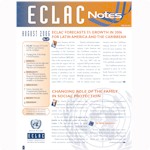
*ECLAC Notes N°47
Date: August 2006

  • ECLAC Forecasts 5% Growth in 2006 for Latin America and the Caribbean
  • Changing Role of the Family in Social Protection
  • Op-ed by ECLAC's Executive Secretary, José Luis Machinea. Latin America and the High-Level Dialogue on International Migration and Development
  • Highlights. On the Difference between Resources Generated within the Region and the Resources Available to its Residents
  • Indicators
  • Science, Innovation and Competitiveness: Experiences from Australia and New Zealand
  • Recent titles
  • Calendar of events

Tags:


Thursday, September 28, 2006 

Global Challenges HIV/AIDS in Caribbean Is 'Single Greatest Threat' to Region's Security; More U.S. Funding Is Needed, Official Says
[Sep 28, 2006]
Kerrie Symmonds, minister of state for the Ministry of Foreign Affairs and Foreign Trade in Barbados, on Tuesday at the Fifth Caribbean Chiefs of Mission Conference on HIV/AIDS said HIV/AIDS in the Caribbean "poses the single greatest threat to the region's security," the Caribbean Media Corporation reports (Caribbean Media Corporation, 9/26).

Full Article


Bermuda: Unintended Consequences in the Socio-Economic Balance between Gender!!!!
When we talk about Gender & Development, the clear emphases are to work upon the reduction of disparities between men and women and to make sure that priorities and resources are aligned together as much as possible to improve the quality of strategies and policies. These elements set in motion to counter unbalances vis-à-vis the distribution and access to opportunities and the guarantee of social inclusion.

Over the last couple of years, there have been clear recognitions of the needs to streamline gender policies in order to meet women’s needs and address structural changes toward their advancement, in efforts to curb and mitigate the effects of poverty and assure comprehensive progress in terms of development.
And with all things being equals, to address these perspectives adaptive models of policy call for the integration of measures or reforms to touch certain initiatives to provide equality in education, employment or political participation among others.

But along these routes, it is also important to stress that policy measures can also bring-in a set of unintended consequences, as they are being witnessed in Bermuda under the form of a cross-gender educational gap, where a mix in gender policy, reverses in cultural traditions and changing demographics have placed men within an unbalanced loop in terms of socio-economic distribution, see Op-ed.


Sir Ronald Sanders Warns Caribbean States Against EU, by Amanda Banks, Tax-News.com, London 28 September 2006

Sir Ronald Sanders, formerly a senior Caribbean diplomat, said last week that Governments and financial sector authorities in the Caribbean should be very watchful of the European Union's attempt to broaden the scope of the Savings Tax Directive.

Earlier this month it was reported that European Union Commissioner for Taxation, Laszlo Kovacs, is seeking to extend the Directive to Hong Kong, Singapore, Japan, Macao, Bahrain, Dubai, Canada and the Bahamas.

Full Article (Subscription)

Wednesday, September 27, 2006 

PM says Investments in Infrastructural Projects Will Pay Dividends Beyond Cricket World Cup
Tuesday, September 27, 2006 – Saint Lucia’s active programme of national infrastructural development is aimed at transforming and modernizing the island's physical and economic landscape. And those projects associated with the 2007 Cricket World Cup, while preparing for the greatest sporting even the island will ever have hosted, are also geared at leaving an enduring legacy that will go beyond the boundary of the game.

Full Article


Trade, Trade, Macroeconomic Stability and Development Policy: Where to for SIDS?
The U.N. General Assembly provided Caribbean leaders with a heralding tribune to voice their concerns about the current nature of trade policy, and the waves of imbalances that they forge on local economies, and more specifically in the contexts that surround Small Islands Developing States (SIDS).

Two years ago, the prospects liaised with a global economic recovery mainly emphasized greater openness to international trade and finance. And to date, there is still a quagmire that sets on fire matters of sustainability and benefits for all countries, as it appears that greater and greater incidences are witnessed in terms of unequal growth distribution, environmental protection, among others.

As pointed out by one Caribbean government official:

the international community needs to make adjustments for “the differences in levels of development among the economies and the asymmetries that exist between developed and developing countries.

Rightly said though, if we consider the facts that current openness to international trade and finance has not delivered or fully enabled the settings of sustained interactions between external financing, domestic investments and export growth for some of those countries.
And secondly, the necessity to adjust the problematique anchored with trade imbalances has still not been approached, and minimize any action vis-à-vis the implementation of development strategies, as matters of macroeconomic stability, and the relevance of appropriate multilateral regulations are left dangling in a room with no immediate answers to deal with the impacts of exogenous shocks on some of these islands, and their capacity to address head-on poverty reduction strategies and national planning.

Tuesday, September 26, 2006 

How Technology could Contribute to a Sustainable Future
The integration of scenario-planning has been a valuable tool to generate discussions and policy options about conceivable paths toward balanced global futures, as distinct challenges earmark the strategic directions and leadership needed to carry out change with sustainable development.

As we move further into the consolidation of globalization patterns, it has become clear that sustainable development is a notion to be reckoned with, as it addresses critical alternatives in terms of choices (individual/collectives), growth and the socio-economic development of nations.
In this regard, a framework developed by the Great Transition Initiative (GTI) has been touching these dialogues with an aim toward the analysis of diverse interpretations behind transformational praxis and the constructs of political, institutional, human/environmental and systems-thinking archetypes.

And amid those series an interesting component was laid-out about the role of science & technology, and how advances in scientific knowledge could be leveraged for greater benefits or impacts on community development.
Of course, these are perspectives that involve important policy changes to tackle balanced industrial development in line with economic and social progress. These elements linked to increased concerns and demands brought by rapid urbanization, food security, differences between rural and urban standards of living and unequal distribution of income.
As a matter of fact, those lines draw the complexity of the challenges, and the needs to generate appropriate technologies, and identify what technology would be necessary to gauge tomorrow’s needs as they evolve in fast changing environments.

*How Technology could contribute to a Sustainable Future. Technological Evolution and Human Choice


Ministry of National Development

Belize and CABEI sign Agreement

Belmopan - 25 September, 2006
An Association Agreement was signed today at the Office of the Prime Minister between the Government of Belize and the Central American Bank for Economic Integration (CABEI). This agreement enables Belize to be incorporated to CABEI as a Non-founding Beneficiary Member.

Full Article

Tags:


Financing for Development: Rural Water Supply and Sanitation for Haiti

To many observers, investments in infrastructures can be seen as viable catalysts to reduce disparities and pockets of poverty in some regions.

Of course, it goes without saying that the association between growth and infrastructure development is sine qua non with a country’s specifics, and the appropriate mix of lending and non-lending assistance to remove some constraints and guarantee the delivery and provisions of supporting financing schemes. And when looking into these dimensions it is interesting to weigh in the challenges liaised with water supply and sanitation.

As a matter of fact, addressing the problem of low-access to water supply and sanitation for some countries goes a long way within time-bound objectives and indicators for international development seen in the Millennium Development Goals (MDGs), where the attainments of such targets imply the expansion of cumulative investments, and the mobilization of international sources to cover those requirements.
And for the viability of collaborative activities, the integration of a harmonized mechanism is a pre-requisite to convey
synchronized responses in order to meet these challenges.

In Haiti for example, the disbursement of a US$15 million loan by the IDB (Inter-American Development Bank) to tackle water and sanitation programs in rural communities is gearing right into those grounds with an emphasis upon the strengthening of operational and financial capacity through cost-recovery mechanisms.

This could be an interesting framework, where the implementation of such an endeavor will highlight the necessity to streamline a national coordination process, and at the same time provide monitoring and evaluation (M&E) with additional foot-prints to assess the country’s performance in terms of poverty reduction goals and results when gauging its institutional capacity to harness financing, infrastructure development and stakeholders’ involvement.


Monday, September 25, 2006 

Where does the Media stand in the CSME Roll-out
The role and position of the media to document various political, economic and social developments has always been envisioned as an integral tool to facilitate and educate citizens when it comes to their perceptions and attitudes about the effects of some changes on their communities.
In fact by trying to curve appropriate strategies in terms of communication and knowledge dissemination re the ongoing developments that evolve around some regional agendas, these practices are unvaluable to tackle head-on campaigns of education and at the same time assure effectiveness in regards to the historic steps and targets behind the unveiling of regional integration frameworks.

The Caribbean shouldn’t be an exception to the rules notwithstanding the technical requirements needed to embark on capacity development strategies, as the roll-out of the CSME has become more than ever an increasing and unavoidable factor for the region.

Hoyte believes that as the region embarks on the CARICOM Single Market and Economy (CSME) "our Fourth Estate profession is pivotally positioned to play a critical role in reducing the gaps of ignorance and misunderstanding".

The argument is straightforward: Unless there's a substantial narrowing of the 'gaps of ignorance and misunderstanding' that have plagued previous plans for regional integration, the current effort in the CSME will not deliver fully on its promise.


Security and Sovereignty!!!!
If some of you have missed this news, it seems like if the ever-increasing insecurity landscape in Haiti is now turning into a case of lost sovereignty. From all accounts, it appears that concerns over the country’s governance, and the government’s capability to improve it have more or less prompted some international donors to spread a certain gospel against the growth and proliferation of illegal arms, see here.

Tags:

Saturday, September 23, 2006 

Calling for Cultural Change in Health Delivery System and Effectiveness in the Bahamas

By introducing the change process that is taking place in the Health-Care delivery system for the Bahamasvision for an effective health-care system”, Dr. Nottage, Minister of Health has been drumming up the re-development of a streamlined NHI scheme with an overtone toward better management procedures for the public sector, that harbors a strong emphasis on performance or results-based approaches.

In fact, behind this idea, there has been no shortage of discussions, given the needs to pinpoint and address the involvement of government in health-care, and the methods of financing in sights to support and expand access to health insurance by taking into accounts proposals to align objectives through changes applied to the behavior of health-care consumers, and of course accompanied with some kinda form of tax incentives, see here (for some critical views).


Sex Workers’ Rights and the Debate over Regulation or Submission….
I just bumped into this article re the CSME and free movement of people, in which the author points to matters of human trafficking and the increased development of a commercial sex industry in the region.

A key feature of heavily touristed areas and highly mobile populations is the increased presence of commercial sex industry,” notes Dr Peggy McEnvoy in Caribbean Crossroads. McEnvoy adds that given the illegal nature of both their work and residence, CSWs are invisible to social, health and protective services tax.

These issues are no isolated cases, and despite increased attention imparted on trafficking in women and children, we find ourselves pinned in a paradigmatic landscape where wording and working definitions of ‘trafficking’ are still put to the test.
And it has become clear that progress in regards to advocacy initiatives and research strategies are tied up in a framework where concerns over migration, and the simple elimination of prostitution have taken control over the protection of human rights.


Thursday, September 21, 2006 


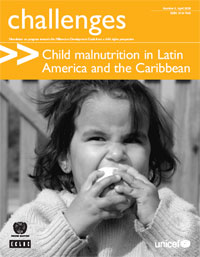
Child Malnutrition in Latin America and the Caribbean
Newsletter: Number 2
Date April 2005
ISSN: 1816-7543

A particularly crucial issue.In the context of the Millennium Development Goals,
we dedicate this second edition of Challenges to the issue of child malnutrition
in Latin America and the Caribbean.Likewise, the President of Chile, Michelle
Bachelet, as Chief of State and Paediatritian, sets forth arguments calling on
governments and citizens to mobilize for children's rights to adequate
nutrition


Sales Tax and Fiscal Policy: Where to Find the Right Equilibrium
By aiming with an unabashed determination toward the setting of Sales Tax measures, the government of Antigua & Barbuda is embarking into a sensitive route where the final outcomes might turn into a nightmarish journey in regards to their long-term capacity to control inflation and at the same time ensuring macroeconomic stability.
As those measures are undertaken, controversies have also started to boil in regards to the relevance of such a mechanism, and above all the drawbacks that could be experienced through rising cost of living and a decrease in consumption levels.

Those goods that are going to climb, and it is estimated that the cost of living might rise over 10 per cent. The goods which are zero rated they are not new. They are already enjoying no consumption tax.

As I see it, and referring to the above mentioned article, the political dimension and willingness to open up consultations with all stakeholders about these issues should be necessary steps for the government, instead of a playing it alone kinda demeanor. It is true that indirect taxes can be effective ways to generate quick revenues for governments, but on the other hand a strong balance between different tax regimes is a more appropriate framework to ensure and improve income distribution and harmonization between different earning brackets.


Wednesday, September 20, 2006 - Philipsburg, St. Maarten, N.A.
Population figures
The figures quoted by Minister of Justice David Dick concerning the composition of St. Maarten’s population (see yesterday’s edition) may not be altogether precise; they do not lie. Even if the number of illegal residents would prove to be considerably less than Dick’s 20,000, it is clear that the island is faced with an enormous challenge. Mind you, not only because of the “illegal problem,” but more because of the registered 50,000. Of that number only 50 per cent holds a Dutch passport and of those only a small number can claim to be “born here” St. Maarteners. The other 25,000 are foreigners holding the required papers to reside on the island mostly for a limited time span.

Full Article

Wednesday, September 20, 2006 

Ministry experiencing challenges in dealing with the homeless
Web Posted - Wed Sep 20 2006
The area of housing for the homeless is a major challenge facing the Ministry of Social Transformation.

Full Article


A Step forward for Jamaica’s Progress in Poverty Reduction.. But Still Many Hurdles to Cross
A few days ago, came the announcement by the Jamaican Minister for Foreign Affairs and Foreign Trade (Senator Franklyn) of a breakthrough in the country’s performance vis-à-vis its national policy and strategies in poverty reduction.The decrease in poverty level from 28.4% in 1990 to 14.8 percent in 2005 represents significant steps forward that have greatly impacted upon the standard of living.
However, it is quite sure that the challenges ahead are many, and on the methodological and practical sides of policy analysis and reviews, these elements raise some interesting points about the ways survey data can be used to improve and enhance the policy process.

As pointed by the Minister, these advances have been carried out by increasing inflows of remittances that alone cannot play substitutes in the loss of human capital, and the brain-drain that has been affecting the country.

Thus, thorough analysis of these dynamics and their effects on the standard of living should position the inputs from household budget data, income and expenditure surveys within a comprehensive framework, to equip monitoring and evaluation (M&E) mechanisms with the relevant statistical and econometric models to tackle the substance of policy options. Where in the examples of migratory patterns, remittances flows, labor mobility, we do have direct impacts upon the nature and choices of public policies as they affect patterns of household demands and the types of inward developments needed to address the poverty questions.


CARIBBEAN HIV/AIDS CARE UNDER REVIEW
19th September, 2006
A GROUP OF STAKEHOLDERS IS REVIEWING A PROPOSAL GEARED AT PROVIDING ASSISTANCE FOR SIX CARIBBEAN COUNTRIES IN HIV/AIDS TREATMENT AND CARE.
THE MEETING IS BEING HELD AT THE MINISTRY OF WORKS CONFERENCE ROOM.

Full Article

Tuesday, September 19, 2006 

Migration Dynamics and Policy Choices (II)
I couldn’t leave the previous post on migration policy alone, and I found quite interesting the points raised in this article re another aspect in the migration conundrum for the Caribbean.
This aspect lies with the impacts and expansion of free-trade on local economies, and how those patterns will affect the movement of people, and on the same token on the choices of public policy to adjust standards of living with balanced economic growth.


IMF Executive Board Deems Haiti Eligible for Assistance Under the HIPC Initiative
Press Release No. 06/206

September 18, 2006

Mr. Takatoshi Kato, Deputy Managing Director of the International Monetary Fund (IMF), issued the following statement today:....

Full Press Release

Tags:


Migration Dynamics and Policy Choices
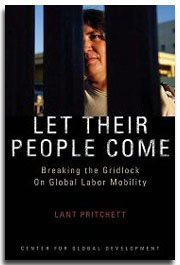
In a recent book by Lant Pritchett, “Let Their People Come: Breaking the Gridlock on Global Labor Mobility”, the problematique of cross-border mobility for unskilled labor, is traced in parallel with the increasing pressures applied by demographic expansions, and the political constructs that frame migration policies within integrated and liberalized economies.

What’s in it for the poor, and more specifically for developing nations are crucial to be addressed, given the fact that properly managed migration flows can deliver major benefits in terms of development and poverty reduction.

In fact in this ongoing debate, the whole paradigm center matters of impacts (distributional costs and benefits) around political and ethical issues that more than often drive policymaking within clustered channels wrapped around conservative views and approaches to migration policies and regulations.
If we consider for one second, or turn around the current discourses vis-à-vis costs and benefits projections, it might occur that evenly distributed migration patterns between and within countries could streamline approaches/strategies to enhance the distributional factors toward certain types of migration in order to make it work for the poor.

It goes without saying that these ideas are really interesting for the Caribbean and its regional development goals due to the fact that over the last couple of years, we have been witnessing severe imbalances between its international migration patterns, and the needs to harmonize a regional migration framework to compensate its losses in terms of human capital, labor market distribution and welfare stabilization, see here.

In an increasingly liberalized and integrated global economy, with more open capital and goods and services markets, the highly restricted and heavily regulated markets for global labor are an oddity. In this controversial book, CGD non-resident fellow Lant Pritchett examines the potentials and perils of greater cross-border mobility of unskilled labor -- within poor world regions and between poor and rich countries. Pritchett argues that irresistible demographic forces for greater international labor mobility are being checked by immovable anti-immigration ideas of rich-country citizens. He highlights the difficult political and ethical issues that the movement of people across national borders presents to the current system and proposes breaking the gridlock through policies that support development while also being politically acceptable in rich countries. These include greater use of temporary worker permits, permit rationing, reliance on bilateral rather than multilateral agreements, and protection of migrants' fundamental human rights. Pritchett's discussion of ways to break the deadlock is a provocative contribution to the growing debate on one of the most important and difficult issues of the 21st century.

Monday, September 18, 2006 


More than 9,000 families waiting for public housing
Monday, September 18, 2006
By José Fernández Colón
PONCE (AP) – Housing Department Secretary Jorge Rivera Jiménez on Sunday said there are currently 9,135 families waiting for public housing services.

Full Article


Local Government Reform 2006
As a commendable step forward, and in order to gain support for its Local Government Reform Agenda, the Government of Trinidad & Tobago (Ministry of Local Government) has issued this Draft White Paper which follows suit on the Vision 2020 program aiming toward the implementation of Regional Development and Sustainable Communities framework.

At its core, readers can get acquainted to the different thematic areas that will accompany the reform process, namely:

  • Legislative reviews of bye-laws and regulations;
  • Re-definition of the roles of the Ministry of Local Government and Municipal Corporations;
  • Re-definition of boundaries, functions responsibilities;
  • Corporate restructuring of the Ministry of Local Government and Municipal Corporations;
  • Institutional Strengthening and capacity building;
  • Determination of human resources/technical and key funding requirements;
  • Delegation of operational activities from the Ministry Local Government to Municipal Corporations;
  • De-linking of the regional corporations from the administrative structure of the Ministry of Local Government;
  • Transfer of resources from ministries and departments to Local Government level;
  • Determination of an agency, which will be responsible for Local Government bodies;

However, there is a tiny missing note. And in fact I think that it would have been useful to provide a link (web) or email address in the document, this in order to render and ease the development of public consultations with all stakeholders. Streamlining this process by opening up channels of communications vis-à-vis the hot topics behind the reform, could provide policy-makers with more evidence and opinions relevant to this dynamic of change as an ongoing and evolving mechanism.

Tags:


That difficult quest for literacy
Monday, September 18, 2006
Those old enough will remember the missionary-like zeal with which many responded in the early to mid-70s to the call by the late Mr Michael Manley for the abolition of illiteracy.

Full Editorial

Sunday, September 17, 2006 

Aid and the Politics of Politics…
I have always been amazed by the various ways under which foreign and economic aid have been used as instruments of self-gratifying humanity.
And in another chapter of such a long and diverse history, the announcement by the Taiwanese president of increasing economic cooperation with some Latin-American and Caribbean countries, just seems like too good to be true.
I’m not saying that these prospects won’t have significant impacts on some local economies, but on the other hand tying foreign aid with some kinda foreign policy outreach, can also prove at times as a recipe for disasters.

Alas, nowadays more than ever, ideological approaches to foreign assistance programs are the norms rather than the exceptions. So, let us wait and see what will come out from those too idyllic arrangements.


Caribbean Festival of Arts reinforces Identity

Port of Spain, sep 16 (Prensa Latina) Caribbean nations are preparing for the region's most important cultural event: the Caribbean Festival of Arts (CARIFESTA), says Ruben Silie Valdez, Secretary General of the Association of Caribbean States.

Full Article


LICUS: Toward an Understanding of Fragility and Countries’ Governance. What’s in it for The Caribbean Community and Haiti….
For some countries the impacts of development strategies and the role of the international community will have to be strengthened to really carry out sound policy analyses, donors’ programmatic and aid allocations to attack the root-causes of poverty, instability and the institutionalization and prioritization of inclusive reforms processes.

In what can be seen as a dramatic increase in the numbers of fragile states, over the last couple of years a report by the World Bank has been computing those figures with a staggering evolution that has scaled up from 17 to 25.

Among some of the characteristics used to define a fragile state, the use of indicators such as the World Bank’s Country Policy and Institutional Assessment (CPIA) classify results under five categories of performance to harbor a working definition of fragility that reveal the extent, and lack of functioning for governments to attend to the needs of their people, and on the same token to commit on the implementation of Poverty Reduction Strategies (PRS), and social development programs.

It is clear though that to make “development work” in such contexts, and guarantee the sustainability of programs and the analysis of appropriate policies can be a huge challenge given the fact that at times donors choose to pull out when things get sour.

“Past International engagement with these countries has failed to yield significant improvement and donors and others continue to struggle with how best to assist fragile states. LICUS are characterized by weak policies, institutions and governance. The Bank identified 25 such countries in fiscal year 2005. These 25 countries have a number of similarities: their infant mortality rate is a third higher than that of other low-income countries, life expectancy is lower, and their maternal mortality rate is about 20 percent higher.”

However, as staggering as those figures can be, the tasks ahead for the international community is more than ever of great concerns, this in order to shift the current rhetoric and aim toward the implementation of a broad transformational agenda that will steer differences and impacts to enhance capacity and willingness.
For the Caribbean region, these perspectives do matter given the dire situations faced by Haiti on a daily basis where poverty in its midst is a constant reminder of the threats associated with regional destabilization, security and the costs associated with crisis responses.


*LICUS (Low-Income Countries Under Stress)
*Fragile states risks instability

Friday, September 15, 2006 

IMF report suggests increase in VAT
Web Posted - Fri Sep 15 2006
THE International Monetary Fund (IMF) is again calling on the Barbados government to increase the value added tax (VAT).

Full Article


Where does Fiscal Policies stand in the Development Process for the Caribbean? (II)
Still documenting the issues of fiscal policies and reforms in the Caribbean, I have found this article re Antigua & Barbuda highlighting the introduction of their reform package dubbed: “The Home-grown Adjustment Programme”. This project undertaken by the Ministry of Finance is an overhaul of the fiscal structure with an emphasis to streamline public services. As you will see the program is aiming to improve the delivery of fiscal mechanisms to smoothen, the impacts of debt stocks strengthen revenues and curb expenditures.

  • Fiscal reforms to be made available to public


Thursday, September 14, 2006
Patterson says Caribbean should not fear the C.S.M.E.
He will be giving a major address tonight at the Bliss before being honoured with the Order of Belize. But this afternoon News Five's Stewart Krohn sat down with former Jamaican Prime Minister P.J. Patterson for an extensive interview to be aired in the Caribbean. Among the many topics discussed was the implementation of the Caribbean Single Market and Economy. For Patterson the C.S.M.E. is the product of a very carefully negotiated process and CARICOM nations should not fear the economic integration that it brings.

Full Article

Thursday, September 14, 2006 

New Economic Development Minister for Dominica
Thursday, September 14, 2006
by Malaika Laurent
Caribbean Net News Dominica Correspondent
Email: malaika@caribbeannetnews.com
ROSEAU, Dominica: Dominica’s Prime Minister has revealed that there will be an addition to the government, with former deputy leader of the opposition party taking on the role as Minister for Economic Development and Planning.

Full Article


An Extra-Mile for Reforms…
Not really a big extra-mile! But I mean that this can be quite a shaky road for the IMF. As some observers have pointed out, the future for global economic and financial stability can be conditional with the IMF’s willingness to overhaul its current governance structure.

Ok, let’s see for a moment… at this juncture several questions come to mind, and by moving ahead with this process of reforms, the IMF board has to put on the table a package of measures to assure accountability in regards to the participation of low-income countries vis-à-vis its policies and decision-making. So, let us wait for the upcoming annual meeting and its outcomes, scheduled, September 19-20, 2006 in Singapore.

Furthermore, in regards to quotas and the prospects behind these governance reforms, the current regime of voting at the executive board and board of governors is based on a one dollar, one vote system. Thus setting the tone for unequal patterns in decision-making… Reforms can go a long way, but to which extent the decision-making could be reflective of broad inclusion, is still a pending question.

Moreover, if this transformational agenda is steered through the introduction of a complete transparent and democratic (!) process, chances are that the implementation of effective and varied stakeholder groupings could be feasible gearing toward the integration of geographical diversity. This last element taking into account a broad recruiting strategy vis-à-vis the management of multi-lateral organizations, to harbor a framework that would move closer to a valuable decision-making apparatus, and increase in participation for all member governments. Let us see, let us see….


PM KNOCKS HEALTH MANAGEMENT
Thursday, September 14 2006
Prime Minister, Patrick Manning, has identified the lack of a solid management as a key factor plaguing the health sector.
Manning, speaking in San Fernando on Tuesday evening, promised to plug the loopholes in the health system, as identified by the Justice Gladys Gafoor-led Commission of Inquiry.

Full Article

Wednesday, September 13, 2006 


Latin America, Caribbean Remittances Seen $60 Billion in 2006
Wednesday, September 13rd, 2006 / 22:42
QUITO -(Dow Jones)- Remittances sent home by some 25 million Latin American and Caribbean immigrants are pegged to reach $60 billion in 2006, according to a study released Wednesday by the Inter-American Development Bank, or IDB. That figure is 20% higher than it was in 2005, Donald Terry, manager of the IDB's Multilateral Investment Fund, said at a press conference. Of the total funds, 75% are sent from the U.S., 17% from Europe, and 8% from Japan.

Full Article


The Experience of Conditional Cash

Transfers in Latin America and the

Caribbean

In this study published by the FAO, two researchers examine the effectiveness of Conditional Cash Transfers (CCT) in their impacts on household welfares and rural development.

By comparing six programs underway in the region, namely for: Honduras, Nicaragua, Jamaica, Colombia, Brazil and Mexico, the authors lay-out their analysis within the contexts of national policies, and their alignments with strategies to reduce poverty, and foster human capital development. And viewed from a critical perspective, they scrutinize the dynamics behind the process of Demand-Side Subsidy, and their real impacts when setting in motion strategies for educational development, or level of school attendance in rural and deprived urban areas. These points leading to the question: “Is There a Development Bottleneck?”

*Sudhanshu Handa and Benjamin Davis, FAO, ESA Working Paper No. 06-O7, May 2006.


Wednesday, September 13, 2006 - Philipsburg, St. Maarten, N.A

Draft budget shows 138.9 million debt
WILLEMSTAD--The 2007 draft Budget has a NAf. 138.9 million deficit. The Central Government needs to borrow NAf. 336.4 million to cover all its budgeted cost. Usually the draft budget will be amended before its handling in Parliament.

Full Article


Where does Fiscal Policy stand in the Development Process for the Caribbean?
In the eyes of many in the Caribbean adjustments in fiscal policies are fundamental to leverage, and strengthen the paths to development.

“One of the most significant issues which confront the countries of the Commonwealth Caribbean is the fiscal challenge which hinders our ability to sustain economic growth and the level necessary to support our development objectives”, said Prime Minister Douglas."

These are laudable comments, and viewed from a broad angle these issues are critical to be reckoned with due to the various dynamics that apply to fiscal policies, level of development and the rate of growth.

These questions are open to debates when we consider the facts liaised with the fiscal structures in developing nations and their strong reliance on international trade taxes. These elements call for effective assessments of such determinants in their impacts upon the scale of their economies, and public investments in infrastructures, social services (education, health).

It goes without saying that in the midst of such inquiries, the role of empirical research can be quite challenging given the difficulties that can be seen in the analysis of correlations between growth, and the effects of taxation mechanisms.

Nonetheless, as an interesting point of departure reviewing the terms of macroeconomic relations, budget surpluses/deficits, tax and spending policies can go a long way to provide policymaking with solid evidence of “What Works” in regards to medium or long-term economic growth.

BRIEF

Tuesday, September 12, 2006 

Thinking of Consultations on Private Sector Development, and Accession to EU Markets
There has been a great sense of urgency in reviving the talks/consultations on the CARIFORUM-EU Economic Partnership Agreement, see here.
As a matter of fact, when looking into these perspectives the importance liaised with Private Sector Development is a critical point in order to tackle the best policy mechanisms needed to harmonize the growth of local businesses, and on the same token to take into consideration the realities associated with the terms of some preferential treatments, when it comes to access to EU markets.

In the eyes of some Caribbean negotiators, it is important to address the concerns of local business owners with respect to the upcoming rounds of discussions with their EU counterparts.
It is clear that for policy-makers in the region, the growth of an SME sector goes a long way with a stable business environment, and this in two ways. First to impact upon the level and quality of development, and secondly to enable the construction of SMEs strategies documenting and reviewing the various growth constraints, and the policies needed to overcome those constraints.

Thus, issues that take to the forefront matters linked with the functioning of a legal system, the bureaucratic regulations, and the enforcement of intellectual property rights in order to better position growth, market expansions and competition.

Monday, September 11, 2006 

Area representative implements after-school sessions
Monday September 11 2006
Newly-elected representative for the St. Pauls Constituency, Robelto Hector, while presenting footballs to the Charlestown Primary School last Thursday, called on volunteers to assist with the implementation of a homework after-school session programme.

Full Article


Sustainable Practices and Tourism: Feasible Business Models for the Caribbean
It is true that the implementation of sustainability practices can reveal tremendous challenges. And the relationships between corporate strategies and sustainable development evolve along various dimensions that can be seen at times not as straightforward praxis, when addressing matters of choices, policy regulations, compliance and reporting mechanisms.
However, despite the odds, it is quite interesting to explore the relevance and adaptation of such a concept when some initiatives have been set to steer the development and engagement of strategic planning processes, where some of these initiatives pave the way and aim toward better integration of market-based systems to strengthen productivity, efficiency and environmental protection. In fact, it all comes down to Best Practices, and the mapping of capacity building schemes to drive and sustain innovative programs.

As an example the upcoming Green Tourism Conference that will be held in Jamaica, November 1 – 3 2006 will convene such a forum gearing toward the identification of business models vis-à-vis sustainability practices, and the greening of the tourism industry in the Caribbean.


September, 11 - 9:15 AM
US$30M loan to give Dominican youngsters birth certificates

SANTO DOMINGO.- The Dominican Vice-president and coordinator of the Government’s Social Cabinet said that a US$30 million World Bank loan is being sought to conduct a program to issue birth certificates to poor children and adolescents who need the document.

Full Article

Sunday, September 10, 2006 

Sunday, September 10, 2006
'Good team' challenged to uphold high standards
By Neil Marks
SWEARING in 19 ministers of his new government, President Bharrat Jagdeo yesterday said he was confident that he has chosen a “good team” to carry out his five-year development agenda, but warned that he would require high standards from them.

Full Article

Saturday, September 09, 2006 

The 2006 Small States Forum
This is an event that deserves not to be left un-attended. With the upcoming 2006 Small States Forum that will be held in Singapore, September 18, 2006, the people gathered there will have the opportunities to discuss and exchange ideas about the relevance of such issues as the Private Sector Development, labor mobility and remittances, and their impacts on the development of Small States.
And of course, as I also did not want to be left stranded with such a tiny piece of information from my side, I also managed to find the provisional agenda for those meetings.

“Ooops! I was about to say if further information are needed… which is an understatement. And for further info. interested parties can contact the 2006 Small States Forum Conference Officer: Ms. Rachel McColgan, World Bank, ssfsecretariat@worldbank.org


2 New Bimini Schools
By LaShonne Outten, Guardian Staff Reporter

lashonne@nasguard.com

The Ministry of Education has partnered with the developer of the Bimini Bay resort in a bid to construct two new schools on the island.

According to Biminites, the island's all-age school is run down and dilapidated. However, in an attempt to address the concerns of the residents, Alfred Sears and other government officials met with Bimini Bay developer, Gerardo Capo on Thursday to discuss plans for the construction of the new schools.

Full Article


Traveling across the Energy Security Paradigm in the Caribbean
Not so long ago, a Caribbean Forum titled: “Energy and the Competitiveness of the Caribbean” took aim at the challenges facing nations in regards to issues of diversification and investment policies toward safe energy resources for the region.

“Participants at the forum included energy ministers for the Caribbean governments, multilateral development banks, potential investors and project developers. Patrick Duddy, the U.S. government deputy assistant secretary of state for Western Hemisphere affairs, was among the U.S. government officials speaking at the event. A main theme for the forum was how to “diversify the Caribbean energy mix and move it beyond the dependence on imported oil and how clear investment policies can secure energy resources for the Caribbean”, see here.

It is clear that those issues carry significant importance vis-à-vis any policy designs, and the effectiveness of planning mechanisms as Small States have specific needs rooted with the nature of their local economies, and the prospects of sustainable practices as they position certain set of typologies where among them we can have "community-wide energy conservation programs."

As a matter of fact, the focus on investments and regulatory frameworks are critical aspects behind such discussions where diversification in energy security go a long way with the implementation and development of partnerships (Public/Private), in order to tackle and address the dynamics behind energy-efficiency programs, and community’s specific needs and goals. And in my opinion this is where the paths for the development of sustainable practices lie, by blending and strengthening the outcomes of Demand-Side Management (DMS) programs with full strategies positively impacting the promotion of efficiency, conservation, and renewable sources of energy.


And in more News:

*Development bank pushes for renewable energy investment in Caribbean

*Our Habitat, the Kyoto Protocol and Friendly Caribbean Sunshine

*T&T Prime Minister warns Caribbean countries to rethink PetroCaribe initiative


Tags:

Friday, September 08, 2006 

Statistical yearbook for Latin America and the Caribbean, 2005

The 2005 edition of the Statistical Yearbook for Latin America and the Caribbean introduces a series of important modifications, both in content and design, the objective being to reflect the changes in the demand of researchers who analyse the economic and social situation of the region and to incorporate the technological advances that modify the modes of dissemination and use of statistical information.

With special insights on:

  • demographic and social indicators (with attention to the gender dimension in statistical information)
  • economic, trade and balance of payments, and national accounts
  • environment and natural resources
  • aspects of methodology and metadata
  • latest updates about the MDGs, and progress made in the region

Thursday, September 07, 2006 

Gender, Remittances and Development

The case of women migrants from Vicente Noble, Dominican Republic


From Executive Summary:

Over the last few years interest in remittances and their development potential has grown consistently. However, the majority of studies look at remittances from an economistic perspective, without taking gender issues into account. The sending and use of remittances is conditioned by economic, social and cultural elements in the contexts of both the senders and recipients. In addition these elements are always impacted by gender, as a structural variable that cuts across all other variables. Not only is the migratory experience different for women and men, but the impact of migration itself on households differs depending on whether it is a man or a woman who migrates. Gender differences are thus observed in the restructuring of households, what decisions are made and by whom on the use of remittances, the type of investments they finance, etc.


Workshop on Nutrition and Physical Activities: CFNI
Nutrition and physical activities are part of a two-day workshop organized by the Caribbean Food and Nutrition Institute (CFNI) in Antigua & Barbuda. By engaging this framework the institute is exploring the linkages in terms of methodological approaches in collection and analyses of data and their dissemination through educational materials. Viewed under the lenses of Public health driven initiatives, this workshop is meaningful for policy-based strategies and the reviews of practices to address the critical factors liaised with food choices, physical activities and screen time. Thus, an opportunity for public health professionals to merge and broaden certain outcomes in knowledge management vis-à-vis national strategies taking into account the connections between nutrition, food security and their overall impacts on community-driven schemes and development processes.

Tags:


ICT and Evidence-Based Practices: A Resonating Case for Antigua & Barbuda
In the knowledge economy, the promotion and identification of ICT clusters is vital to align and expand vertical and horizontal linkages among all stakeholders. And when addressing these perspectives, a government has to explore “best practices” vis-à-vis standardization mechanisms and policy regulations, as those components facilitate the identification of strengths and weaknesses in the development of clusters as they strive to attain optimal efficiency.

It is interesting to note that Antigua & Barbuda is strongly positioning itself when it comes to the development of strategies, and long-term competitiveness for its ICT sector. In this landscape, the stakes are seen as the capacity to work toward the harmonization of policies and regulations to engage simultaneous growth in employment and wealth creation. A great deal in this process relies heavily on the participation in capacity building schemes, in order to arm policy implementation with the best feasible evidence for practices, paramount to a strong architecture bridging the gaps between policy & research in development strategies.

Wednesday, September 06, 2006 

Ministry of Agriculture & Land


Farmers in Sanguinetti get help

MAY PEN (JIS)
Wednesday, September 06, 2006

Farming equipment valued at just over $580,000, has been handed over to 25 farmers from the Sanguinetti community in North Clarendon, who have formed a co-operative called the 'Sanguinetti Action Group'.

Full Article

Tags:


Next on the Agenda

The World Bank has been the focus of numerous calls for reforms as some critics have clearly emphasized its approach toward development, and the role/lack of transparency in its operations and policy-making decisions, see here, here and here where that last publication is amazingly addressed through the American Enterprise Institute.

At a time when global economics, growth have espoused straight lines through liberalizing outward looking strategies, many concerns have been raised in regards to the needs of low and middle income countries, and the type of cooperation envisioned to address poverty reduction in the face of pressing neo-liberal financial mechanisms.
It goes without saying that in order to fully scrutinize these issues, the relevance of any analysis has also to take into consideration, and dissect the various leadership processes that have been displayed at the World Bank, as these leadership styles have affected in more than one way the World Bank’s stance vis-à-vis development, accountability and governance.

In a new publication by the CGD (Center for Global Development) some of these issues are being examined, where the principal theme of analysis: “Rescuing the World Bank”, introduces a collection of essays that capture the depth of these two questions:


  • Are the Bank’s shortcomings exaggerated or potentially fatal?
  • If potentially fatal, can this critical institution be rescued?

And as a must read: The Hardest Job in the World: Five Crucial Tasks for the New President of the World Bank

“For any inquiries about online orders for the complete, I mean the full and complete version! This is who you folks out there gonna have to reach out to: Lindsay Morgan, LMorgan@CGDev.org


Caribbean countries failing to take advantage of aid
Web Posted - Wed Sep 06 2006
By Marita Greenidge

DR.Kathleen Gordon, Deputy Director of Information Technology at the Caribbean Development Bank (CDB) has accused Caribbean countries of failing to take advantage of the funding sources available to them.

Full Article

Tags:

Tuesday, September 05, 2006 

This is the One!

The IDB has just released an updated version of its database on social indicators for Latin-America and the Caribbbean. And the innovation lies with the integration of complete maps displaying dissagregated sub-national data for 15 countries in the region. Information System on Social Indicators and Equity (EQxIS)

*And more: as an upcoming seminar is scheduled at IDB headquarters in DC, around the theme: “Using Statistics for Broad-Based Development: Challenges for Latin-America and the Caribbean”.

The dates are for September 28th – 29th, and I will provide updates as they become available.


Put Freedom to the Test: And we can have full display of public consultations on electoral reforms

I like very much these exercises on public consultations for the future of St Kitts & Nevis electoral reform process.
As a starting a point in government accountability vis-à-vis its constituents, these perspectives can run a long way to position freedom and citizens’ rights to choose vis-à-vis political or socio-economic futures. These ‘rights and freedom to choose’ being fundamental to strike the right balance in attainable level of development, along with the liberty of political participation.

These dynamics highlight the necessity behind strengthened institutional settings, in order for them to be responsive to public debates and demands, as matters of rights and freedom can be instrumental for development to facilitate access to opportunities, participation in labor market arrangements and the creation of economic security.

So, let the future rolls…

Electoral Reform Consultative Committee (ERCC) member, Mr. Douglas Wattley says the Committee is hopeful that the public consultation process will be successful and is confident that stakeholders recognise the importance of participating in the meetings, which start on Monday, September 4, 2006 and end on Friday, October 13, 2006.


Tuesday, September 5, 2006


Government highlights rural area as tourist destination
SAN JUAN (AP) – The new approach that the Tourism Co. has taken to promote other aspects of the island has enable the development of certain projects such as the cable cart of Jayuya, to highlighting the attributes of the mountainous region of the island, Jayuya Mayor Jorge González Otero said Saturday.

Full Article


Noncommunicable Diseases and Injuries in Latin America and the Caribbean: Time for Action

Pablo Perel*, Juan P. Casas, Zulma Ortiz, J. Jaime Miranda

Pablo Perel, Juan P. Casas, and J. Jaime Miranda are in the Department of Epidemiology and Population Health, London School of Hygiene and Tropical Medicine, London, United Kingdom. Zulma Ortiz is at the Collaborating Center of the Iberoamerican Cochrane Network and the Epidemiological Research Centre, National Academy of Medicine, Buenos Aires, Argentina.

Tags:


Volume No. 1 Issue No. 86 - Monday September 04, 2006
Communities of Wotton Waven Copthall and Trafalgar Receive New water Supply
Sean Douglas


Prime Minister, Hon. Roosevelt Skerrit and Minister for Public Works and Public Utilities, Hon. Ambrose George were among the many invited guests for the official opening ceremony for the long-awaited Wotton Waven/Trafalgar/Copthall Water Supply Project which took place recently.

Full Article

Monday, September 04, 2006 

Report of the Caribbean Commission on Health and Development

The title says all about it, this is the last joint publication by the PAHO and the CARICOM.

Abstract from Executive Summary:

A healthy population is an essential prerequisite
for the economic growth and stability of the

Caribbean. This is a statement of reality that cannot
be repeated too often. The picture of the Caribbean
as an idyllic paradise is an appropriate one for
promoting the area to the outside world and one
that most nationals in the diaspora retain with
fondness and nostalgia. The physical attributes
often shown are real, but they sometimes hide the
struggle that many citizens must make to acquire
the necessities for a decent living against the
background of that reality. The Caribbean region
appears to be ‘developing’ when compared with
other regions, and the various countries can
legitimately pride themselves in how one or another
of their development indexes rank on some global
scale.

Full Report


Some Ramblings on Cultural Policies, and their Imprints on Development issues and Decision-making

The recent gatherings of Caribbean writers which took place at the UWI’s Mona campus in Jamaica brought together a wide and distinguished set of cultural producers; and just to name a few among them were: Derek Walcott, Merle Hodge and Cecil Gray. The theme behind this conference was: “Writing Life: Reflections by West Indian Writers”, and I would like to highlight this little extract purged from the T&T’s Newsday:

St Lucian poet Kendel Hippolyte presented a paper in which he argued that the writer had social utility. “But”, he admitted, “I would have a hard time explaining and justifying why I should be paid for staying home and writing poems.” He asked, “Can we really believe that, in the Caribbean, the activity of a poet matters?”

And for me this is where I find interesting the contextualization between the role of cultural policies and any departure to create and nurture thinking vis-à-vis the adaptation in public consciousness of a definition of culture that evolves along matters of development and decision-making for societies.
If for example, in development thinking there has been lately calls gearing toward the ideas and expressions of cultural development, this concept translates the necessity to reflect about the integration of various mediums about cultural issues as they impact upon certain outcomes and patterns vis-à-vis well being or relevance of certain individual and collective choices.
Moreover, it is also a shift in thinking where matters of cultural development could steer discussions about the traditional views linked with the commodification of culture, to broader notions within the realms of politics, governance and the position of multicultural settings.

… Just some ramblings…/…

BRIEF


*In the spirit of conferencing and learning, this is the upcoming 23rd Oxford Analytica International Conference that will be held from September 20 – 22, 2006 at Christ Church College (Oxford University, UK). The principal themes will steer discussions around:
  • Religion and International Relations
  • Corruption
  • Global Media
  • Energy Addiction
  • Corporate Citizenship


Cayman gets EU money

Monday, September 4, 2006

After many months of waiting, the Cayman Islands has at last received a response to its seven million-dollar petition to help rebuild the country in the post Hurricane Ivan period.

On 1 September 2006 Hon Alden McLaughlin, Minister of Education, brought the news that the $7.2 million Cayman requested from the EU 'C' Reserve Fund had been approved.

Full Article

Tags:


The disabled and the law

Monday, September 4 2006

Even though we may not willingly admit it, a lot of us in Trinidad and Tobago associate physical disability with poverty. When we see someone in a wheelchair, there is often the reaction to hand the person money or offer some kind of charity.

Full Article

Tags:

Sunday, September 03, 2006 

Conditional Cash Transfer and Reduction in Child Poverty: A Review of Evidence

This study entitled: Reducing Child Poverty with Cash Tranfers: A Sure Thing? is a comparative analysis about the impacts of Cash Transfer Initiatives (CCT) as tools to alleviate the impacts of poverty on children.

“Widespread poverty and vulnerability among children and their households in developing countries provide a strong motivation to find appropriate policy response.”

With a section of the study looking into the dynamics behind Conditional Cash Transfer programs in Latin-America and the Caribbean, the authors shed some lights on the effectiveness of such schemes, bearing in mind the extent of the correlation with children living in poor households, the terms and arrangements set to channel the right targeting strategies for those children, and mostly the conditionalities and entitlements that should sustain the effectiveness of such programs on poverty reduction.


EDITORIAL - State financing of education

published: Sunday | September 3, 2006

THERE ARE some very worrying statistics, published in last Friday's Gleaner, which should concentrate the minds of the Education Minister and others in the policy establishment.

First, it is bad enough that a full fifth of Jamaican parents say, according to a poll conducted on behalf of this newspaper, that they will not be able to afford the cost of keeping their children in school this academic year. That is to say, assuming that teachers are not on strike over pay, many children will not find their way to the classrooms for the term which begins this week.

Full Editorial


Restoring Growth in Puerto Rico
Overview and Policy Options

Susan M. Collins, Barry Bosworth, and Miguel A. Soto-Class, eds.
Brookings Institution Press and the Center for the New Economy 2006
c. 136pp.


The CSME: A Question of Choices and Policy alternatives

I’m back on the block with this time some comments about the Caribbean Regional Integration Process (CSME) through the eyes of Dr. Keith Rowley, Minister of Housing of Trinidad and Tobago.

“Addressing the topic of the Caribbean Single Market and Economy (CSME), Dr. Rowley asked the Kiwani’s South membership to contemplate the ease with which the Caribbean region could implement a unification process if they simply learn from the example provided by the European Union (EU). We do not have to recreate the wheel, noted Dr. Rowley, and the benefit of a larger available market, less borders, less political activities and a drive to reach international standards should make sense to all participating islands.”

With all due respects, I have to reckon that this matter of Regional Integration (CSME) is no small perspective, having to deal on one hand with changing patterns brought on by globalization, and the impacts of various trade policies, and on the other hand the policy options that should take into accounts their endowments, and institutional frameworks. But of course these are only some parts of the components in the whole paradigm. Where the greater issues in my understanding can be summed up (really summed up for the moment), with the needs to develop and draw upon alternative policy choices in the lights of unilateral trade liberalization, and the domestic reforms to facilitate South-South integration and cooperation, whether in terms of public goods exchange, free movement of people and goods, welfare implications, and technology transfers.

Friday, September 01, 2006 

Job Training Programs: A Synopsis toward the Expansion of Educational Capacity and Youth Development in the Dominican Republic

The links between education and poverty levels have been proven in many instances. And to attack poverty at its core, there is definitely this necessity to position development strategies and discourses beyond the current rational driving market mechanisms.

And to step further into those configurations, the arguments viewing education as “Public Goods” are interesting proposals by highlighting the case for social provisioning, and the needs associated with basic capabilities, and access to educational opportunities.
As an interesting case in Poverty Reduction Strategies (PRS) and education, the expansion of the Dominican Republic Youth Development Program can provide and arm systematic reviews to document “What Works” in the balance between policy implementation and budgeting operations to attain realistic levels in public expenditures and provisioning in public services.
These are fundamental issues to assess the country’s economic choices when it comes to the balance between equity and efficiency, and how far is the government willing to go vis-à-vis the costs and intrumentations of incentives gearing toward the expansion of social schemes.

BRIEF


And in more World Bank News

*This is the International Data Collection Programs or ICP, which features the Purchasing Power Parity data (PPP), and country classification by level of economic development.


Tags:


Students to meet national performance standard

Friday, September 1, 2006

According to Minister of Education, Hon Alden McLaughlin, students are to meet higher performance standards than those previously set, but details as well as other elements that compose a new National Curriculum are still to be crafted.

Work on the new performance standards will begin in early October 2006, when a Steering Committee will settle down to "establishing national standards for students for each subject," the Minister said.

Full Article

Tags:


Beyond the Numbers: Understanding the Institutions for Monitoring Poverty Reduction Strategies

In this publication by the World Bank, researchers examine the process of M&E in Poverty Reduction Strategies by stressing an emphasis upon the institutional arrangements behind PRS monitoring systems.

As a comprehensive approach for M&E in poverty reduction planning, this book is very informative for practitioners and compiles lessons, guidance, diagnostic tools and also comparative analyses for twelve country cases in their PRS approaches.

Author(s): Tara Bedi; Aline Coudouel; Marcus Cox; Markus Goldstein; Nigel Thornton

Year: 2006

About me

  • I'm Em Asomba
  • From United States
My profile
Skype Me™!

Poverty & Social Development: A Caribbean Perspective is powered by Blogspot and Gecko & Fly.
No part of the content or the blog may be reproduced without prior written permission.
Join the Google Adsense program and learn how to make money online.